
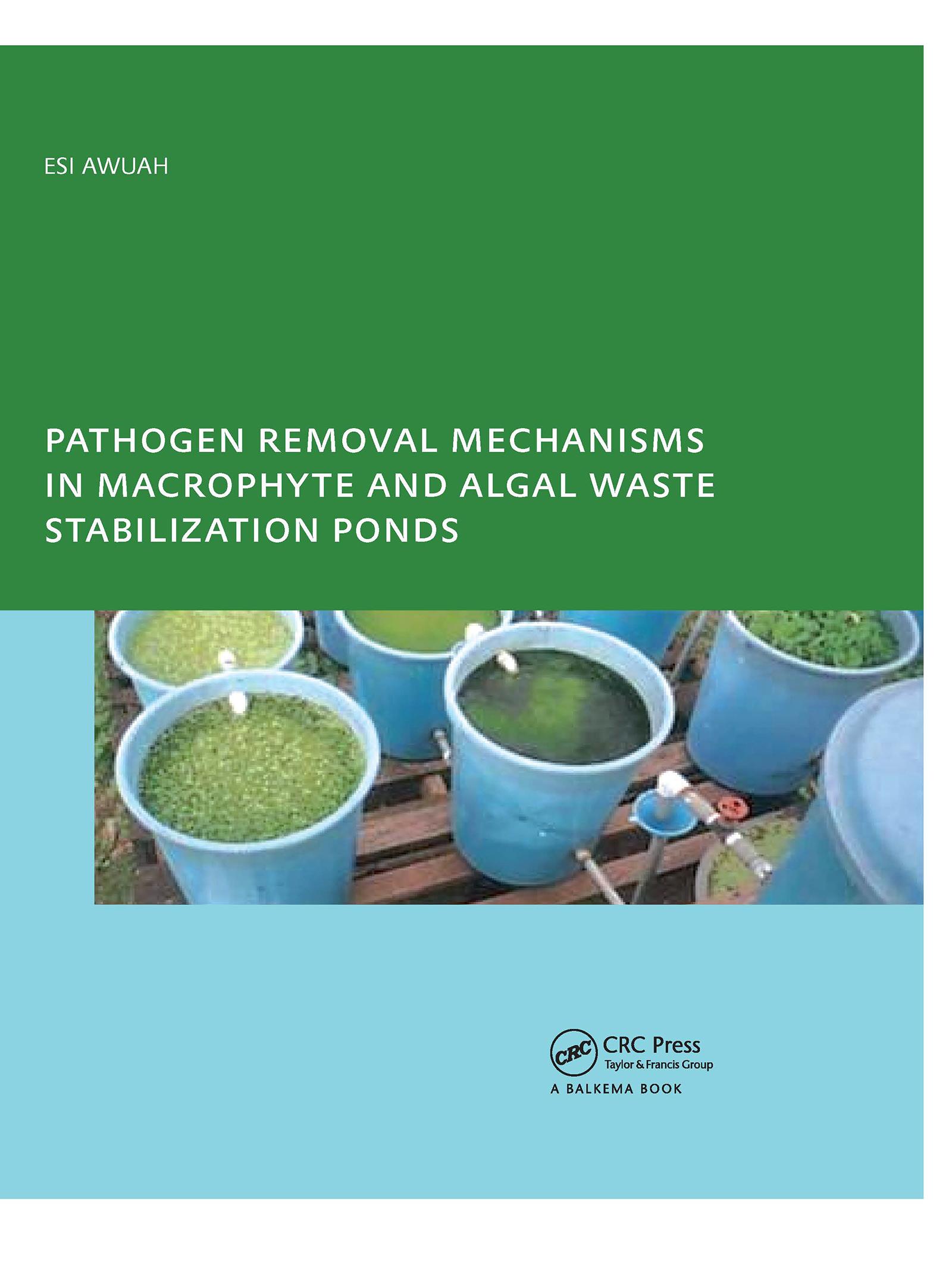
Pathogen removal mechanisms in macrophyte and algal-based waste stabilization ponds were studied in Ghana and Colombia. The macrophytes used were water lettuce (Pistia stratiotes) and duckweeds (Lemna paucicostata and Spirodela polyrhiza). The selection of the species was based on economic importance and availability. Lemna was used during the initial investigations. However, Lemna could not withstand the ammonia levels in the wastewater used. Spirodela polyrhiza a rarer species in Ghana was therefore used in subsequent studies. The main mechanisms considered in this study were pH, protozoa predation and surface attachment. The microorganisms used were faecal bacteria namely; Escherichia coli, other coliforms, Salmonella sp., other enterobacteria, E. coli, ATCC13706 and enterococci. Studies were conducted using batch scale, continuous flow bench and pilot scale ponds. Results indicated in order of importance that long retention periods, attachment, sedimentation, predation and low pH are mechanisms in macrophyte ponds enhancing faecal bacteria removal, while in the algal ponds long retention periods, sunlight penetration, high pH, attachment and sedimentation are the mechanisms of importance in faecal bacteria removal. Presence of protozoa was also found to be important but true grazing studies could not be quantified. Dissolved oxygen did not play a major role in faecal bacteria removal.
Betal nemt med kort, Klarna, Apple Pay eller Google Pay. Ikke tilfreds? Du har altid 14 dages fortrydelsesret. Læs mere i vores vilkår. Har du spørgsmål, så send os en mail på hello@memmo.org.
Memmo gør det nemmere at studere – uanset hvor du er i verden. Hos os samler du dine kursusbøger og smarte studieværktøjer ét sted: resuméer, quizzer, podcasts og flashcards. Og så er der Ted, din studieven, der svarer på alt, du undrer dig over. Over 50 000 studerende studerer allerede her – bygget til at hjælpe dig med at lære hurtigere og stresse mindre.