
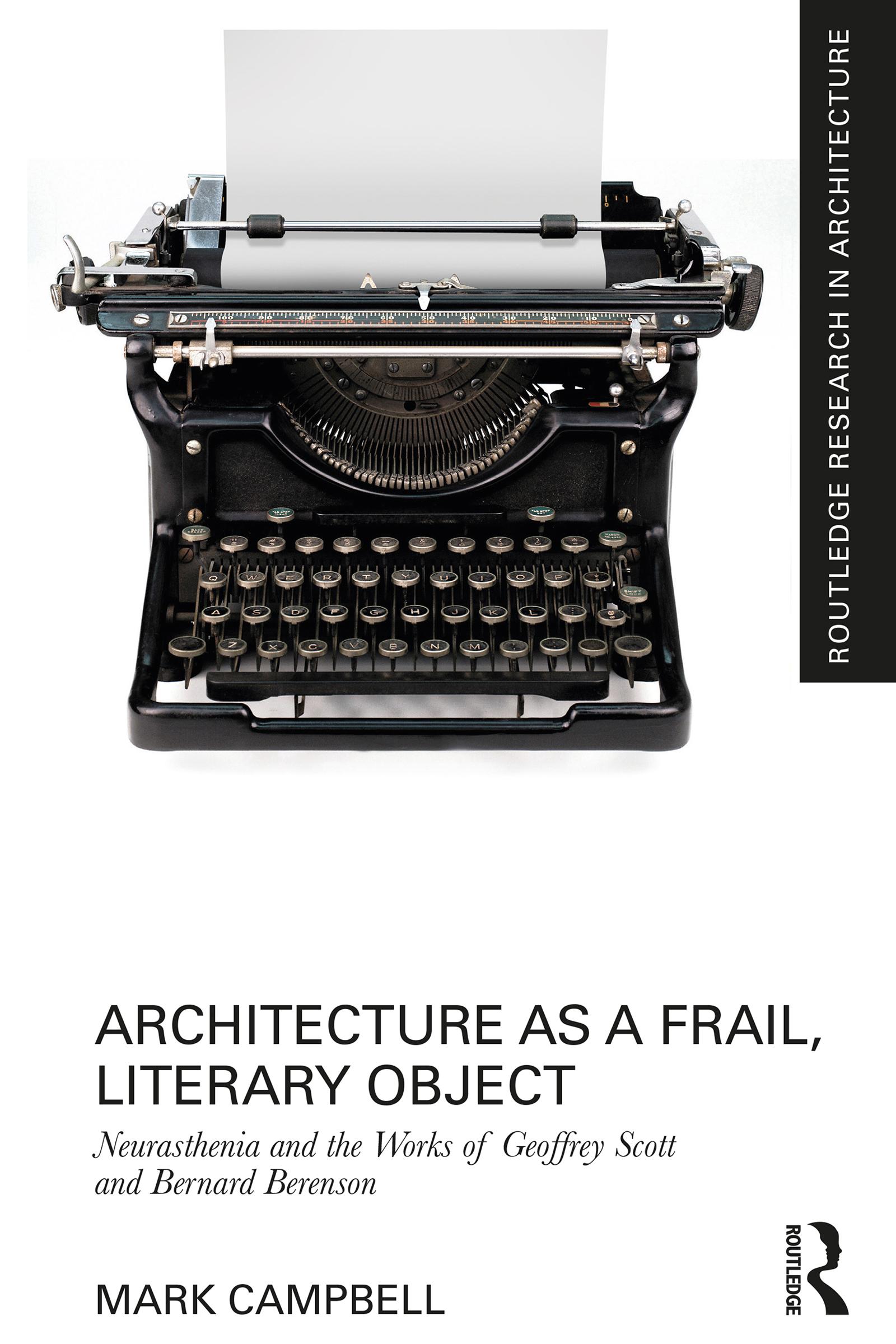
This book considers the motives, ambitions, and malaprops of writing architectural history during the early-1900s – a moment that coincided with the emergence of modernity. In reference to a series of eccentric Anglo-American cultural figures, it considers the relationships between architecture, human perception, disease, and frailty to provide original ideas regarding the writing of architectural history and the literary construction of architecture.
Architecture is not typically associated with frailty. Indeed, one of the founding principles of architecture is that it should aspire to be stable, resilient and indefatigable. In addition, architecture is also not typically thought of in terms of its literariness. Tracing this contradictoriness, this book considers architecture as a frail, literary object by examining the eccentric architectural criticism of Geoffrey Scott, author of The Architecture of Humanism (1914), together with the opportunistic connoisseurship of Bernard Berenson, the leading authority on the attribution of Italian Renaissance painting. Through a reading of their works, it interprets architecture as both “frail,” when viewed through the diffracted lens of nervous illness, and a form of “writing,” in which architecture assumes concrete form through literary description.
This book will be of interest to academics, students, and researchers in architecture and architectural history.
Betal nemt med kort, Klarna, Apple Pay eller Google Pay. Ikke tilfreds? Du har altid 14 dages fortrydelsesret. Læs mere i vores vilkår. Har du spørgsmål, så send os en mail på hello@memmo.org.
Memmo gør det nemmere at studere – uanset hvor du er i verden. Hos os samler du dine kursusbøger og smarte studieværktøjer ét sted: resuméer, quizzer, podcasts og flashcards. Og så er der Ted, din studieven, der svarer på alt, du undrer dig over. Over 50 000 studerende studerer allerede her – bygget til at hjælpe dig med at lære hurtigere og stresse mindre.