
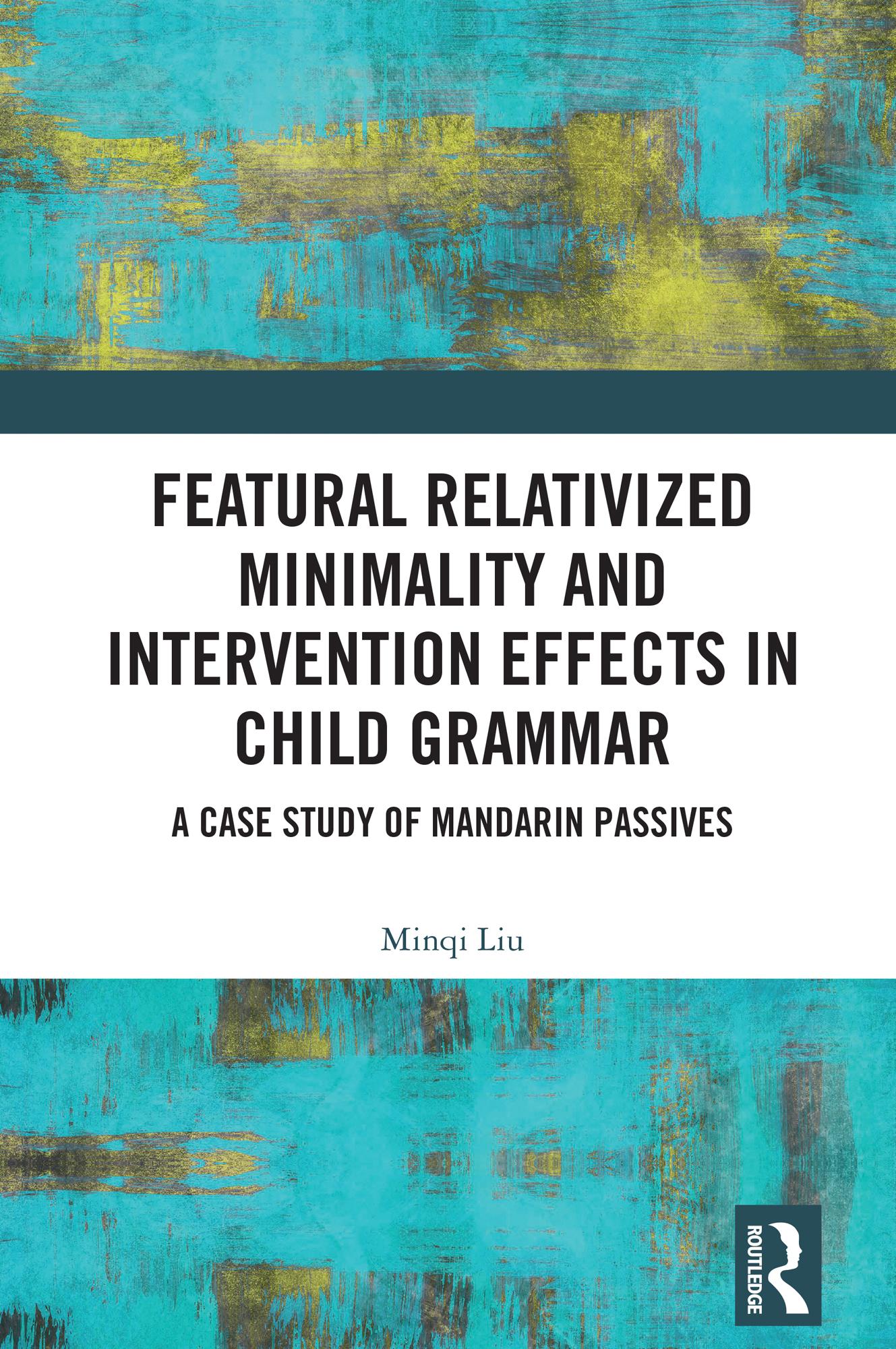
How do young children comprehend complex sentences when intervening elements disrupt understanding? This book explores a key puzzle: Children often struggle to link phrases across distance when similar phrases intervene – an ‘intervention effect’ that sheds light on how the mind constructs grammatical structure.
Using Mandarin Chinese passive sentences as a uniquely clear test case, the author integrates naturalistic speech data with carefully designed comprehension experiments involving Mandarin-speaking preschoolers. The findings reveal that children's difficulties are not merely due to memory constraints or unfamiliarity with the construction. Instead, they stem from a stricter application of a grammatical principle that also governs adult language. Importantly, only mismatches in features that are actively involved in a language's grammar – rather than any perceptible differences between phrases – help children to overcome these challenges.
Drawing on evidence from languages such as Hebrew, Italian, Greek, English, and Mandarin, this study offers fresh perspectives on the universal architecture of grammar and its development in early childhood. It is an essential resource for scholars and students in linguistics, Chinese language studies, and developmental psychology.
Betal nemt med kort, Klarna, Apple Pay eller Google Pay. Ikke tilfreds? Du har altid 14 dages fortrydelsesret. Læs mere i vores vilkår. Har du spørgsmål, så send os en mail på hello@memmo.org.
Memmo gør det nemmere at studere – uanset hvor du er i verden. Hos os samler du dine kursusbøger og smarte studieværktøjer ét sted: resuméer, quizzer, podcasts og flashcards. Og så er der Ted, din studieven, der svarer på alt, du undrer dig over. Over 50 000 studerende studerer allerede her – bygget til at hjælpe dig med at lære hurtigere og stresse mindre.