
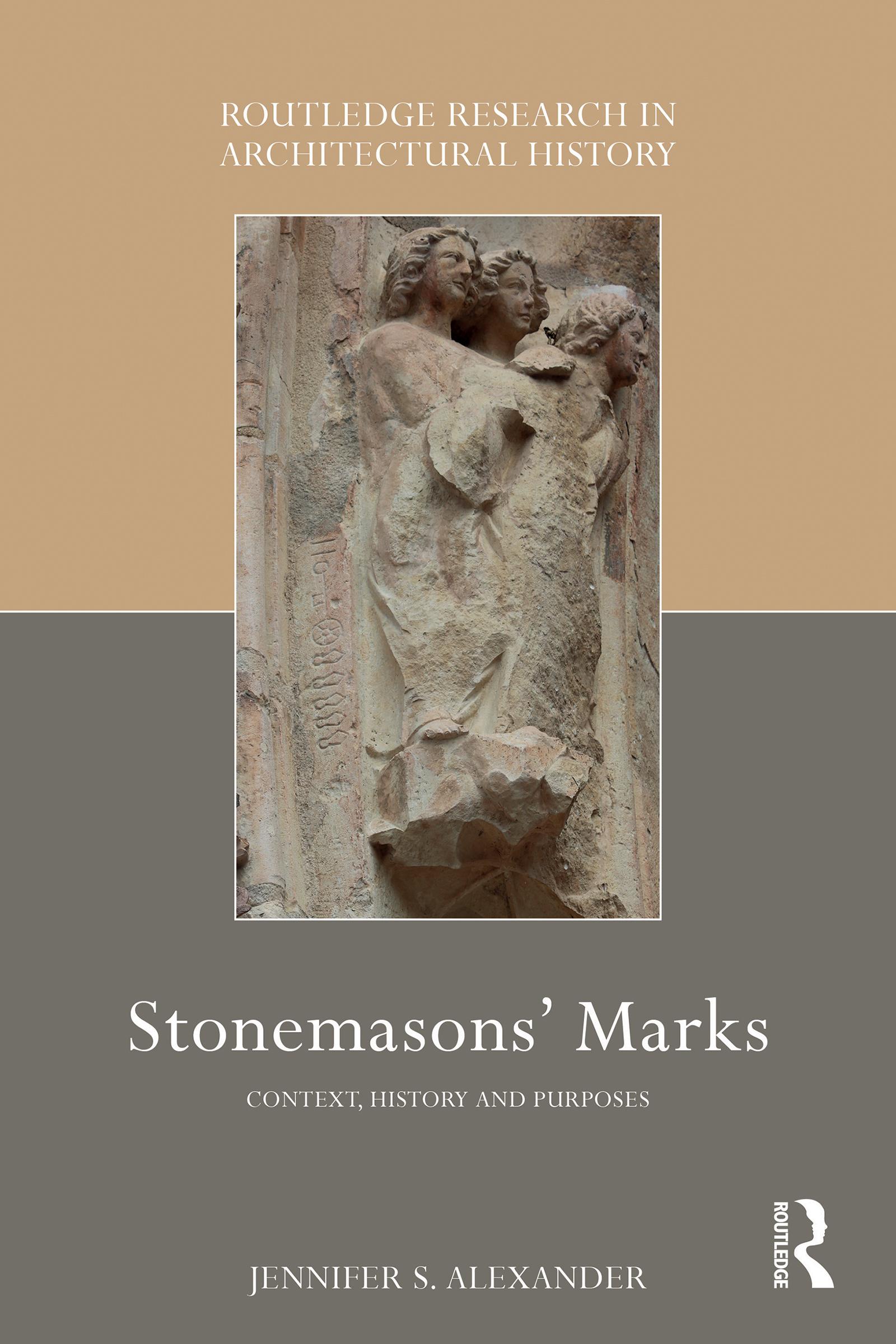
This book investigates the historical and functional significance of stonemasons’ marks – symbols inscribed on individual stone blocks – as a communicative practice within the architectural and construction industries.
Masons’ marks exist for practical reasons and have been in use for over 4000 years. Marks stood outside literacy and acted as a form of communication within the stone-working environment that had parallels with systems of visual signs used elsewhere. This book presents an analysis of masons’ marks, moving the debate away from a search for meaning to an appraisal of their roles. It is divided into two main sections; the first deals with the historic search for an understanding of marks, and provides their context within other cipher-based communication systems before identifying the different ways in which masons’ marks were used. The second section considers the evidence from buildings of the medieval, early-modern, and industrial periods and demonstrates the changes evident in the use of marks. By drawing on detailed case studies of buildings, it shows how marks can inform and deepen our understanding of the ways in which stone buildings have been constructed across time.
The first of its kind, this book provides a definitive account of a subject. It will therefore be of interest to buildings archaeologists, conservators, and students of architectural history, as well as members of the public interested in knowing more about how buildings are constructed.
Betal nemt med kort, Klarna, Apple Pay eller Google Pay. Ikke tilfreds? Du har altid 14 dages fortrydelsesret. Læs mere i vores vilkår. Har du spørgsmål, så send os en mail på hello@memmo.org.
Memmo gør det nemmere at studere – uanset hvor du er i verden. Hos os samler du dine kursusbøger og smarte studieværktøjer ét sted: resuméer, quizzer, podcasts og flashcards. Og så er der Ted, din studieven, der svarer på alt, du undrer dig over. Over 50 000 studerende studerer allerede her – bygget til at hjælpe dig med at lære hurtigere og stresse mindre.