
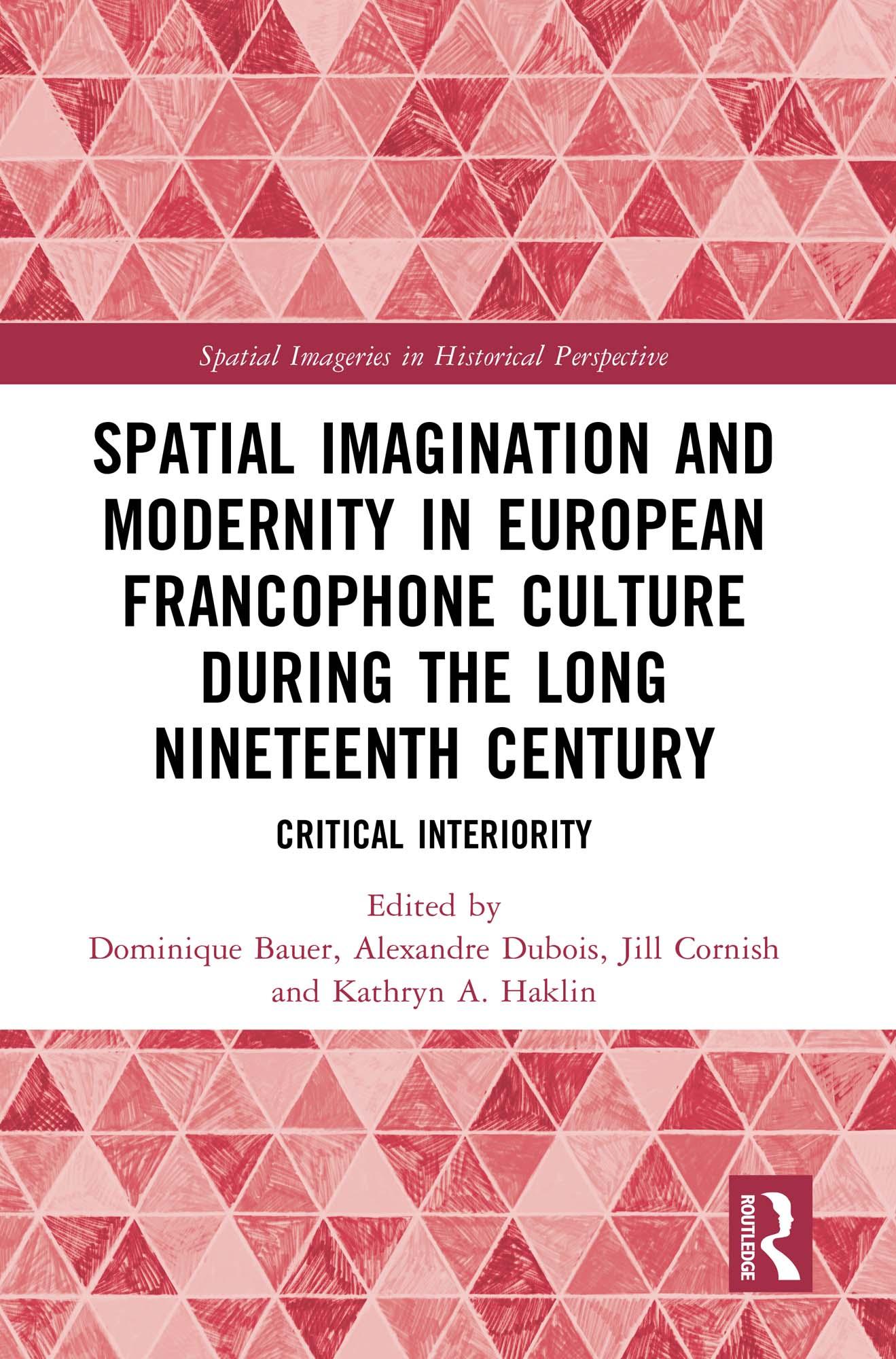
This book explores the concept of critical interiority in literature, art, and architecture within European francophone culture, spanning the late eighteenth to early twentieth centuries.
As a lived, imagined, or conceptualized interior space, critical interiority initially suggests a duality between interior and exterior spaces. However, this division is simultaneously destabilized, to the point where the distinction between the two spatial categories nearly dissolves. This paradox forms a lens through which modern subjectivity is analysed as an interiority. By examining examples of critical interiority found in architecture, literature, and visual art, the chapters in this volume illuminate the fundamental tensions of modernity regarding the subject and its relationship to authenticity, gender, identity, memory, nature, privacy, sociability, and temporality.
Set at the intersections of various critical frameworks, this book offers a unique and interdisciplinary perspective on space. It will be of interest to researchers in the fields of nineteenth-century literature and architecture, France and Belgium, general cultural history, domesticity and the city, art history and aesthetic theory, literary genres and comparative literature.
Betal nemt med kort, Klarna, Apple Pay eller Google Pay. Ikke tilfreds? Du har altid 14 dages fortrydelsesret. Læs mere i vores vilkår. Har du spørgsmål, så send os en mail på hello@memmo.org.
Memmo gør det nemmere at studere – uanset hvor du er i verden. Hos os samler du dine kursusbøger og smarte studieværktøjer ét sted: resuméer, quizzer, podcasts og flashcards. Og så er der Ted, din studieven, der svarer på alt, du undrer dig over. Over 50 000 studerende studerer allerede her – bygget til at hjælpe dig med at lære hurtigere og stresse mindre.