
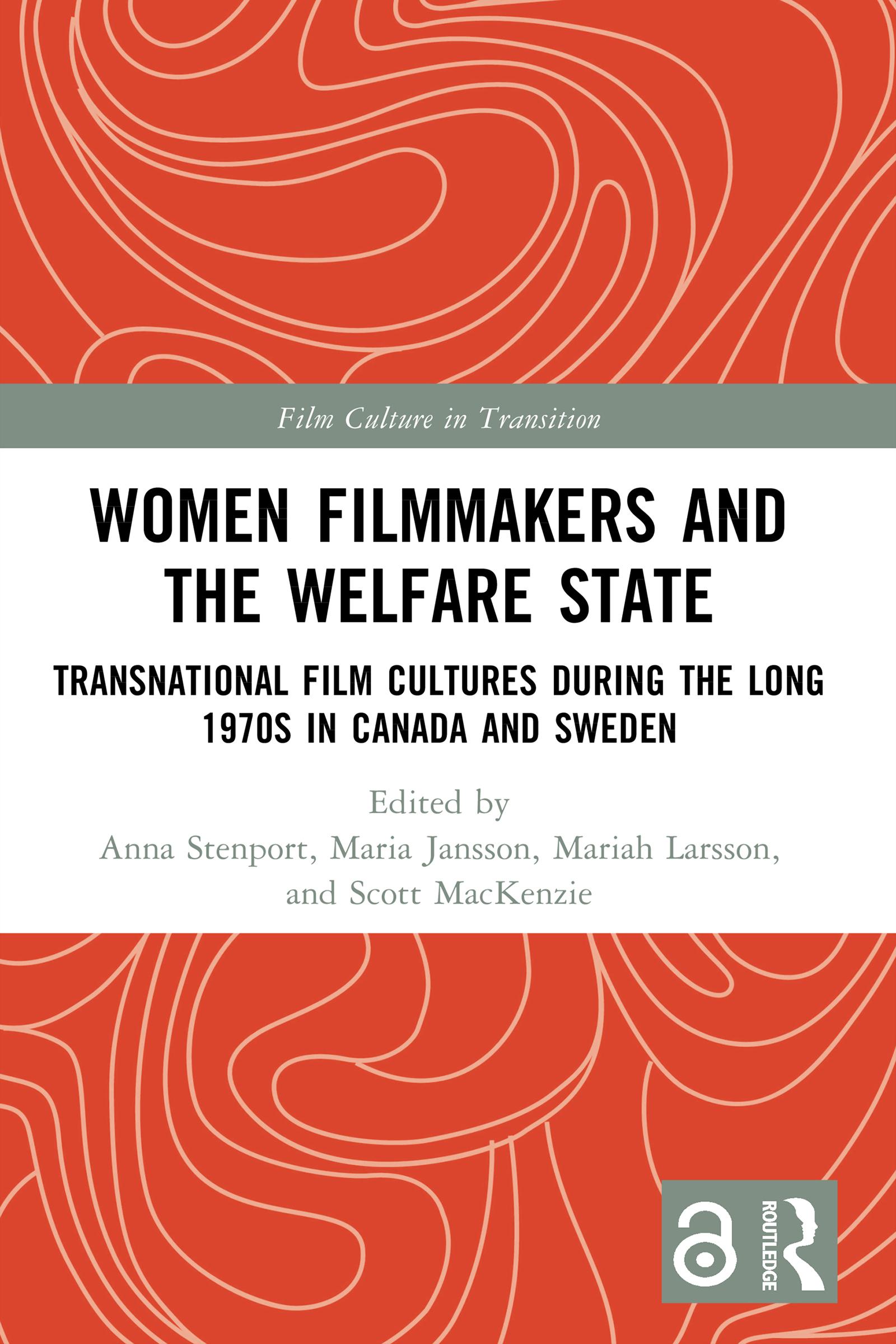
Women Filmmakers and the Welfare State compares conditions for diverse women filmmakers in relation to cultural movements, politics, and welfare state policy during the long 1970s.
The book examines the expansion of women’s filmmaking and transnational collaboration across a range of genres, styles, and forms, foregrounding that film practices of the time were highly varied, ranging from women’s political and “consciousness-raising” films to fiction, art cinema, animation, documentary, experimental, and educational cinema. Welfare states such as Canada and Sweden had related, but different approaches to public support for filmmaking by women, which also influenced Indigenous, queer, and migrant and immigrant access to film production. At the height of second-wave feminism, this expansion took root through transnational collaboration as well as collectives, co-ops, activist networks, film festivals, public television, and government organizations, including in relation to environmentalist, pacifist, and UN Year and Decade of the Woman initiatives. The book includes interviews with filmmakers and also explores the current state of access, circulation, and archival practice.
This book is aimed at a scholarly audience with applicability for undergraduate and graduate students, as well as for adoption across a variety of cinema, media, gender, political science, cultural policy, transnationalism, and gender and women’s studies courses.
Betal nemt med kort, Klarna, Apple Pay eller Google Pay. Ikke tilfreds? Du har altid 14 dages fortrydelsesret. Læs mere i vores vilkår. Har du spørgsmål, så send os en mail på hello@memmo.org.
Memmo gør det nemmere at studere – uanset hvor du er i verden. Hos os samler du dine kursusbøger og smarte studieværktøjer ét sted: resuméer, quizzer, podcasts og flashcards. Og så er der Ted, din studieven, der svarer på alt, du undrer dig over. Over 50 000 studerende studerer allerede her – bygget til at hjælpe dig med at lære hurtigere og stresse mindre.