
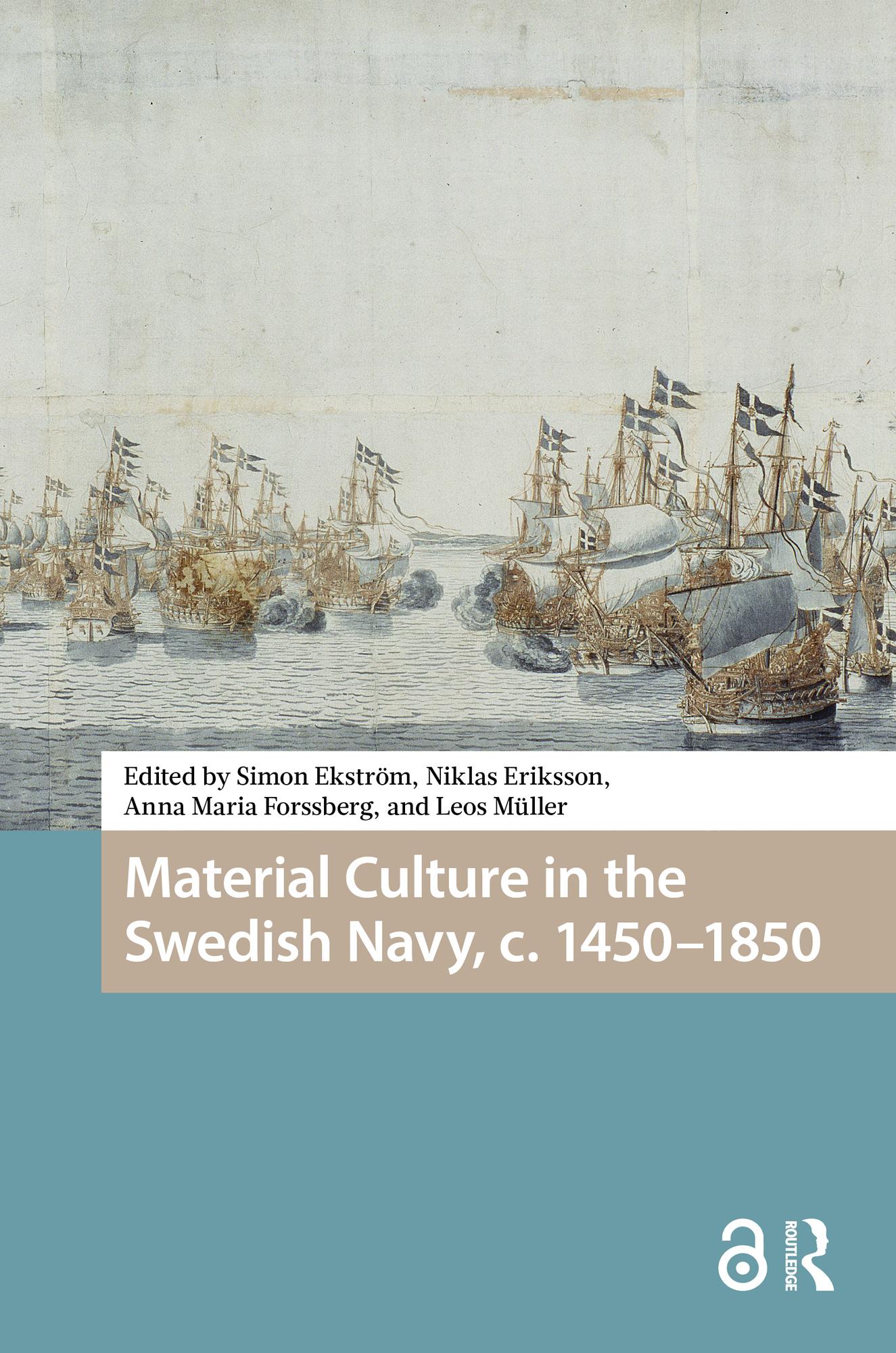
Nearly 400 years have passed since the naval ship Vasa sank in Stockholm in 1628, and more than sixty years since its salvage in 1961. Today, Vasa stands as an iconic symbol – a ship, a shipwreck, a museum, and a unique manifestation of the material culture of Sweden’s early modern navy. But Vasa is not the only Swedish naval vessel of its time. Sweden’s naval records reveal nearly 900 other ships, each with a story very different from Vasa’s. Some were sunk in battle, many served in the navy for decades, others were repurposed as construction elements in harbours, or deliberately sunk at the entrances to Swedish cities and naval bases as obstacles for the enemy.
This volume focuses on and examines these forgotten or hidden ships as material culture, broadly defined to encompass all remains of the navy, from shipwrecks on the seabed to museum objects, archives, cannons, and even coffins made from ship timbers. The book highlights how new methods, techniques, and materials can challenge and enrich naval studies. It is the result of an interdisciplinary collaboration between underwater archaeology, history, ethnology, and cultural heritage studies from both Sweden and Finland.
Betal nemt med kort, Klarna, Apple Pay eller Google Pay. Ikke tilfreds? Du har altid 14 dages fortrydelsesret. Læs mere i vores vilkår. Har du spørgsmål, så send os en mail på hello@memmo.org.
Memmo gør det nemmere at studere – uanset hvor du er i verden. Hos os samler du dine kursusbøger og smarte studieværktøjer ét sted: resuméer, quizzer, podcasts og flashcards. Og så er der Ted, din studieven, der svarer på alt, du undrer dig over. Over 50 000 studerende studerer allerede her – bygget til at hjælpe dig med at lære hurtigere og stresse mindre.