
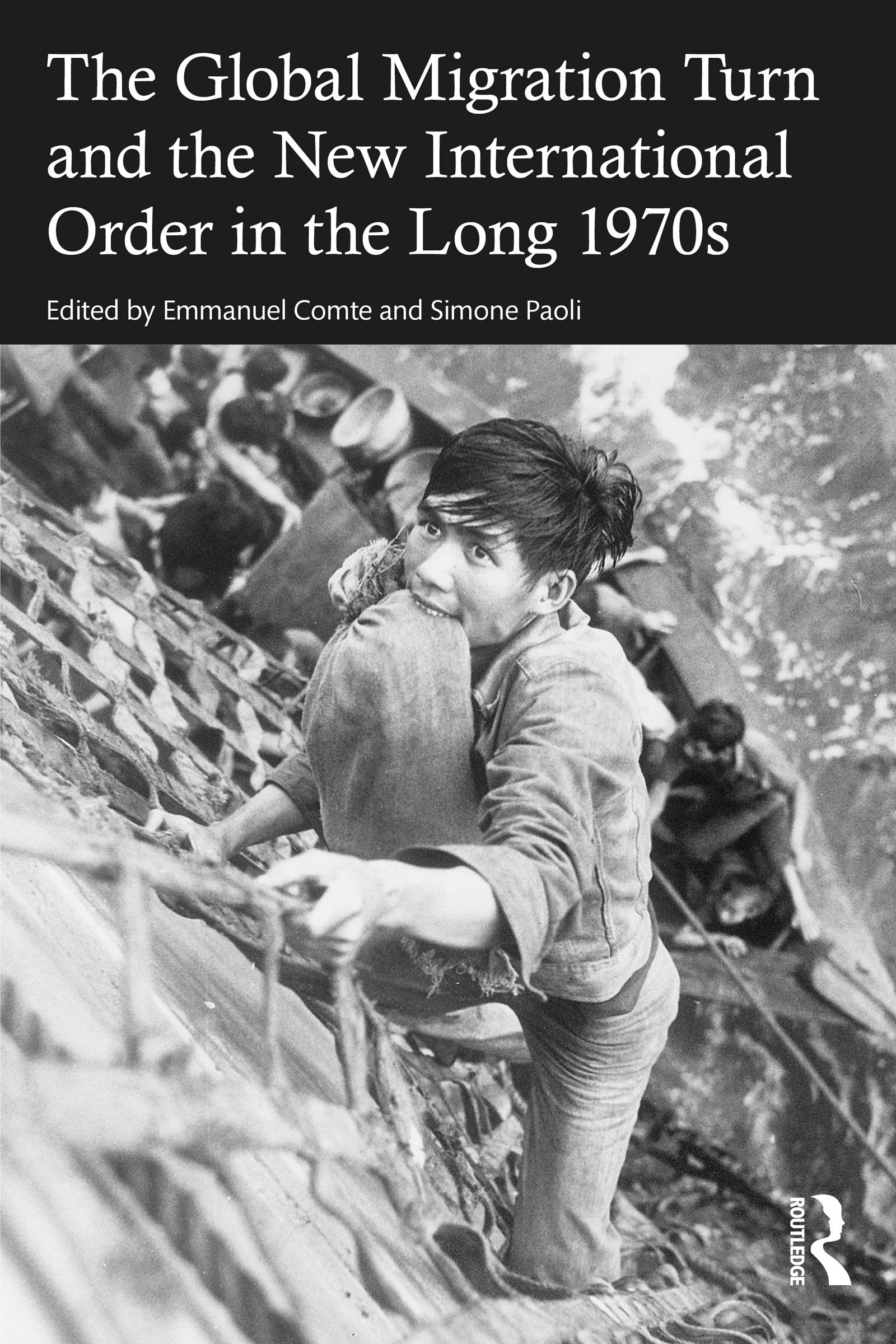
This book reveals how policies, public sentiments, and international negotiations converged to reshape migration governance in the 1970s, a pivotal decade which serves as a crucial starting point for grappling with one of the twenty-first century’s defining issues.
Expansive government interventions, growing public resistance, and the first serious efforts at global migration governance left an enduring legacy. Tracing the shift from relative North–South openness to new restrictions and from East–West closure to cautious openness, the book explores how migration governance transformed in response to economic pressures, decolonisation, and Cold War geopolitics. Covering case studies from Europe, North America, Africa, Asia, and Australia, contributors analyse the emergence of migration as a political flashpoint – from legislative change and international diplomacy to grassroots activism. The book innovates by connecting diverse world regions and actors – state and non-state alike – and by reassessing the role of international organisations such as the ILO, UNHCR, and ICEM.
Essential reading for academics and general readers alike, The Global Migration Turn offers a ground-breaking interpretation of the 1970s as a turning point in global migration governance. It equips readers with critical historical insight into contemporary challenges surrounding migration and international cooperation.
Betal nemt med kort, Klarna, Apple Pay eller Google Pay. Ikke tilfreds? Du har altid 14 dages fortrydelsesret. Læs mere i vores vilkår. Har du spørgsmål, så send os en mail på hello@memmo.org.
Memmo gør det nemmere at studere – uanset hvor du er i verden. Hos os samler du dine kursusbøger og smarte studieværktøjer ét sted: resuméer, quizzer, podcasts og flashcards. Og så er der Ted, din studieven, der svarer på alt, du undrer dig over. Over 50 000 studerende studerer allerede her – bygget til at hjælpe dig med at lære hurtigere og stresse mindre.