
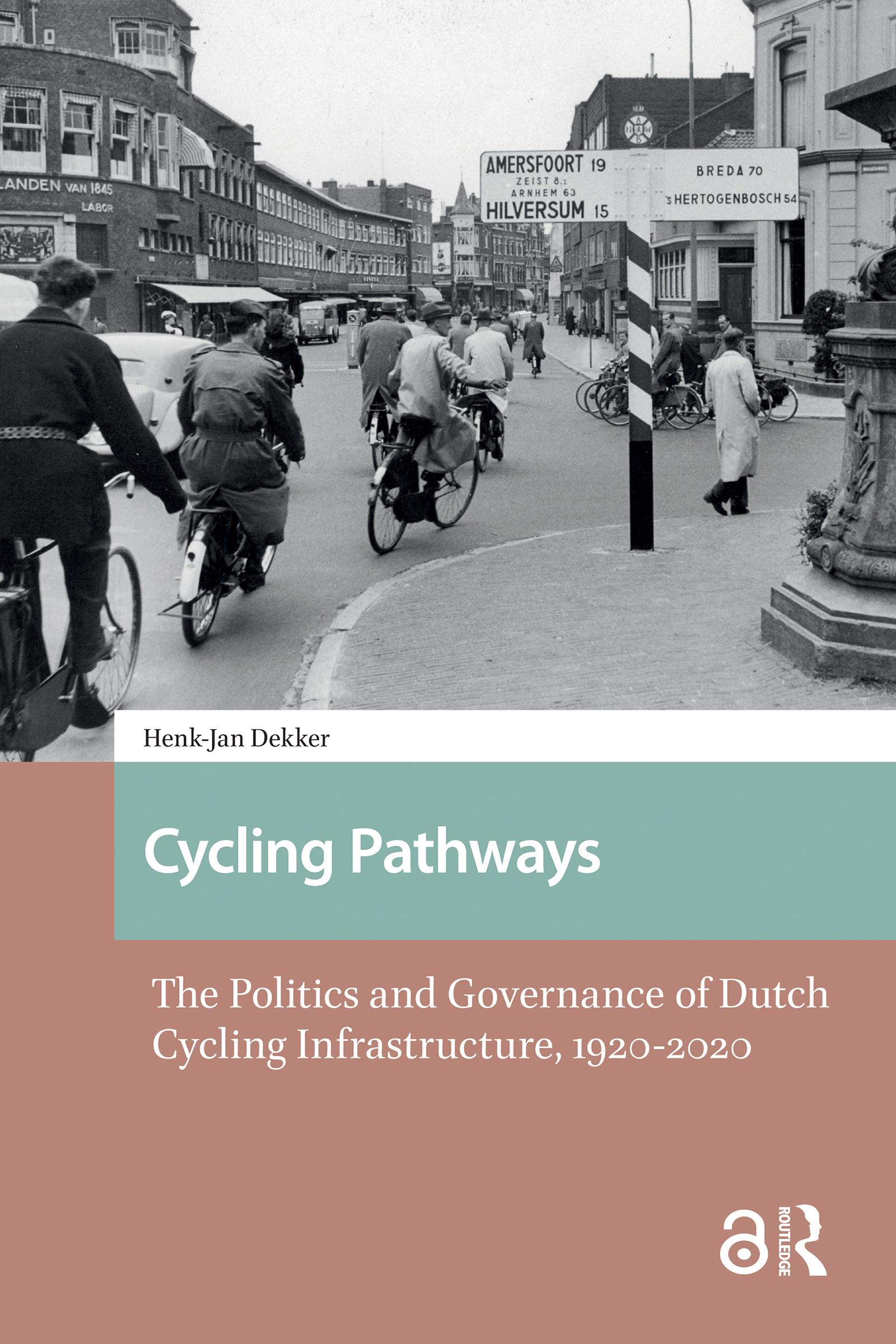
In an effort to fight climate change, many cities try to boost their cycling levels. They often look towards the Dutch for guidance. However, historians have only begun to uncover how and why the Netherlands became the premier cycling country of the world. Why were Dutch cyclists so successful in their fight for a place on the road? Cycling Pathways: The Politics and Governance of Dutch Cycling Infrastructure, 1920-2020 explores the long political struggle that culminated in today’s high cycling levels. Delving into the archives, it uncovers the important role of social movements and shows in detail how these interacted with national, provincial, and urban engineers and policymakers to govern the distribution of road space and construction of cycling infrastructure. It discusses a wide range of topics, ranging from activists to engineering committees, from urban commuters to recreational cyclists and from the early 1900s to today in order to uncover the long and all-but-forgotten history of Dutch cycling governance.
Betal nemt med kort, Klarna, Apple Pay eller Google Pay. Ikke tilfreds? Du har altid 14 dages fortrydelsesret. Læs mere i vores vilkår. Har du spørgsmål, så send os en mail på hello@memmo.org.
Memmo gør det nemmere at studere – uanset hvor du er i verden. Hos os samler du dine kursusbøger og smarte studieværktøjer ét sted: resuméer, quizzer, podcasts og flashcards. Og så er der Ted, din studieven, der svarer på alt, du undrer dig over. Over 50 000 studerende studerer allerede her – bygget til at hjælpe dig med at lære hurtigere og stresse mindre.