
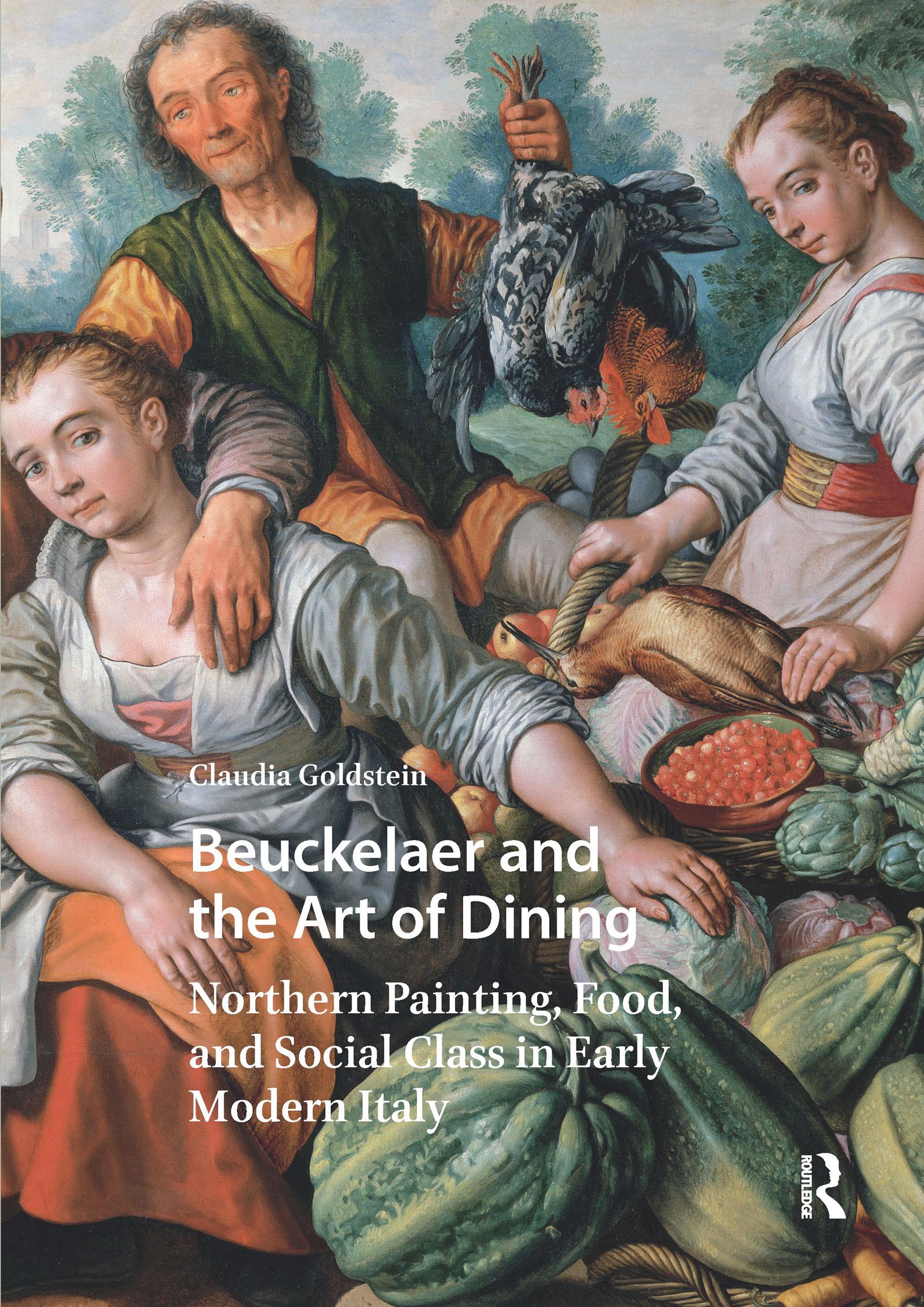
Sixteenth-century Flemish painter Joachim Beuckelaer produced dozens of large-scale paintings of contemporary working women and men selling, presenting, and preparing a visually stunning array of foodstuffs for the viewer. These were new subjects in Antwerp and even newer in Italy, where elite merchants and nobles like Margaret of Parma displayed them as they were meant to be displayed: in dining rooms and spaces used for entertaining. This study explores the cross-cultural meanings of Beuckelaer's distinctly Northern European kitchen and market scenes in the context of North Italian dining and food culture. Examining the functions of Beuckelaer's strange and new subject matter, Goldstein situates his paintings and those of his closest Italian follower, Vincenzo Campi, in the physical space of the dining room, addressing dining practice and the class and gender tensions inherent in a setting that placed both elite and non-elite viewers before life-sized renderings of their employees, and themselves.
Betal nemt med kort, Klarna, Apple Pay eller Google Pay. Ikke tilfreds? Du har altid 14 dages fortrydelsesret. Læs mere i vores vilkår. Har du spørgsmål, så send os en mail på hello@memmo.org.
Memmo gør det nemmere at studere – uanset hvor du er i verden. Hos os samler du dine kursusbøger og smarte studieværktøjer ét sted: resuméer, quizzer, podcasts og flashcards. Og så er der Ted, din studieven, der svarer på alt, du undrer dig over. Over 50 000 studerende studerer allerede her – bygget til at hjælpe dig med at lære hurtigere og stresse mindre.
Du kan måske også lide
Køb bogen0