
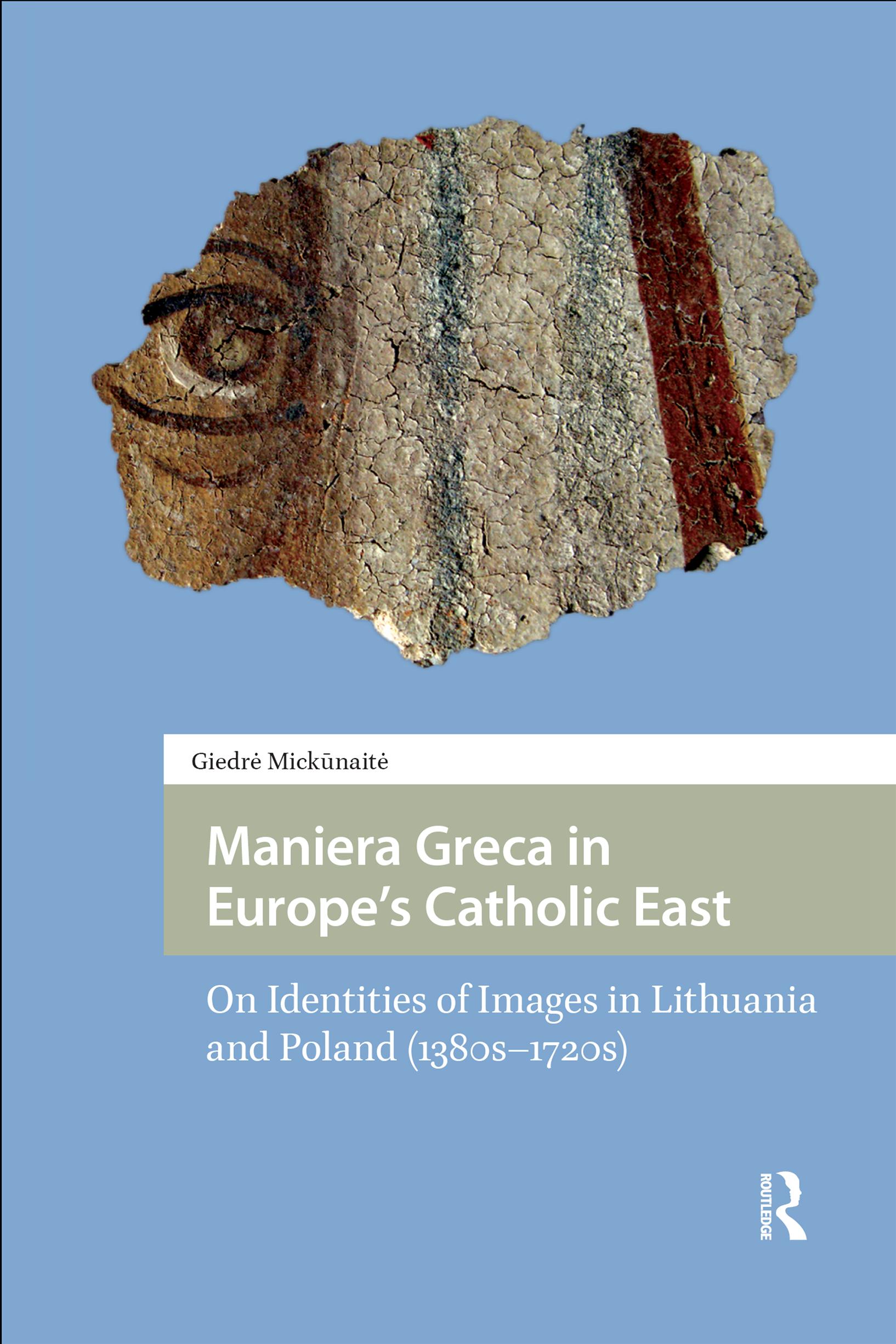
How and why does vernacular art become foreign? What does ‘Greek manner’ mean in regions far beyond the Mediterranean? What stories do images need? How do narratives shape pictures? The study addresses these questions in Byzantine paintings from the former Grand Duchy of Lithuania, contextualized with evidence from Poland, Serbia, Russia, and Italy. The research follows developments in artistic practices and the reception of these images, as well as distinguishing between the Greek manner – based on visual qualities – and the style favoured by the devout, sustained by cults and altered through stories. Following the reception of Byzantine and pseudo-Byzantine art in Lithuania and Poland from the late fourteenth through the early eighteenth centuries, Maniera Greca in Europe’s Catholic Easit argues that tradition is repetitive order achieved through reduction and oblivion, and concludes that the sole persistent understanding of the Greek image has been stereotyped as the icon of the Mother of God.
Betal nemt med kort, Klarna, Apple Pay eller Google Pay. Ikke tilfreds? Du har altid 14 dages fortrydelsesret. Læs mere i vores vilkår. Har du spørgsmål, så send os en mail på hello@memmo.org.
Memmo gør det nemmere at studere – uanset hvor du er i verden. Hos os samler du dine kursusbøger og smarte studieværktøjer ét sted: resuméer, quizzer, podcasts og flashcards. Og så er der Ted, din studieven, der svarer på alt, du undrer dig over. Over 50 000 studerende studerer allerede her – bygget til at hjælpe dig med at lære hurtigere og stresse mindre.