
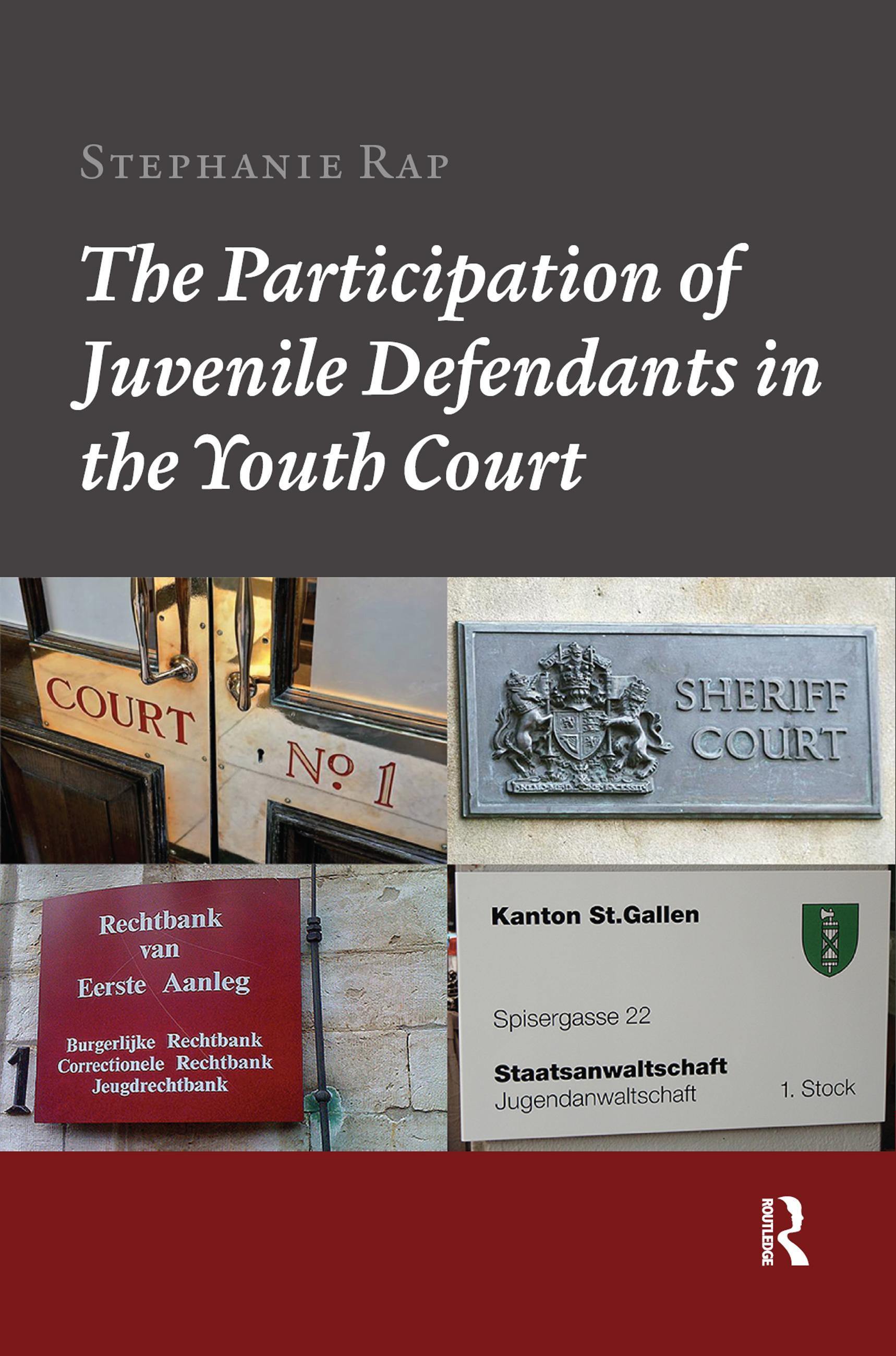
This study revolves around the issue of the participation of juvenile defendants in the youth court. Juvenile defendants’ right to be heard, as stipulated in international children’s rights law and standards, and the fact that juveniles have a limited understanding of the juvenile justice process are taken as starting points to formulate directives in order for young persons to be able to participate effectively in the youth court. In total, the cases of 3,019 juvenile defendants have been observed in youth courts and other competent administrative bodies in juvenile justice in 11 European countries. The Scottish children’s hearing and the juvenile justice practice in Switzerland come forward as examples of best practice regarding the participation of juveniles. A more intimate and informal setting contributes to making the hearing more accessible for the young person and his parents. Furthermore, this study shows that the fulfilment of the requirements for the effective participation of juvenile defendants is not possible in the adversarial youth courts in Europe.
Betal nemt med kort, Klarna, Apple Pay eller Google Pay. Ikke tilfreds? Du har altid 14 dages fortrydelsesret. Læs mere i vores vilkår. Har du spørgsmål, så send os en mail på hello@memmo.org.
Memmo gør det nemmere at studere – uanset hvor du er i verden. Hos os samler du dine kursusbøger og smarte studieværktøjer ét sted: resuméer, quizzer, podcasts og flashcards. Og så er der Ted, din studieven, der svarer på alt, du undrer dig over. Over 50 000 studerende studerer allerede her – bygget til at hjælpe dig med at lære hurtigere og stresse mindre.
Du kan måske også lide
Køb bogen0