
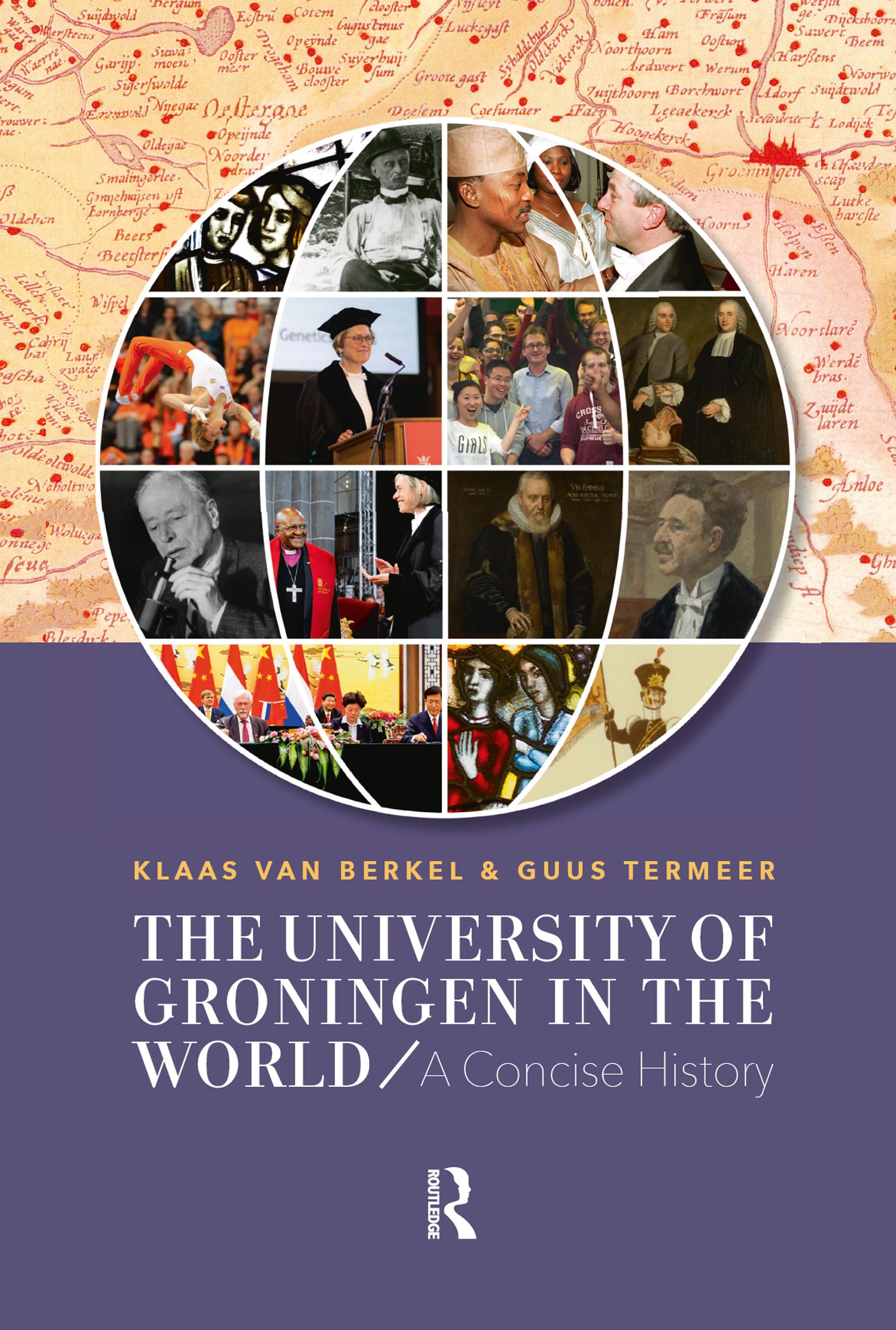
The University of Groningen has been an international university since its foundation in 1614. The first professors formed a rich international community, and many students came from outside the Netherlands, especially from areas now belonging to Germany. Internationalization, a popular slogan nowadays, is therefore nothing new, but its meaning has changed over time. How did the University of Groningen grow from a provincial institution established for religious reasons into a top-100 university with 36,000 students, of whom 25% come from abroad and almost half of the academic staff is of foreign descent? What is the identity of this four-century-old university that is still strongly anchored in the northern part of the Netherlands but that also has a mind that is open to the world? The history of the university, as told by Klaas van Berkel and Guus Termeer, ends with a short paragraph on the impact of the corona crisis.
Betal nemt med kort, Klarna, Apple Pay eller Google Pay. Ikke tilfreds? Du har altid 14 dages fortrydelsesret. Læs mere i vores vilkår. Har du spørgsmål, så send os en mail på hello@memmo.org.
Memmo gør det nemmere at studere – uanset hvor du er i verden. Hos os samler du dine kursusbøger og smarte studieværktøjer ét sted: resuméer, quizzer, podcasts og flashcards. Og så er der Ted, din studieven, der svarer på alt, du undrer dig over. Over 50 000 studerende studerer allerede her – bygget til at hjælpe dig med at lære hurtigere og stresse mindre.
Du kan måske også lide
Køb bogen0