
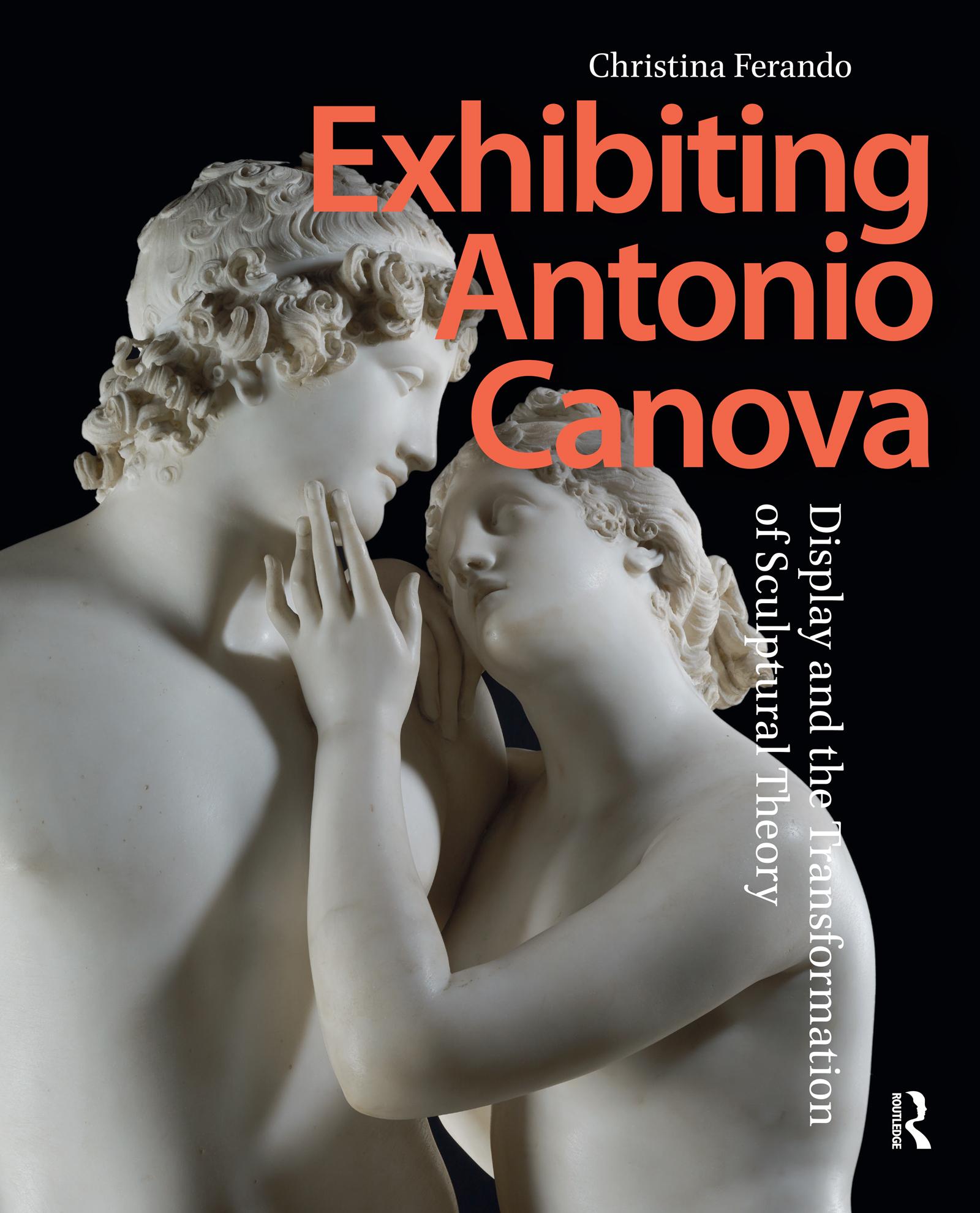
Exhibiting Antonio Canova: Display and the Transformation of Sculptural Theory argues that the display of Canova’s sculptures in the late eighteenth and early nineteenth centuries acted as a catalyst for discourse across a broad range of subjects. By enshrining his marble figures alongside plaster casts of ancient works, bathing them in candlelight, staining and waxing their surfaces, and even setting them in motion on rotating bases, Canova engaged viewers intellectually, physically, and emotionally. These displays inspired discussions on topics as diverse as originality and artistic production, the association between the sculptural surface, flesh, and anatomy, the relationship between painting and sculpture, and the role of public museums. Beholders’ discussions also shaped the legacy of important sculptural theories. They helped usher in their modern definitions and created the lenses through which we experience and interpret works of art, establishing modern attitudes not just towards sculpture, but towards cultural patrimony in general.
Betal nemt med kort, Klarna, Apple Pay eller Google Pay. Ikke tilfreds? Du har altid 14 dages fortrydelsesret. Læs mere i vores vilkår. Har du spørgsmål, så send os en mail på hello@memmo.org.
Memmo gør det nemmere at studere – uanset hvor du er i verden. Hos os samler du dine kursusbøger og smarte studieværktøjer ét sted: resuméer, quizzer, podcasts og flashcards. Og så er der Ted, din studieven, der svarer på alt, du undrer dig over. Over 50 000 studerende studerer allerede her – bygget til at hjælpe dig med at lære hurtigere og stresse mindre.