
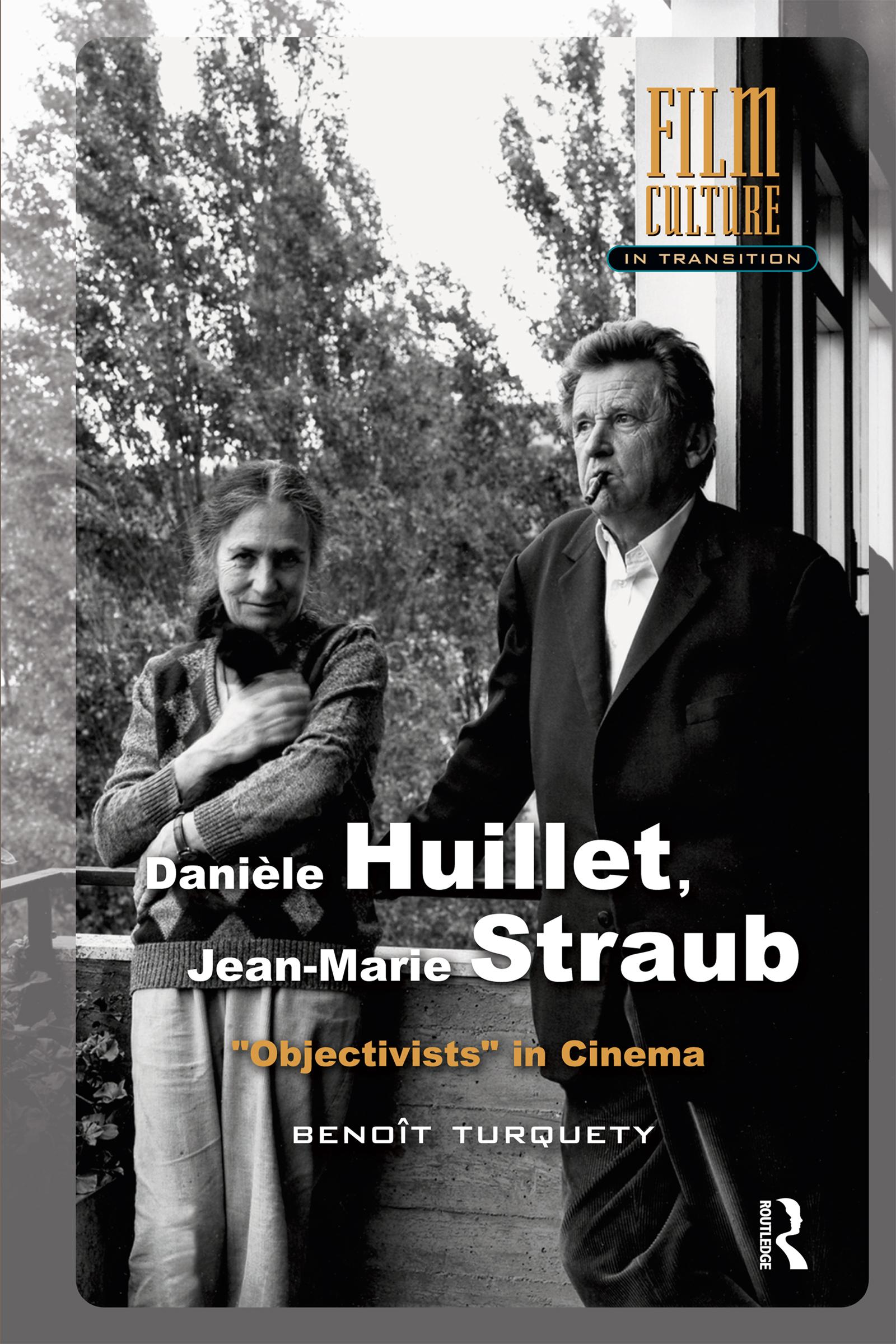
Danièle Huillet and Jean-Marie Straub collaborated on films together from the mid-1960s through the mid-2000s, making formally radical adaptations in several languages of major works of European literature by authors including Franz Kafka, Bertolt Brecht, Friedrich Hölderlin, Pierre Corneille, Arnold Schoenberg, Cesare Pavese, and Elio Vittorini. The impact of their work comes in part from a search for radical objectivity, a theme present in certain underground currents of modernist art and theory in the writings of Benjamin and Adorno as well as in the Objectivist movement, a crucial group within American modernist poetry whose members included Louis Zukofsky, George Oppen, and Charles Reznikoff, with connections to William Carlos Williams and Ezra Pound. Through a detailed analysis of the films of Straub and Huillet, the works they adapted, and Objectivist poems and essays, Benoît Turquety locates common practices and explores a singular aesthetic approach where a work of art is conceived as an object, the artist an anonymous artisan, and where the force of politics and formal research attempt to reconcile with one another.
Betal nemt med kort, Klarna, Apple Pay eller Google Pay. Ikke tilfreds? Du har altid 14 dages fortrydelsesret. Læs mere i vores vilkår. Har du spørgsmål, så send os en mail på hello@memmo.org.
Memmo gør det nemmere at studere – uanset hvor du er i verden. Hos os samler du dine kursusbøger og smarte studieværktøjer ét sted: resuméer, quizzer, podcasts og flashcards. Og så er der Ted, din studieven, der svarer på alt, du undrer dig over. Over 50 000 studerende studerer allerede her – bygget til at hjælpe dig med at lære hurtigere og stresse mindre.
Du kan måske også lide
Køb bogen0