
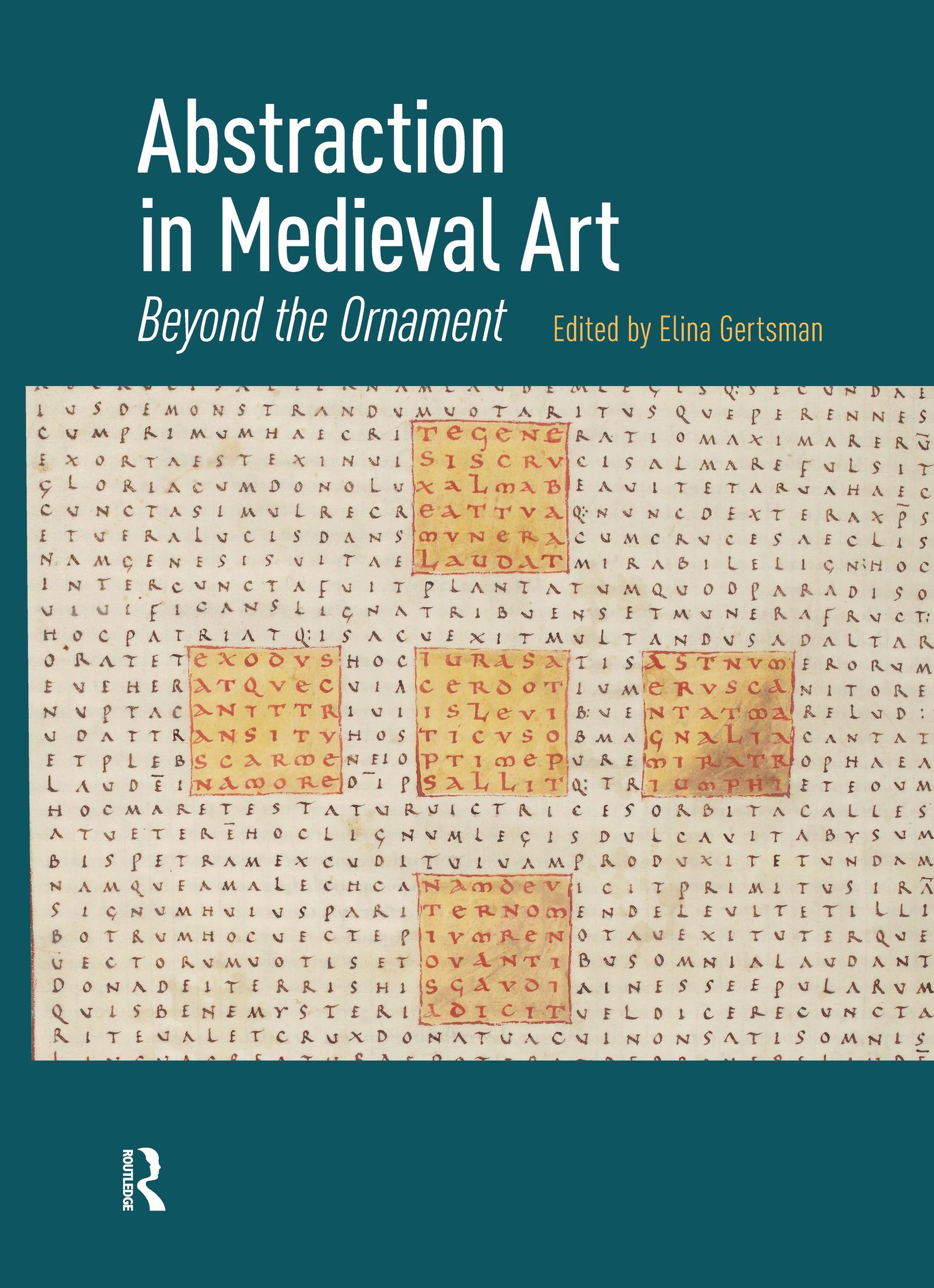
Abstraction haunts medieval art, both withdrawing figuration and suggesting elusive presence. How does it make or destroy meaning in the process? Does it suggest the failure of figuration, the faltering of iconography? Does medieval abstraction function because it is imperfect, incomplete, and uncorrected-and therefore cognitively, visually demanding? Is it, conversely, precisely about perfection? To what extent is the abstract predicated on theorization of the unrepresentable and imperceptible? Does medieval abstraction pit aesthetics against metaphysics, or does it enrich it, or frame it, or both? Essays in this collection explore these and other questions that coalesce around three broad themes: medieval abstraction as the untethering of the image from what it purports to represent; abstraction as a vehicle for signification; and abstraction as a form of figuration. Contributors approach the concept of medieval abstraction from a multitude of perspectives-formal, semiotic, iconographic, material, phenomenological, epistemological.
Betal nemt med kort, Klarna, Apple Pay eller Google Pay. Ikke tilfreds? Du har altid 14 dages fortrydelsesret. Læs mere i vores vilkår. Har du spørgsmål, så send os en mail på hello@memmo.org.
Memmo gør det nemmere at studere – uanset hvor du er i verden. Hos os samler du dine kursusbøger og smarte studieværktøjer ét sted: resuméer, quizzer, podcasts og flashcards. Og så er der Ted, din studieven, der svarer på alt, du undrer dig over. Over 50 000 studerende studerer allerede her – bygget til at hjælpe dig med at lære hurtigere og stresse mindre.
Du kan måske også lide
Køb bogen0