
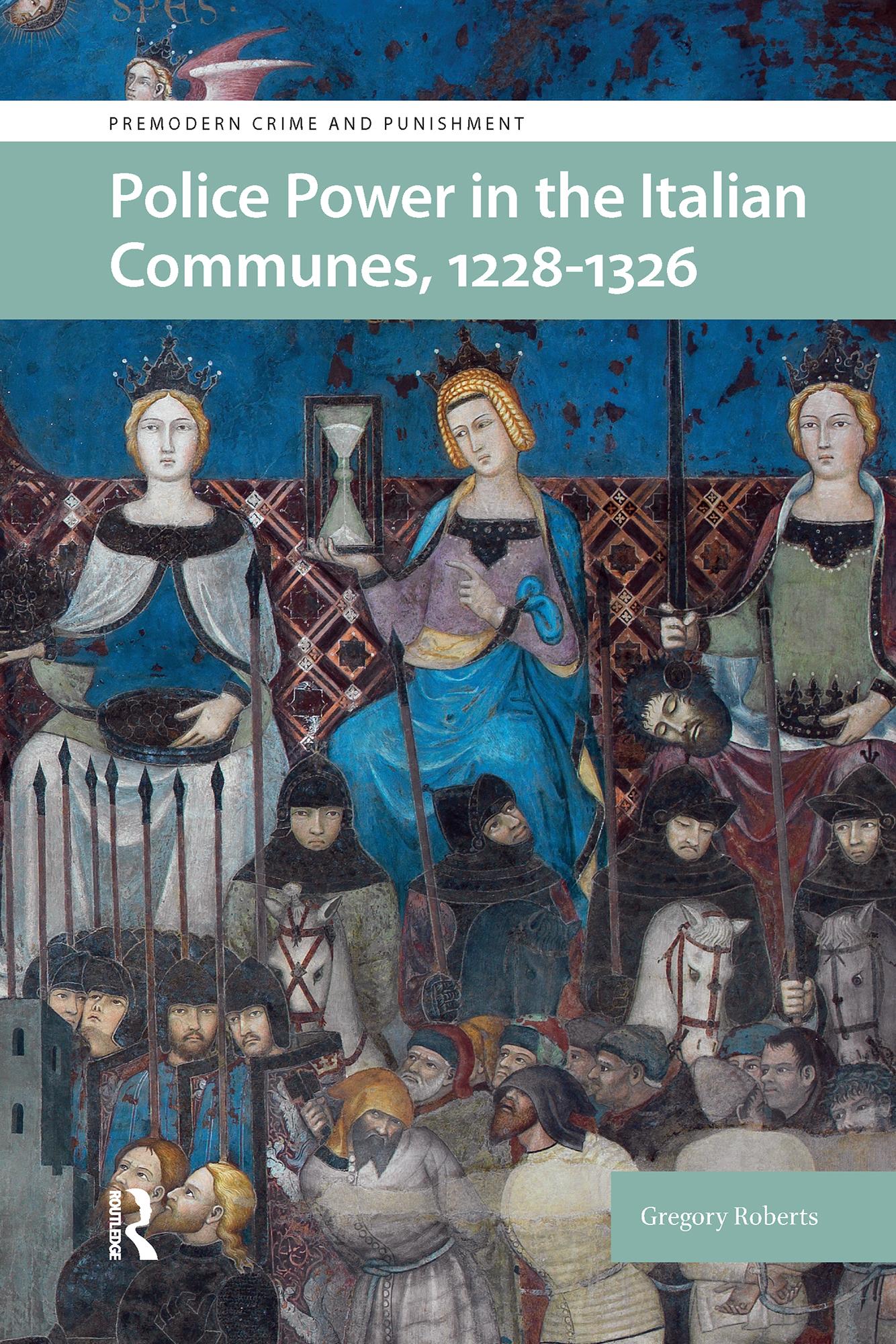
Medieval states are widely assumed to have lacked police forces. Yet in the Italian city-republics, soldiers patrolled the streets daily in search of lawbreakers. 'Police Power in the Italian Communes, 1228-1326' is the first book to examine the emergence of urban policing in medieval Italy and its impact on city life. Focusing on Bologna in the thirteenth and early fourteenth centuries, Gregory Roberts shows how police forces gave teeth to the communes' many statutes through a range of patrol activities. Whether seeking outlaws in the countryside or nighttime serenaders in the streets, urban police forces pursued lawbreakers energetically and effectively. They charged hundreds of individuals each year with arms-bearing, gambling, and curfew violations, convicting many of them in the process. Roberts draws on a trove of unpublished evidence from judicial archives, rich with witness testimony, to paint a vivid picture of policing in daily life and the capacity of urban governments to coerce. Breaking new ground in the study of violence, justice, and state formation in the Middle Ages, Police Power in the Italian Communes sheds fresh light on the question of how ostensibly modern institutions emerge from premodern social orders.
Betal nemt med kort, Klarna, Apple Pay eller Google Pay. Ikke tilfreds? Du har altid 14 dages fortrydelsesret. Læs mere i vores vilkår. Har du spørgsmål, så send os en mail på hello@memmo.org.
Memmo gør det nemmere at studere – uanset hvor du er i verden. Hos os samler du dine kursusbøger og smarte studieværktøjer ét sted: resuméer, quizzer, podcasts og flashcards. Og så er der Ted, din studieven, der svarer på alt, du undrer dig over. Over 50 000 studerende studerer allerede her – bygget til at hjælpe dig med at lære hurtigere og stresse mindre.
Du kan måske også lide
Køb bogen0