
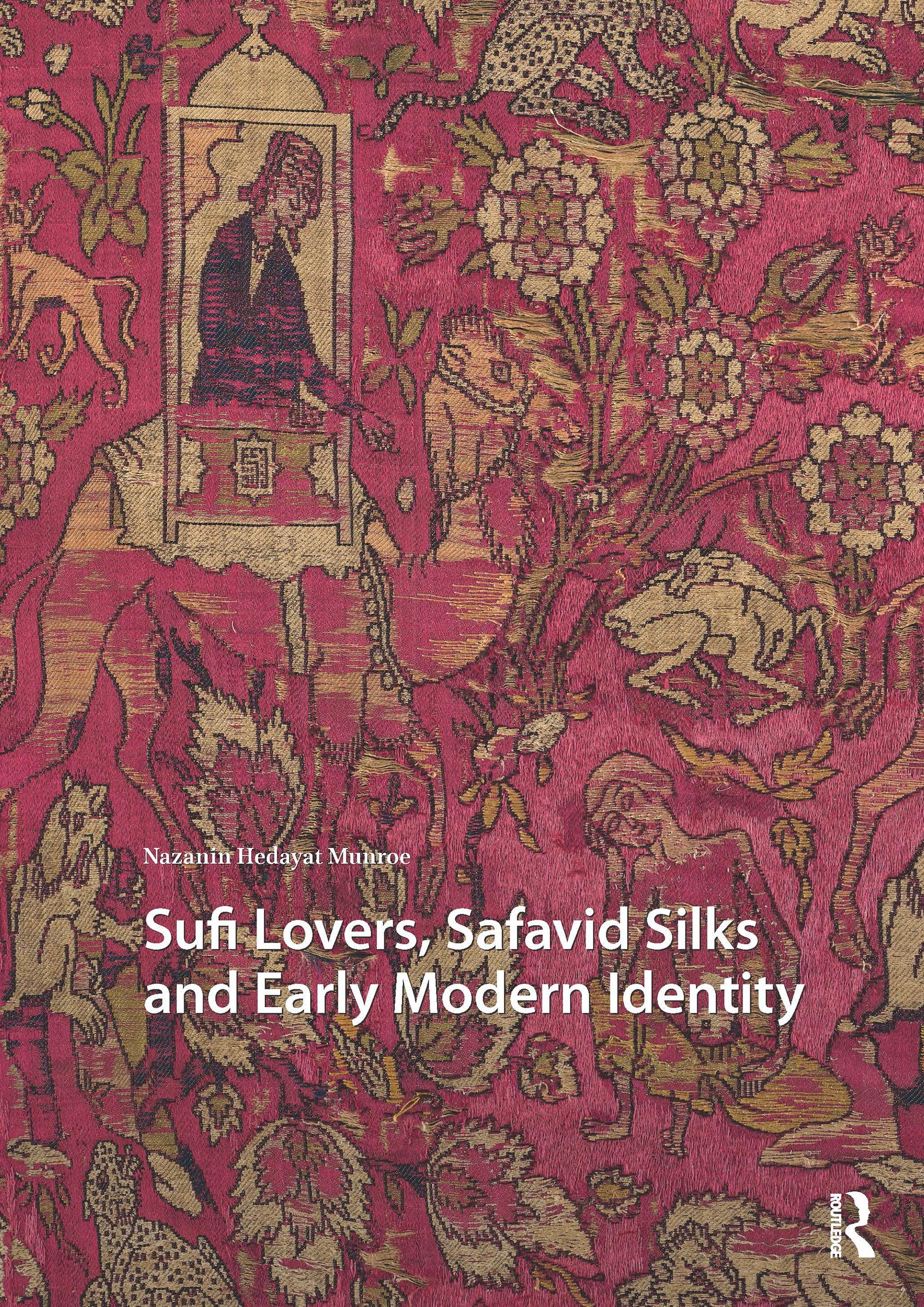
This book examines a group of sixteenth- and seventeenth-century figural silks depicting legendary lovers from the Khamsa (Quintet) of epic Persian poetry. Codified by Nizami Ganjavi in the twelfth century, the Khamsa gained popularity in the Persian-speaking realm through illustrated manuscripts produced for the elite, creating a template for illustrating climactic scenes in the love stories of “Layla and Majnun” and “Khusrau and Shirin” that appear on early modern silks. Attributed to Safavid Iran, the publication proposes that dress fashioned from these silks represented Sufi ideals based on the characters. Migration of weavers between Safavid and Mughal courts resulted in producing goods for a sophisticated and educated elite, demonstrating shared cultural values and potential reattribution. Through an examination of primary source materials, literary analysis of the original text, and close iconographical study of figural designs, the study presents original cross-disciplinary arguments about patronage, provenance, and the socio-cultural significance of wearing these silks.
Betal nemt med kort, Klarna, Apple Pay eller Google Pay. Ikke tilfreds? Du har altid 14 dages fortrydelsesret. Læs mere i vores vilkår. Har du spørgsmål, så send os en mail på hello@memmo.org.
Memmo gør det nemmere at studere – uanset hvor du er i verden. Hos os samler du dine kursusbøger og smarte studieværktøjer ét sted: resuméer, quizzer, podcasts og flashcards. Og så er der Ted, din studieven, der svarer på alt, du undrer dig over. Over 50 000 studerende studerer allerede her – bygget til at hjælpe dig med at lære hurtigere og stresse mindre.