
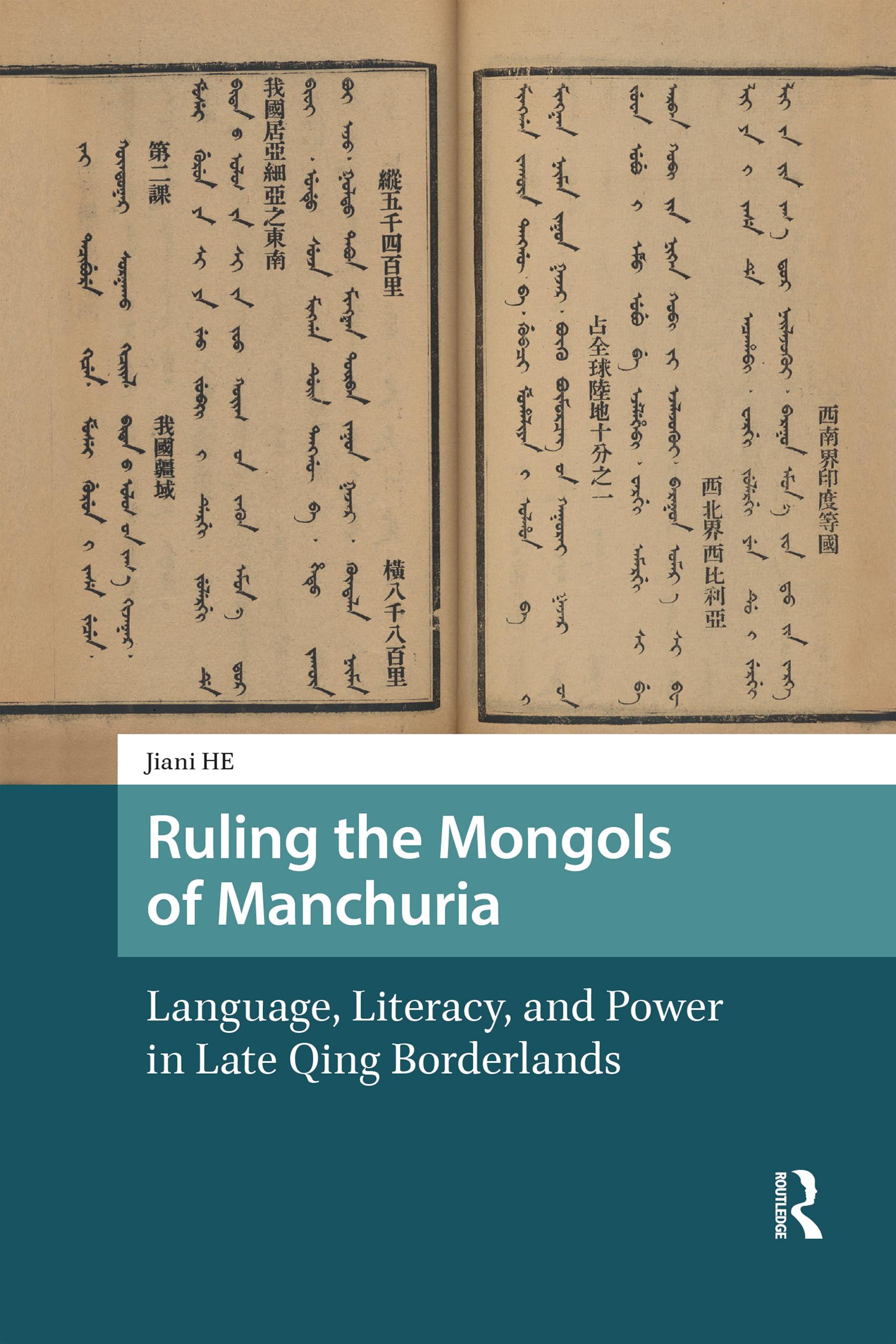
At the turn of the twentieth century, the Jirim League witnessed a linguistic struggle between Manchu, Mongol, Chinese, Japanese, and Russian powers. The Qing Empire envisioned a trilingual educational system, with the aim of improving the Jirim Mongols’ ability to read Chinese, Manchu, and Mongolian. Through this policy, the Qing sought to transform loyal imperial subjects into modern patriotic nationals and incorporate them into an integrated and united China under a Manchu constitutional monarchy. The late Qing’s language policy and strategy for ruling the Mongols of Manchuria was an attempt to address the enduring multilingual legacies in Qing administration and people’s everyday life, growing local ethnic tensions, cross-boundary connections, imperial rivalries, and the rise of new ideas concerning nation, modern state, and international relations in East Asia. This book challenges the notion of Chinese language reform as a story of linear progression towards national monolingualism, highlights the power of multilingualism in Chinese nationalist discourse from a peripheral, non-Han Chinese perspective, and questions the extent to which national languages dominate the writing of history.
Betal nemt med kort, Klarna, Apple Pay eller Google Pay. Ikke tilfreds? Du har altid 14 dages fortrydelsesret. Læs mere i vores vilkår. Har du spørgsmål, så send os en mail på hello@memmo.org.
Memmo gør det nemmere at studere – uanset hvor du er i verden. Hos os samler du dine kursusbøger og smarte studieværktøjer ét sted: resuméer, quizzer, podcasts og flashcards. Og så er der Ted, din studieven, der svarer på alt, du undrer dig over. Over 50 000 studerende studerer allerede her – bygget til at hjælpe dig med at lære hurtigere og stresse mindre.
Du kan måske også lide
Køb bogen0