
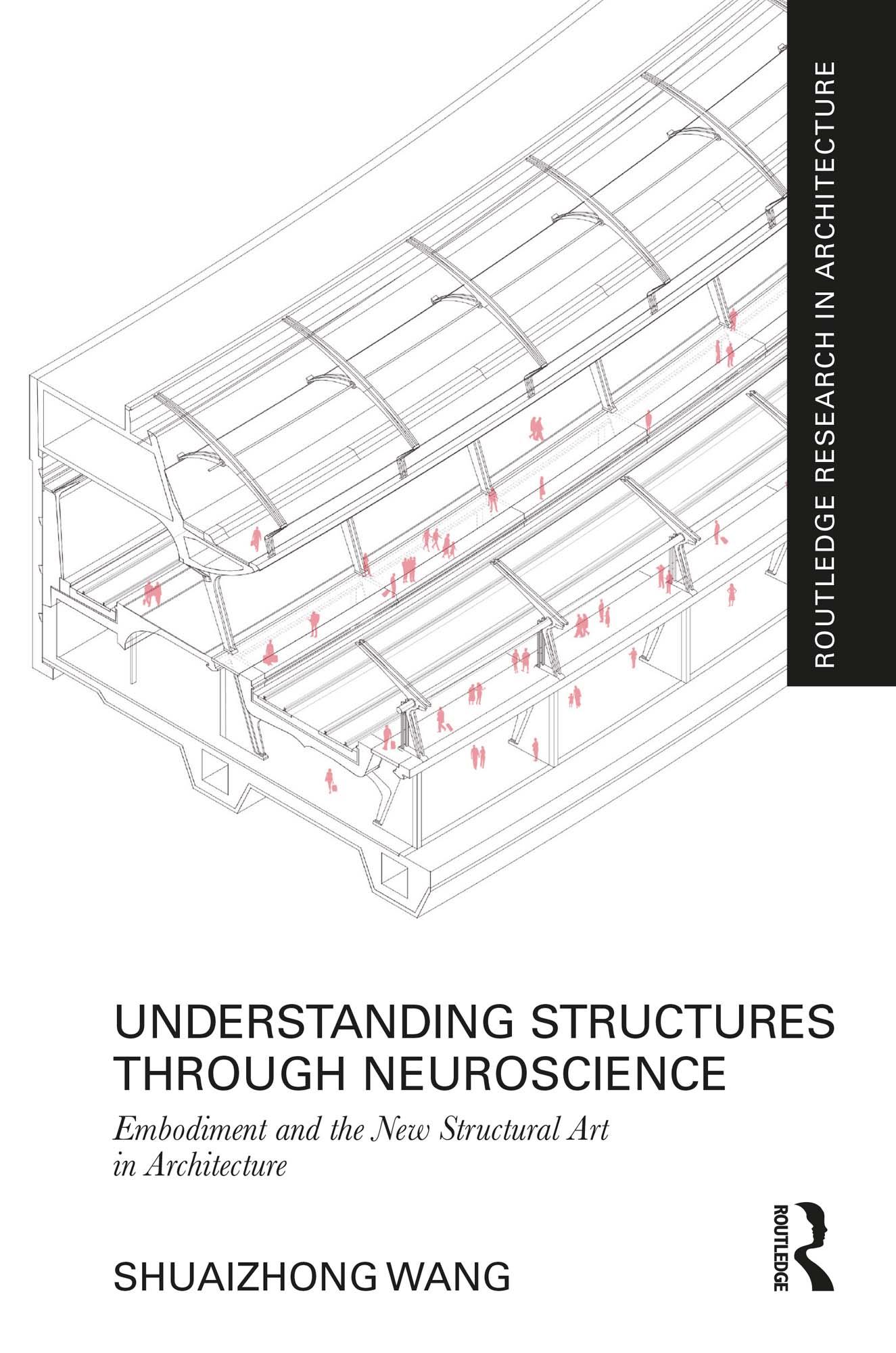
Drawing on the recent findings of neuroscience, this book invites readers to rethink the issue of structural expression through the lens of embodiment.
This book begins by exploring an ambiguous and often-overlooked perspective on structural expression in architectural design. It reveals how structural expressiveness is profoundly shaped by evolving conceptions of the body and analogies between the body and structure. Going beyond the mechanical analogy, it argues that perceptions of structure are embodied, and, conversely, structures should be designed to evoke embodied perceptions. Incorporating the neuroscientific theories of embodied simulation, affordance, and enactivism, this book builds a theoretical framework that informs structural design through sense of force, sense of interaction, and sense of dynamics. Each sense is illustrated through a series of global case studies, which are then located in a comprehensive mapping of relevant figures related to structural expression. Overall, this framework redefines the relationship between physical and mental aspects of structural design, offering a novel perspective on the artistry of structural expression.
This book will be of interest to scholars, practitioners, students, and researchers in architecture, structural engineering, and cognitive neuroscience, particularly those interested in perception and livability.
Betal nemt med kort, Klarna, Apple Pay eller Google Pay. Ikke tilfreds? Du har altid 14 dages fortrydelsesret. Læs mere i vores vilkår. Har du spørgsmål, så send os en mail på hello@memmo.org.
Memmo gør det nemmere at studere – uanset hvor du er i verden. Hos os samler du dine kursusbøger og smarte studieværktøjer ét sted: resuméer, quizzer, podcasts og flashcards. Og så er der Ted, din studieven, der svarer på alt, du undrer dig over. Over 50 000 studerende studerer allerede her – bygget til at hjælpe dig med at lære hurtigere og stresse mindre.