
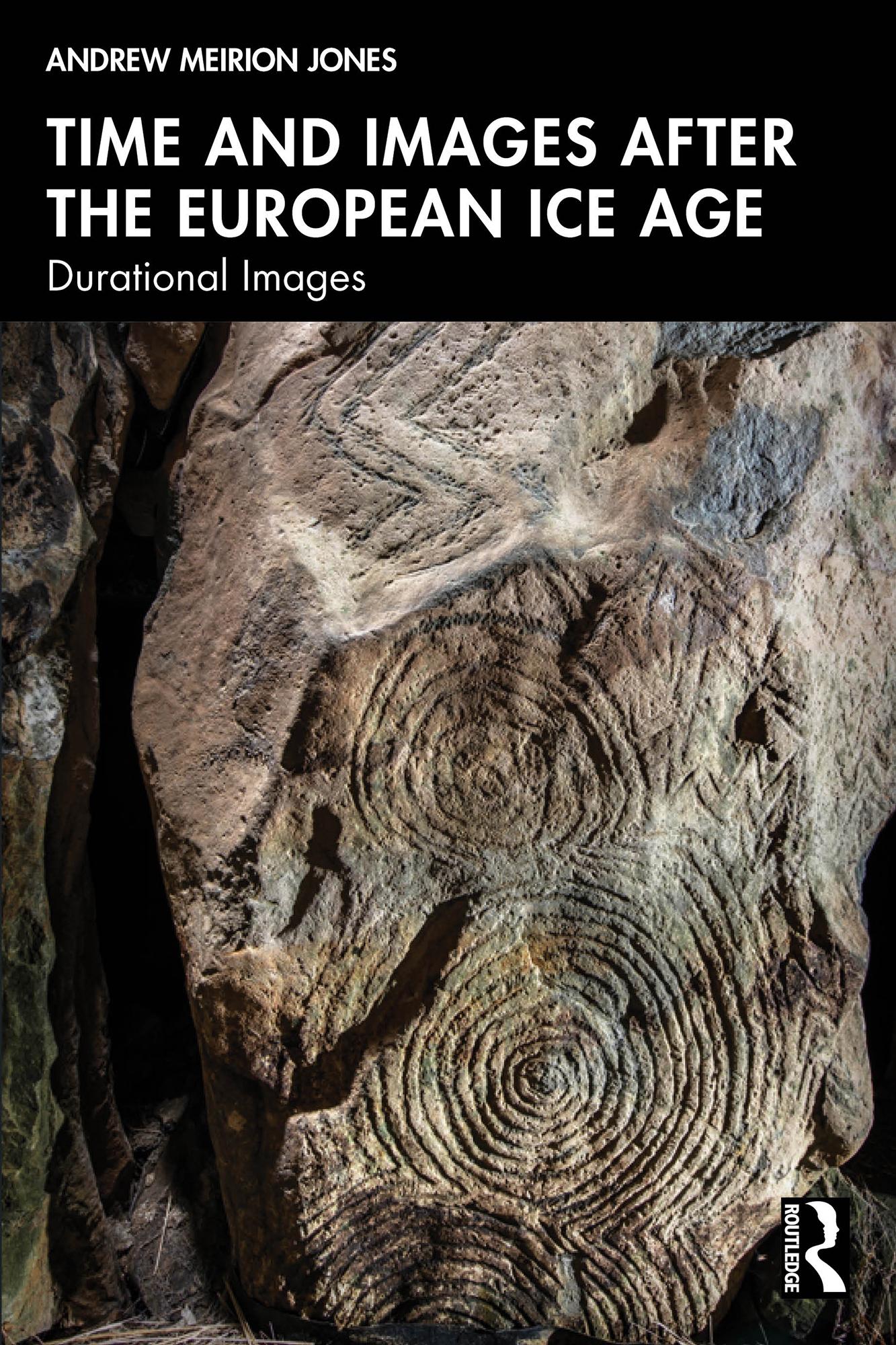
Time and Images after the European Ice Age explores images from the Mesolithic, Neolithic and Bronze Age of Atlantic and Northern Europe to reconsider their ontological attributes as tools for navigating time.
The book argues that durational images from the Mesolithic, Neolithic and Bronze Age mark an important shift from the prevailing Palaeolithic tradition of representational image making. Drawing on the philosophy of Henri Bergson, Gilles Deleuze and Karen Barad, amongst others, the book argues that images from this period must be regarded in a new way as modes of engagement instead of solely as modes of communication. Images are regarded then as multiplicities that exist both temporally and spatially. Considering the dynamic and durational character of images from this period enables us to understand that images may not only be representational, but also used as devices for navigating and producing time in differing ways. While archaeological evidence is often used as a means to situate an origin point for contemporary ways of seeing, this book instead diffracts contemporary ways of seeing derived from digital imaging techniques with images from the Mesolithic to Bronze Age. This opens up a dynamic relational dialogue between the disciplines of archaeology, anthropology, art history, art practice and media.
The central thesis of the book is that the dialogue between images from the Mesolithic to Bronze Age and contemporary image making practices provides the chance to explore the multiple ways in which images produce differing temporalities and engagements with the world. It allows us not only to rethink the character of images from the European Mesolithic, Neolithic and Bronze Age but to reconsider our own contemporary engagements with images. The book is well-illustrated with images to support the theoretical arguments as well as case study chapters focused on portable artefacts from the British and Irish Neolithic, the image making traditions of northern and southern Scandinavia, the long history of image making in the Côa valley, Portugal and the reworking of images at the megalithic passage tomb of Knowth, Ireland.
Time and Images after the European Ice Age is for students and researchers in archaeology, art history, art practice and anthropology. It offers both a critical commentary on the study of images from the Mesolithic to Bronze Age for archaeologists as well as a trans-disciplinary discussion of the character of images.
Betal nemt med kort, Klarna, Apple Pay eller Google Pay. Ikke tilfreds? Du har altid 14 dages fortrydelsesret. Læs mere i vores vilkår. Har du spørgsmål, så send os en mail på hello@memmo.org.
Memmo gør det nemmere at studere – uanset hvor du er i verden. Hos os samler du dine kursusbøger og smarte studieværktøjer ét sted: resuméer, quizzer, podcasts og flashcards. Og så er der Ted, din studieven, der svarer på alt, du undrer dig over. Over 50 000 studerende studerer allerede her – bygget til at hjælpe dig med at lære hurtigere og stresse mindre.