
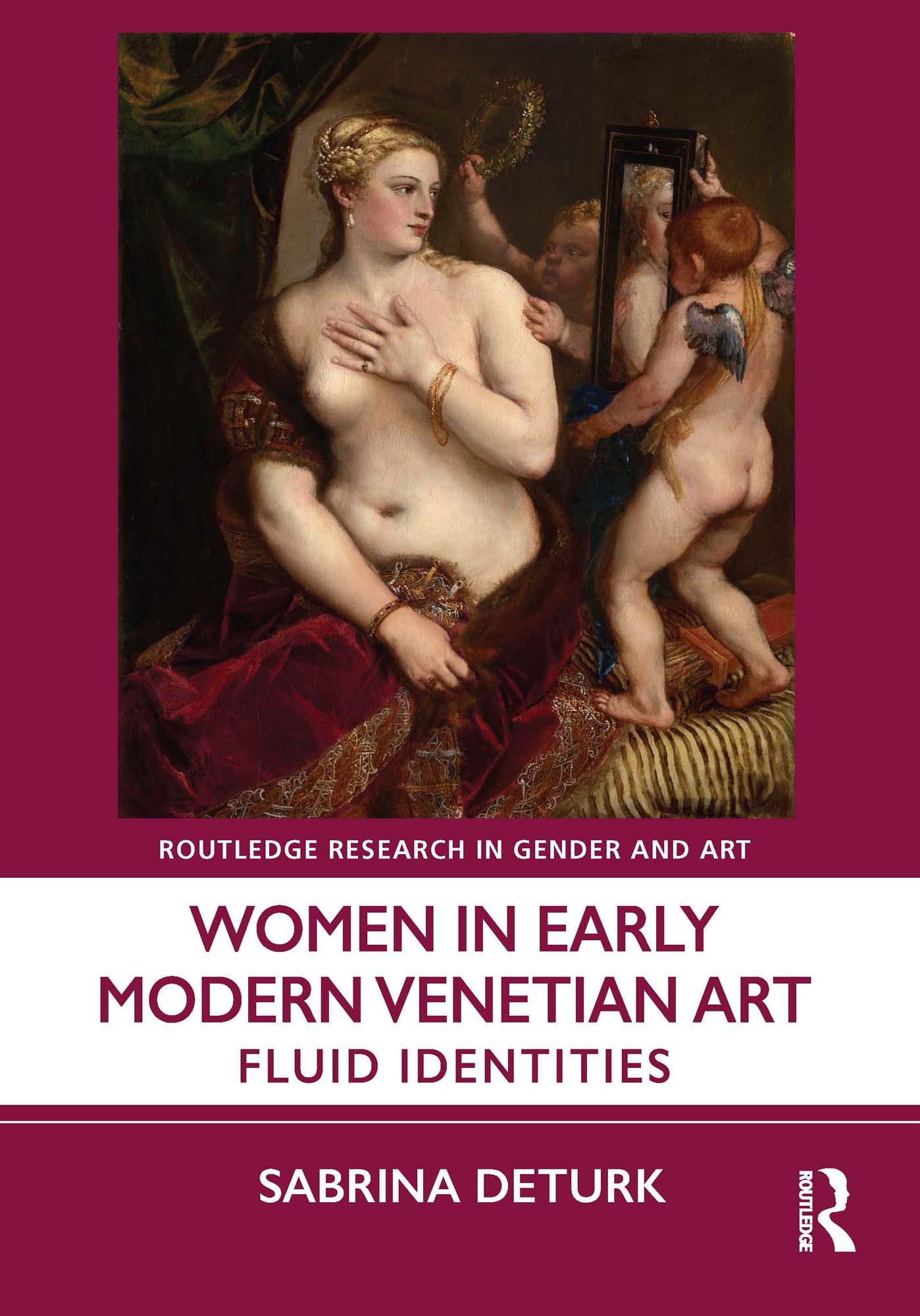
Through several case studies, this book suggests ways in which the art of early modern Venice, particularly its paintings, may be interpreted through a hybrid analysis of their visual form and social context to expand our understanding of women as active participants in the social, intellectual, economic, and political life of the early modern Republic.
In the same way that the urban character and identity of early modern Venice can be seen as liminal and changeable, the art of the city also evinces a mutability, a way in which images are never exactly what they seem to be. This, Sabrina DeTurk argues, is particularly true in reference to the representation of women in the art of fifteenth- and sixteenth-century Venetian art. Chapters allow the artworks, along with other objects of material culture, to enter into new conversations with each other, with their original audiences and with contemporary viewers in ways that allow a fuller understanding of the complex and sometimes contradictory nature of women’s lives in Renaissance Venice.
This book will be of interest to scholars working in art history, gender studies, and Renaissance studies.
Betal nemt med kort, Klarna, Apple Pay eller Google Pay. Ikke tilfreds? Du har altid 14 dages fortrydelsesret. Læs mere i vores vilkår. Har du spørgsmål, så send os en mail på hello@memmo.org.
Memmo gør det nemmere at studere – uanset hvor du er i verden. Hos os samler du dine kursusbøger og smarte studieværktøjer ét sted: resuméer, quizzer, podcasts og flashcards. Og så er der Ted, din studieven, der svarer på alt, du undrer dig over. Over 50 000 studerende studerer allerede her – bygget til at hjælpe dig med at lære hurtigere og stresse mindre.