
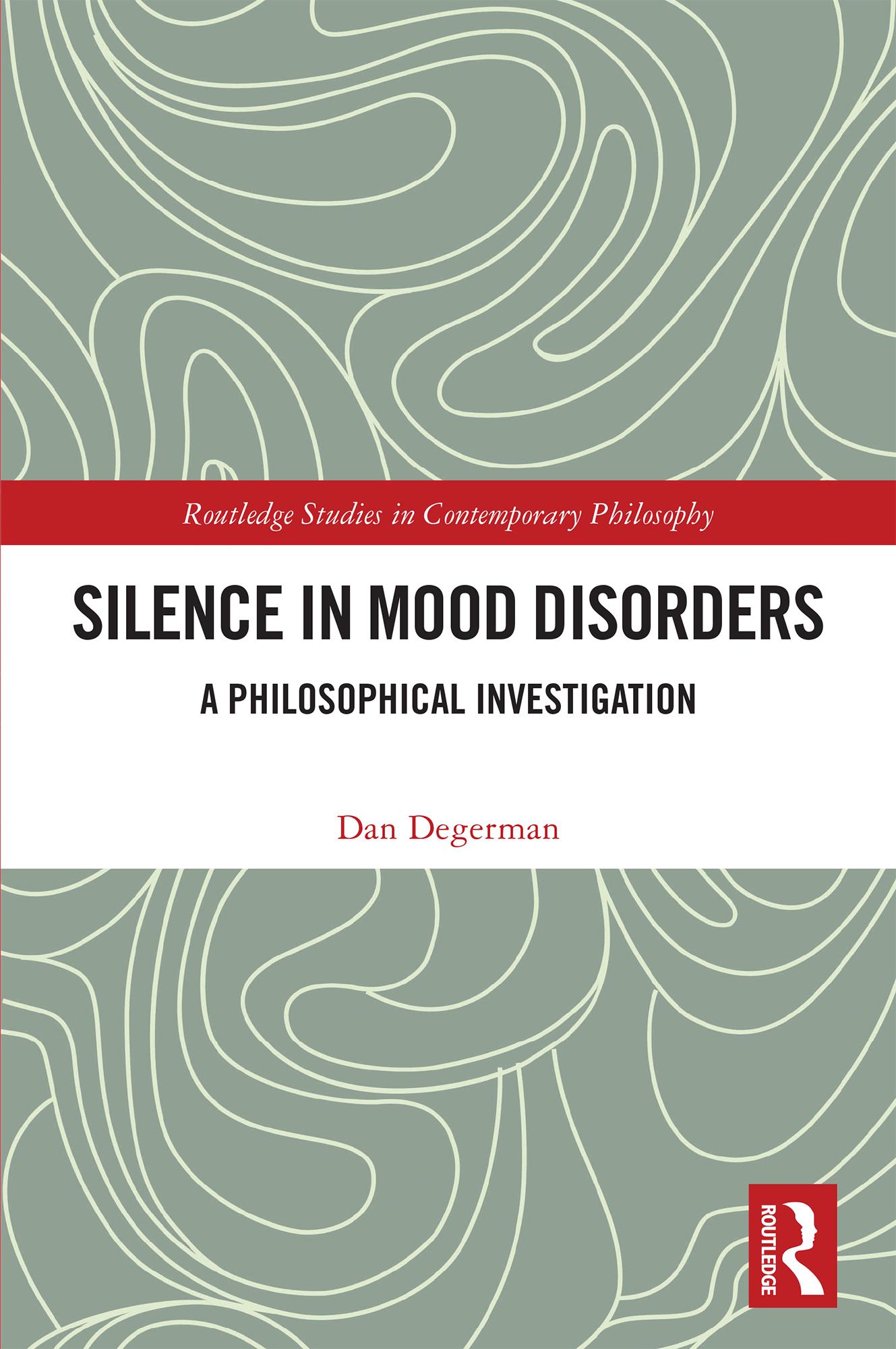
We live in a society that valorises speech and treats silence as a harm to be broken. This assumption runs especially deep in mental health discourse, where silence is both medicalised — as a symptom and as a cause — and targeted by campaigns urging people to open up. Silence in Mood Disorders challenges the dominant understanding of silence in mental illness, arguing that it is not only conceptually impoverished but potentially damaging to the very people it claims to help.
Drawing on first-person accounts of depression and bipolar disorder alongside phenomenology, social epistemology, and silence studies, this book shows that silence in mood disorders is a far more diverse and complex phenomenon than prevailing assumptions allow. To make sense of this diversity, the book develops a set of interconnected conceptual resources for thinking about silence. Central among these is an account of silence as a fragile, embodied, and epistemically significant human capacity, whose disruption may take different forms in depression and mania. These resources are then used to suggest how mental health research, clinical practice, policy, and activism might respond to silence with greater care and discernment.
Silence in Mood Disorders will appeal to scholars and advanced students in philosophy of psychiatry, phenomenology, and social epistemology, and will reward anyone working in mental health research, the medical humanities, or disability studies.
Betal nemt med kort, Klarna, Apple Pay eller Google Pay. Ikke tilfreds? Du har altid 14 dages fortrydelsesret. Læs mere i vores vilkår. Har du spørgsmål, så send os en mail på hello@memmo.org.
Memmo gør det nemmere at studere – uanset hvor du er i verden. Hos os samler du dine kursusbøger og smarte studieværktøjer ét sted: resuméer, quizzer, podcasts og flashcards. Og så er der Ted, din studieven, der svarer på alt, du undrer dig over. Over 50 000 studerende studerer allerede her – bygget til at hjælpe dig med at lære hurtigere og stresse mindre.