
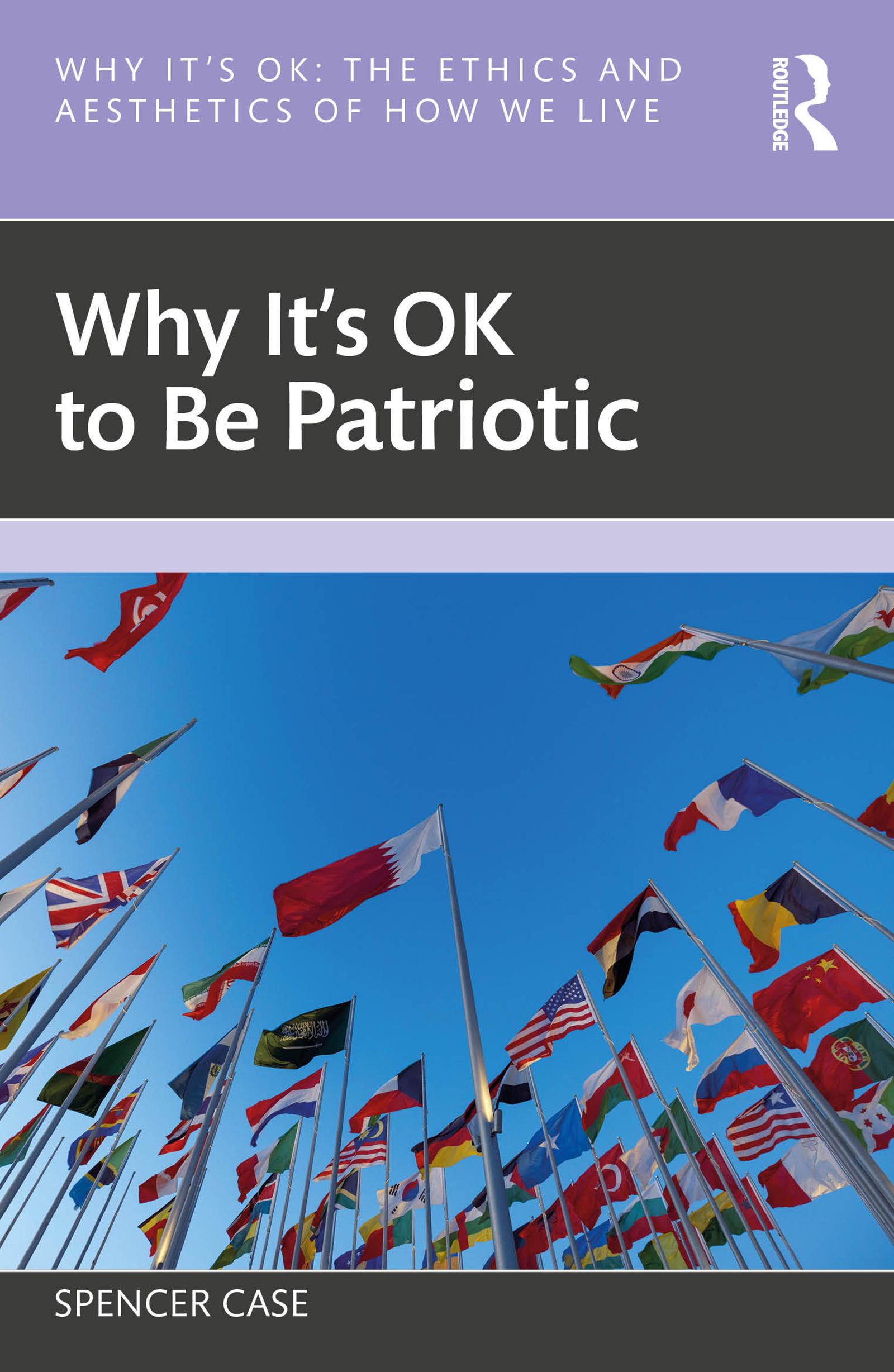
The post-9/11 era saw patriotism transform from somber resolve into jingoistic excess, leaving many to wonder whether love of country inevitably corrupts into tribalism and violence. Critics from Leo Tolstoy to George Kateb have argued that patriotism is inherently dangerous, a relic of a less enlightened age. Yet abandoning patriotism entirely may be worse than the disease.
Why It's OK to Be Patriotic makes a philosophically rigorous case that patriotism, properly conceived, is neither irrational nor harmful—but essential to democratic life. Case argues that patriotism is best understood as love of country rather than mere loyalty, a love directed toward compatriots as participants in a shared political community. Drawing on Aristotle, contemporary philosophy, and hard-won experience, he defends patriotism as a virtue—a golden mean between tribal excess and cosmopolitan detachment—while articulating the patriotic duties of heart and mind required to maintain the civic commons. He tackles the toughest objections head-on: Does patriotism cause war? Does it rest on irrational bias? Can it be reconciled with universal moral principles?
The book culminates in a powerful meditation on America's current crisis. With political violence escalating and talk of "national divorce" gaining traction, Case argues that the only way out is through—not escape from politics, but the difficult practice of loving one's country by learning to love the people in it.
Key features:
- Provides an account of patriotism in terms of love rather than loyalty, distinguishing patriotism from nationalism, jingoism, and tribalism.
- Confronts arguments from critiques of patriotism from Emma Goldman, Leo Tolstoy, and Albert Einstein, as well as from more recent critics such as Simon Keller and George Kateb, showing that patriotism need not be irrational, harmful, or morally blind.
- Offers concrete patriotic duties of heart-mind—including resistance to contempt, epistemic civic virtues, and practices for maintaining the civic commons—that can help repair America's fraying social fabric.
- Draws on Aristotle, contemporary philosophy of love, and virtue ethics while remaining accessible to general readers concerned about their country's future.
Betal nemt med kort, Klarna, Apple Pay eller Google Pay. Ikke tilfreds? Du har altid 14 dages fortrydelsesret. Læs mere i vores vilkår. Har du spørgsmål, så send os en mail på hello@memmo.org.
Memmo gør det nemmere at studere – uanset hvor du er i verden. Hos os samler du dine kursusbøger og smarte studieværktøjer ét sted: resuméer, quizzer, podcasts og flashcards. Og så er der Ted, din studieven, der svarer på alt, du undrer dig over. Over 50 000 studerende studerer allerede her – bygget til at hjælpe dig med at lære hurtigere og stresse mindre.