
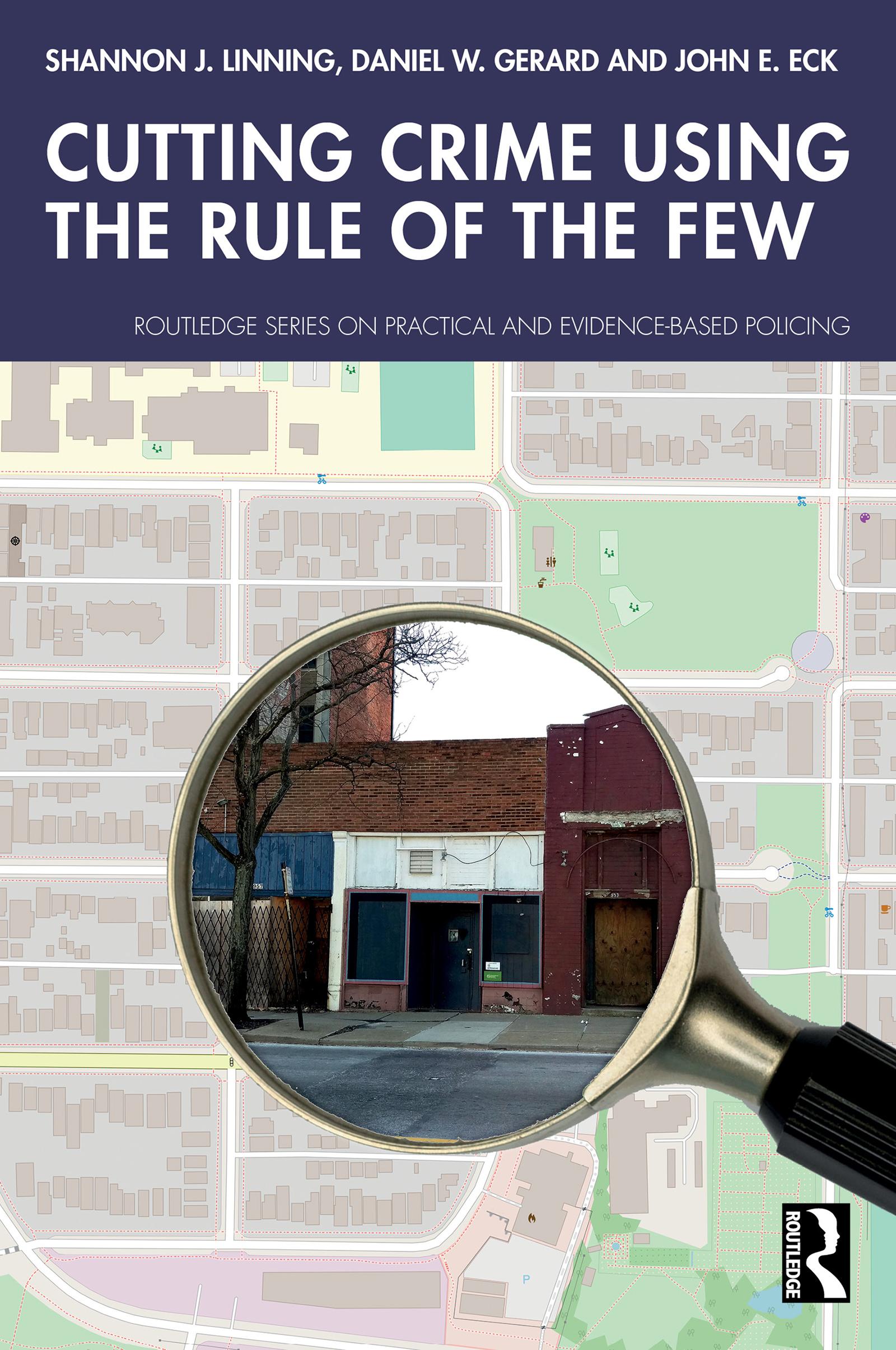
Based on decades of research, this book reveals how the rule of the few can redirect your focus to create effective crime control policies. Many crime reduction strategies fail because they apply common crime fallacies. They assume that: solutions to crime need to be complicated, crime is widespread, residents matter the most, more arrests reduce crime, and police can solve all crime problems. At the heart of each fallacy is a failure to consider an old idea: the rule of the few. The rule of the few means a tiny fraction of inputs cause most of the outcomes. Research shows that solving problems at smaller scales can cut crime substantially, crime is highly concentrated at a few places in any city, only a few residents can usually effect change, only a few people commit most of the crime, and a few everyday people can dismantle crime opportunities.
Cutting Crime Using the Rule of the Few shows that crime is not merely a police problem. It explains how those who own or manage property and design the products we use have far more power to suppress crime opportunities than they realize. Cutting Crime reveals how to use the rule of the few to identify and solve crime problems. It provides a set of tools and spells out specific strategies that the police, property owners, business owners, and government agencies can use to reduce crime. Just as it only takes a few to create a lot of crime, it only takes a few to prevent those crimes.
Betal nemt med kort, Klarna, Apple Pay eller Google Pay. Ikke tilfreds? Du har altid 14 dages fortrydelsesret. Læs mere i vores vilkår. Har du spørgsmål, så send os en mail på hello@memmo.org.
Memmo gør det nemmere at studere – uanset hvor du er i verden. Hos os samler du dine kursusbøger og smarte studieværktøjer ét sted: resuméer, quizzer, podcasts og flashcards. Og så er der Ted, din studieven, der svarer på alt, du undrer dig over. Over 50 000 studerende studerer allerede her – bygget til at hjælpe dig med at lære hurtigere og stresse mindre.