
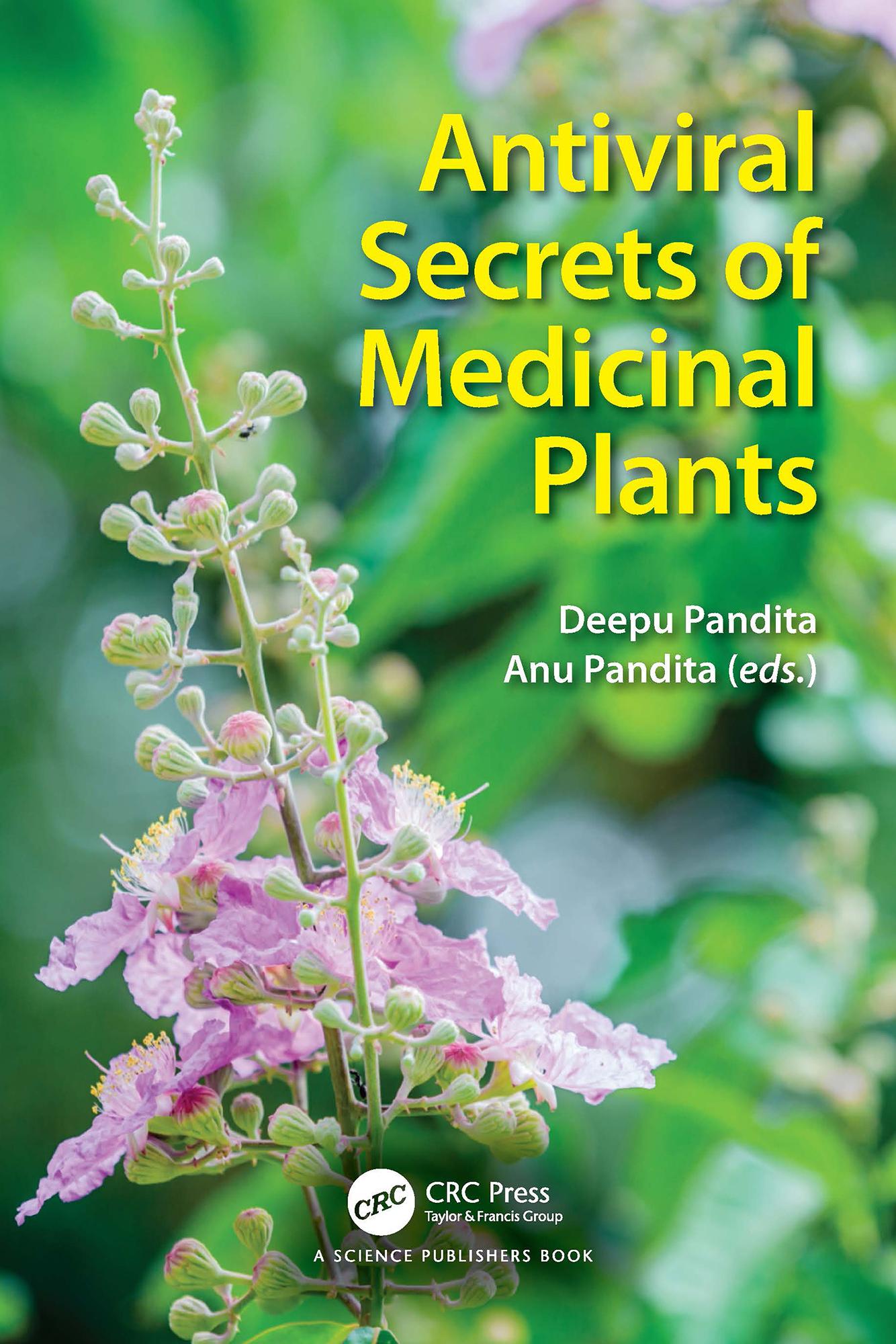
Plant-based therapies are in tune with nature and have relatively little or no side effects. World Health Organisation (WHO) is a strong advocate of herbal inputs in modern systems of medicine. This book contains detailed descriptions of 23 medicinal plants with antiviral properties. The molecules from these plants are known to be effective against viruses. For instance, alkaloids like perivine, pericalline, periformyline, leurocristine, leurosivine, vincaleukoblastine, perividine, vindolinine, and carosine derived from Catharanthus roseus, are effective against viruses like herpes simplex virus type 1, vaccinia virus, poliovirus, and dengue virus type 2 (DENV-2). Large amounts of pentacyclic triterpenoid saponins, also referred as centelloids, are present in C. asiatica. Asiaticoside, centelloside, madecassoside, brahmoside, brahminoside, thankuniside, sceffoleoside, centellose, asiatic-, brahmic-, centellic-, and madecassic acids are some of the terpenoids of this group. Studies show the effectiveness of asiatic acid and their derivatives against the inhibition of human enterovirus 71 replication and anti-HSV-1 and 2 activity of Centella asiatica is because of the asiaticoside.
The book is intended for botanists, biotechnologists, healthcare professionals and general readers interested in enhancing their knowledge on natural plant-based sources of antiviral compounds.
Betal nemt med kort, Klarna, Apple Pay eller Google Pay. Ikke tilfreds? Du har altid 14 dages fortrydelsesret. Læs mere i vores vilkår. Har du spørgsmål, så send os en mail på hello@memmo.org.
Memmo gør det nemmere at studere – uanset hvor du er i verden. Hos os samler du dine kursusbøger og smarte studieværktøjer ét sted: resuméer, quizzer, podcasts og flashcards. Og så er der Ted, din studieven, der svarer på alt, du undrer dig over. Over 50 000 studerende studerer allerede her – bygget til at hjælpe dig med at lære hurtigere og stresse mindre.