
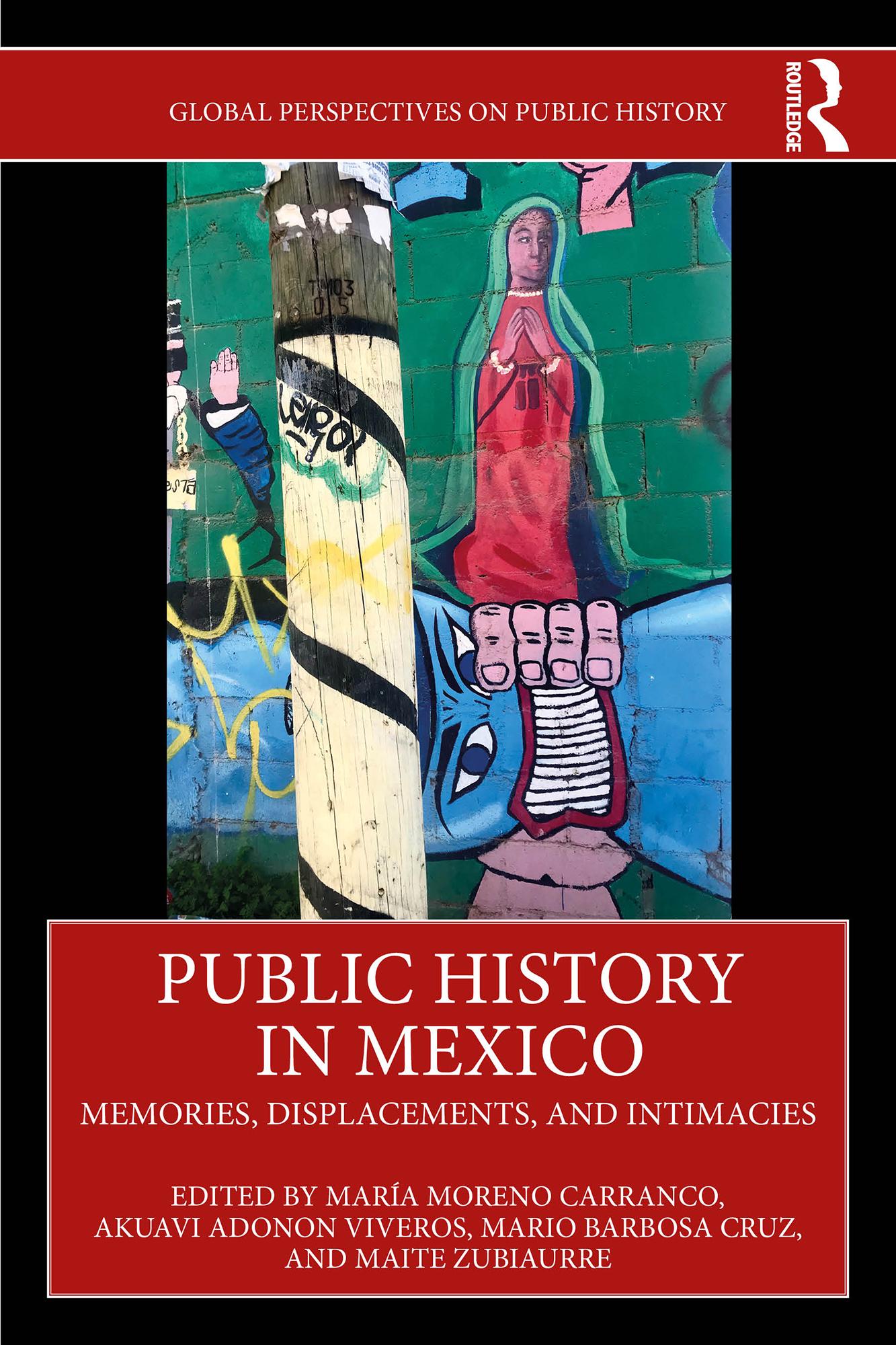
This collection of chapters explores how history is created, shared, and contested in urban and marginalized spaces by examining memory, displacement, resilience, and community-driven historical interventions across Mexico.
Bridging academic research with lived experiences, the book shows how public history is a powerful tool that both reflects on the past and projects more egalitarian futures of justice, representation, and cultural affirmation. Centred mainly around Mexico City, but also touching on the impact of migration at the northern border, it contributes to the debates around new forms of history construction and covers topics including territorial dispossession, deportation processes, the violence entailed in erased histories, and the reconfiguration of daily life during the COVID pandemic. Through diverse approaches and methodologies such as documentary film, digital storytelling, public art, museum interpretations, grassroots activism, and other collective or community work, it provides readers with valuable insights into how historical narratives shape identities, social movements, and public policies, as well as a deeper understanding of how communities engage with their past to reclaim space, resist erasure, and foster belonging.
This book is a useful resource for all upper-level undergraduates, postgraduates, and scholars interested in urban history, public history, cultural studies, anthropology, and Latin American studies.
Betal nemt med kort, Klarna, Apple Pay eller Google Pay. Ikke tilfreds? Du har altid 14 dages fortrydelsesret. Læs mere i vores vilkår. Har du spørgsmål, så send os en mail på hello@memmo.org.
Memmo gør det nemmere at studere – uanset hvor du er i verden. Hos os samler du dine kursusbøger og smarte studieværktøjer ét sted: resuméer, quizzer, podcasts og flashcards. Og så er der Ted, din studieven, der svarer på alt, du undrer dig over. Over 50 000 studerende studerer allerede her – bygget til at hjælpe dig med at lære hurtigere og stresse mindre.