
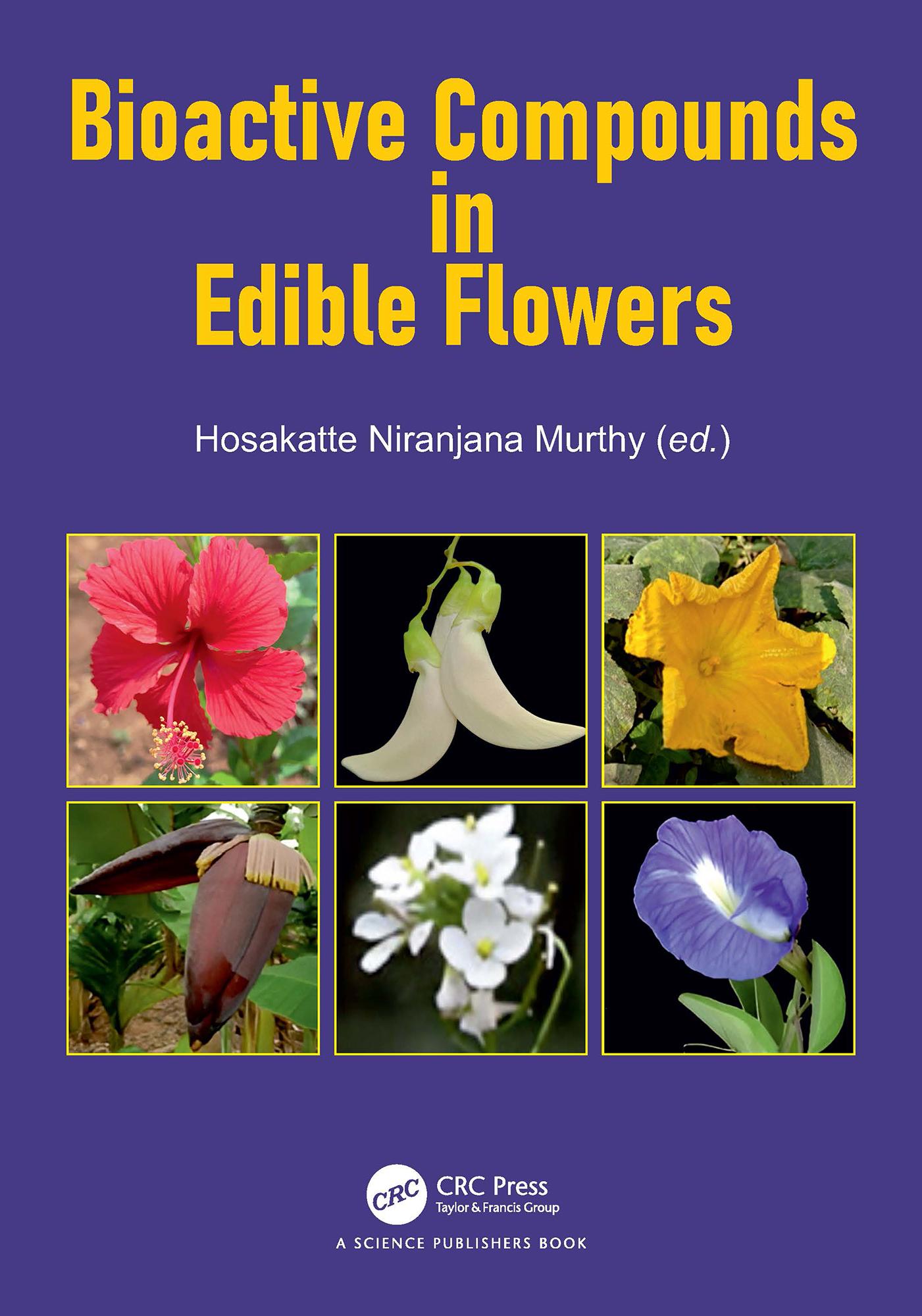
Many societies have found various utilities of edible flowers. They give a more ornamental look, enhances the taste, and also enhances its nutritional value. Numerous studies conducted recently have shown that edible flowers are also rich in nutrients such as carbohydrates, proteins, fats, fibre, vitamins, minerals. These flowers also contain a variety of phytochemicals, including phenolics, flavonoids, carotenoids, terpenoids, alkaloids, and other compounds that have been shown to increase biological activities, such as antioxidant, antimicrobial and antidiabetic, anticancer, cardioprotective, hepatoprotective, and neuroprotective qualities. Edible flowers have now found their way into a number of industries, including as cosmeceuticals, functional foods, and nutraceuticals.
The book provides information on the nutritional value, phytochemical makeup, and bioactivity of both wild and cultivated flowers. It also describes edible flowers in depth to make them better-known to consumers and the food business. Each chapter discusses the possible toxicological effects of floral components.
Betal nemt med kort, Klarna, Apple Pay eller Google Pay. Ikke tilfreds? Du har altid 14 dages fortrydelsesret. Læs mere i vores vilkår. Har du spørgsmål, så send os en mail på hello@memmo.org.
Memmo gør det nemmere at studere – uanset hvor du er i verden. Hos os samler du dine kursusbøger og smarte studieværktøjer ét sted: resuméer, quizzer, podcasts og flashcards. Og så er der Ted, din studieven, der svarer på alt, du undrer dig over. Over 50 000 studerende studerer allerede her – bygget til at hjælpe dig med at lære hurtigere og stresse mindre.