
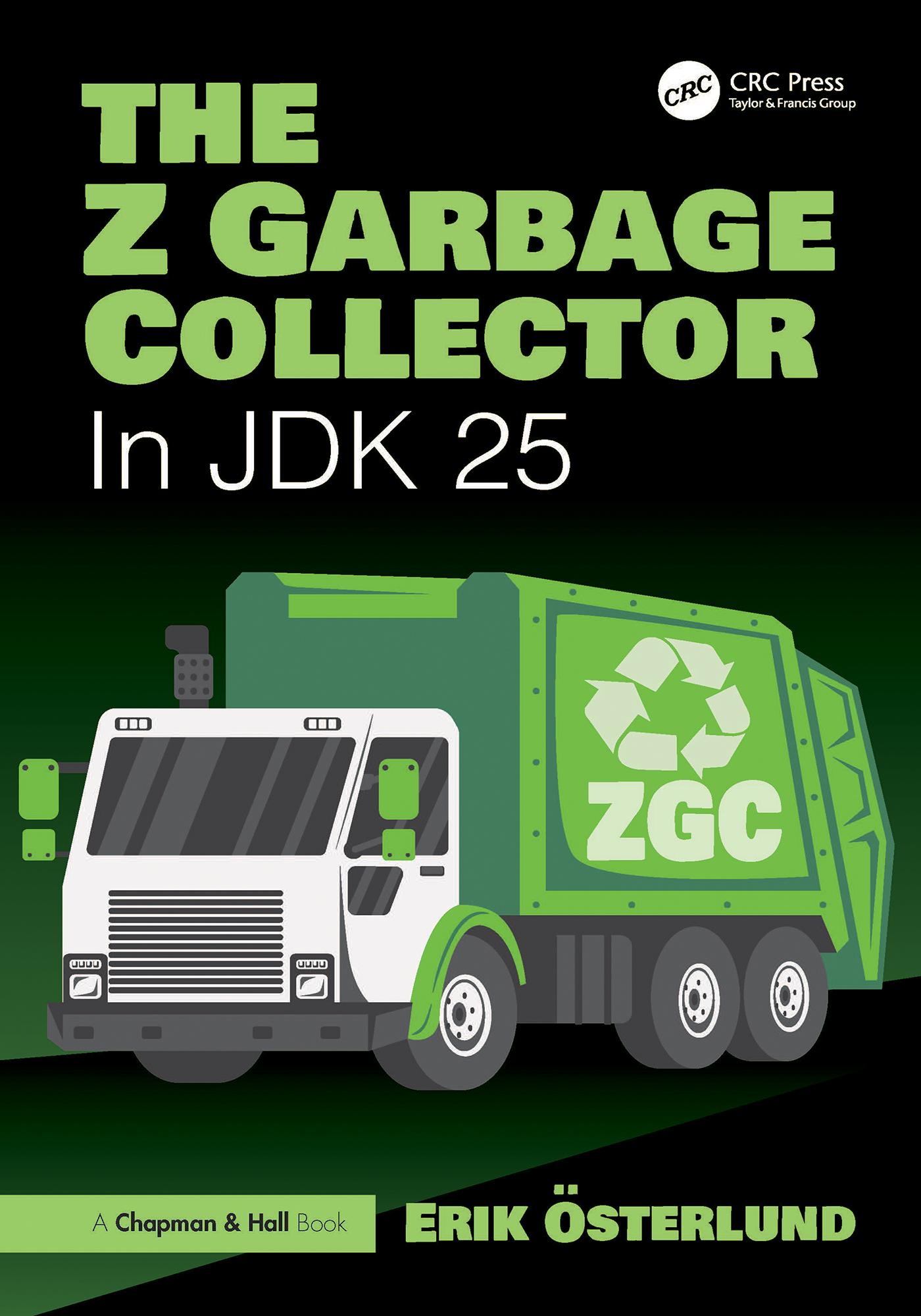
This book explains how the Z Garbage Collector was designed, why it was designed this way, the common pitfalls to avoid when using ZGC in JDK 25 and how to get useful information from the garbage collector.
Java is one of the most widely used programming languages in the world. It is a memory-safe language that completely relies on a good garbage collection (GC) algorithm to work well. The Z Garbage Collector of OpenJDK is arguably the most sophisticated production GC algorithm for any managed language runtime. The book goes into detail and covers core algorithm concepts of ZGC: coloured pointers, GC barriers, concurrent marking, concurrent relocation, concurrent stack scanning, concurrent root scanning, concurrent class unloading, concurrent generational collection, as well as showing how all of this works. It explains how the JVM evolved certain features to be able to accommodate ZGC, and covers the importance of each of the various GC heuristics and how they function.
With a unique angle right between academia and industry, this book is useful for computer science students and Java developers alike.
Betal nemt med kort, Klarna, Apple Pay eller Google Pay. Ikke tilfreds? Du har altid 14 dages fortrydelsesret. Læs mere i vores vilkår. Har du spørgsmål, så send os en mail på hello@memmo.org.
Memmo gør det nemmere at studere – uanset hvor du er i verden. Hos os samler du dine kursusbøger og smarte studieværktøjer ét sted: resuméer, quizzer, podcasts og flashcards. Og så er der Ted, din studieven, der svarer på alt, du undrer dig over. Over 50 000 studerende studerer allerede her – bygget til at hjælpe dig med at lære hurtigere og stresse mindre.