
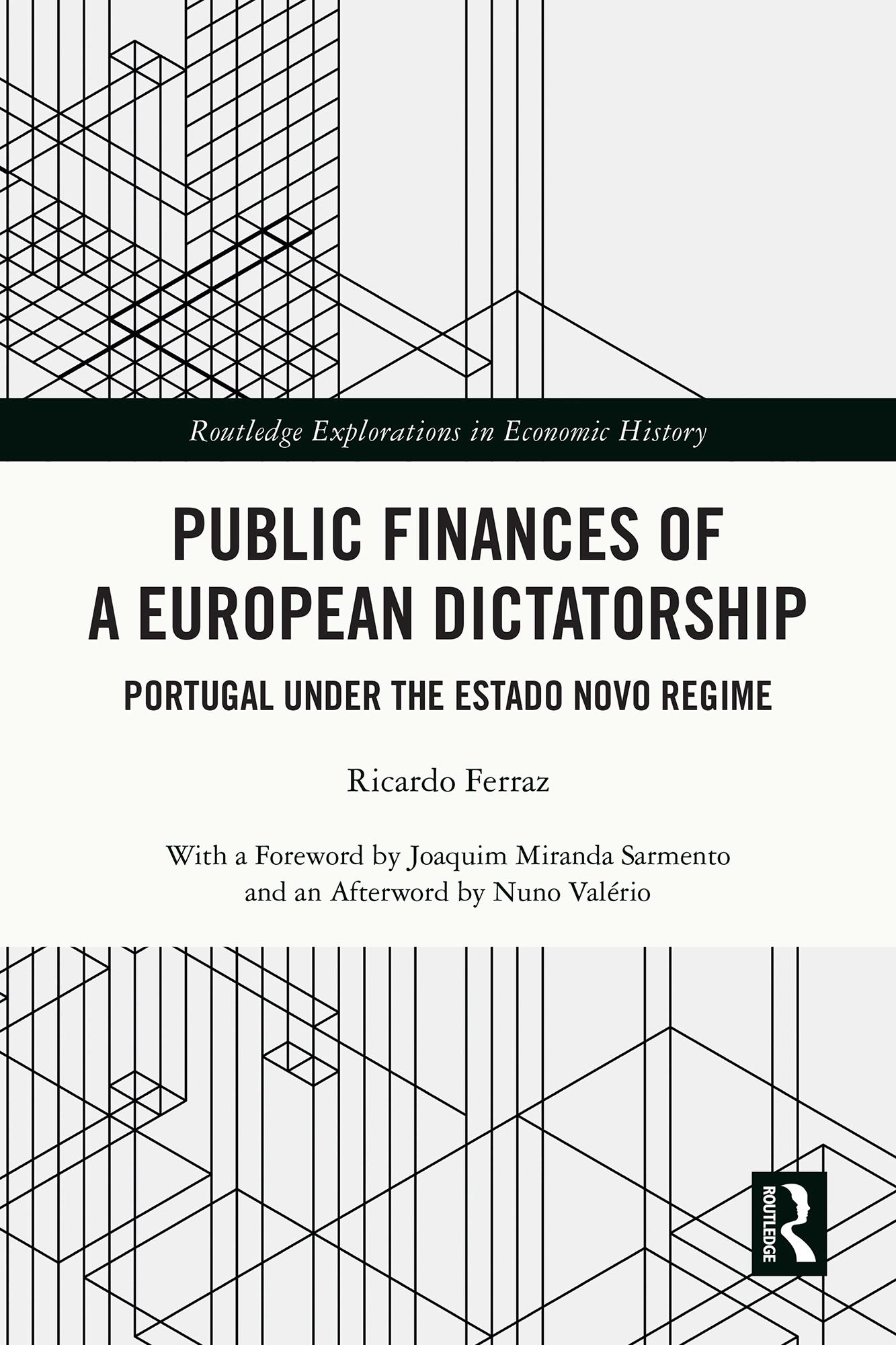
Contributing to the renewed interest in economic history in the role played by peripheral or smaller countries, this book provides a detailed analysis of Portuguese public finances during the Estado Novo regime (1933–1974) – a period marked by dictatorship, industrialization, internationalization, and war. In this book, relevant international comparisons for key macroeconomic indicators are drawn to contextualize the Portuguese case within global settings. Additionally, employing econometric techniques, the sustainability of public finances is assessed across a range of countries, enabling valuable insights for the Portuguese case within a comparative framework. Within Portugal, as the book shows, this period, largely under the dictatorship of Salazar, was characterized by the very first attempt to plan economically in the long term, with the Economic Reconstitution Law (1935–1950). Following the Second World War, and Portugal’s so-called collaborative neutrality, the Portuguese economy experienced a process of industrialization and internationalization, but this culminated in the Colonial War (1961–1974) with blood and tears. The book explores the sources of revenue and expenditure for the Portuguese State during these periods of transformation and crisis and the impact on budget balance and public debt. The book will be of interest to all readers in economic and financial history.
Betal nemt med kort, Klarna, Apple Pay eller Google Pay. Ikke tilfreds? Du har altid 14 dages fortrydelsesret. Læs mere i vores vilkår. Har du spørgsmål, så send os en mail på hello@memmo.org.
Memmo gør det nemmere at studere – uanset hvor du er i verden. Hos os samler du dine kursusbøger og smarte studieværktøjer ét sted: resuméer, quizzer, podcasts og flashcards. Og så er der Ted, din studieven, der svarer på alt, du undrer dig over. Over 50 000 studerende studerer allerede her – bygget til at hjælpe dig med at lære hurtigere og stresse mindre.
Du kan måske også lide
Køb bogen0