
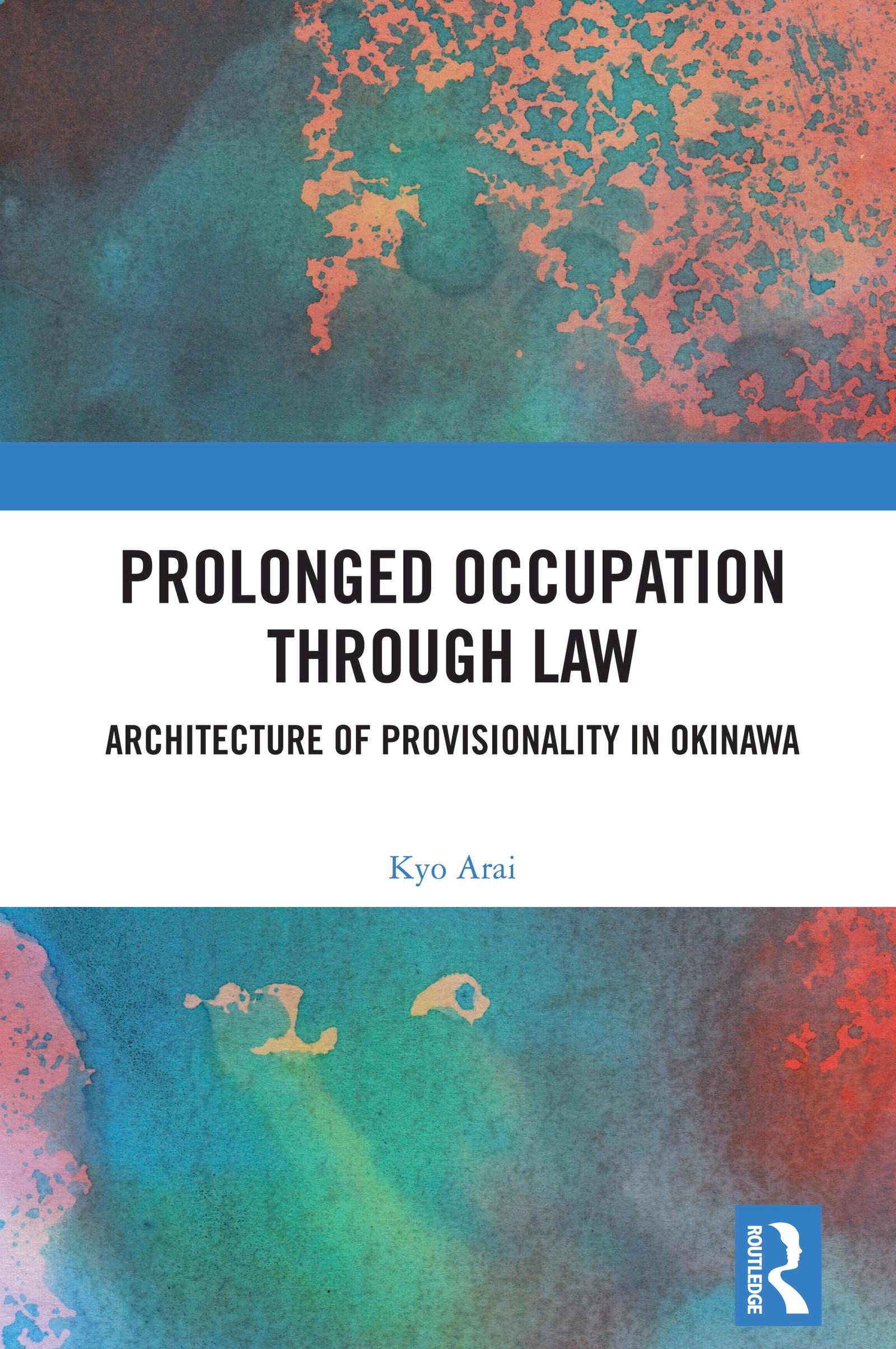
This book examines the body of law relating to occupation and analogous forms of territorial control, including the issues surrounding various types of military occupation and the domination of territory and people abroad. It achieves this through a comprehensive analysis of the legal basis of the U.S. prolonged occupation of Okinawa.
The book begins with a discussion of the legal frameworks under international and U.S. law relating to the occupation and other forms of administration of foreign territory. It then examines the drafting process of various "constitutional" orders issued by the U.S. military for Okinawa during and after World War II. Covering the entire period of the U.S. administration, the book captures the formation of highly contested legal arguments for external governance during the transitional years of 1949-1957, as well as the institutional reforms under the Kennedy administration in the 1960s. The analysis of legal developments contextualizes the Okinawa issue in the current legal discourse on foreign occupation, self-determination, and postcolonialism. The theoretical implications of residual sovereignty and its effect on the relationship between the Japanese government and the people of Okinawa in the modern day are also discussed.
Examining the factors that facilitated the U.S. military rule of Okinawa within the context of international law development, this book will interest scholars of international law, international relations, postcolonial studies, and Asian studies.
Betal nemt med kort, Klarna, Apple Pay eller Google Pay. Ikke tilfreds? Du har altid 14 dages fortrydelsesret. Læs mere i vores vilkår. Har du spørgsmål, så send os en mail på hello@memmo.org.
Memmo gør det nemmere at studere – uanset hvor du er i verden. Hos os samler du dine kursusbøger og smarte studieværktøjer ét sted: resuméer, quizzer, podcasts og flashcards. Og så er der Ted, din studieven, der svarer på alt, du undrer dig over. Over 50 000 studerende studerer allerede her – bygget til at hjælpe dig med at lære hurtigere og stresse mindre.