
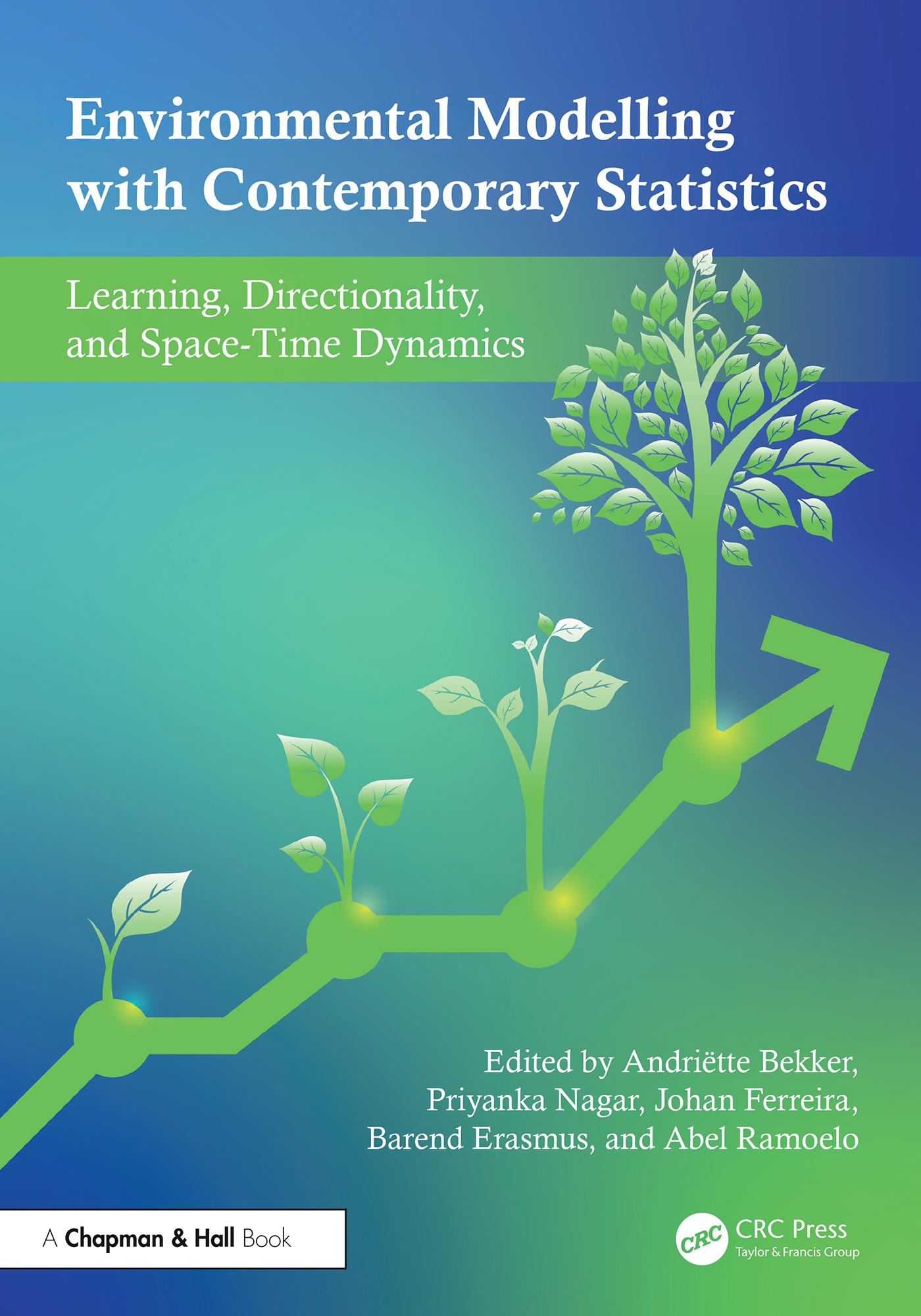
This book places an emphasis upon statistical methodology, data interpretation, and futureproofing with the intention of advancing statistics for the environment, ecology, and environmental health, in addition to environmental theory and practice, via the application of reliable statistics.
With a focus on advances in statistical methodology and application within the environmental sciences, the overarching purpose of this volume is to illuminate current trends, stimulate a focus on, and connect multidisciplinary domains originating from and within statistical analysis, development, and research. Given that the contributions consist of current improvements and new innovations in climate and environmental science research that are based on statistical theory, researchers can derive inspiration for future advancements or similar analyses on other environmental data.
Authored by internationally renowned scholars, this book is organized into three parts: Part I on Supervised and Unsupervised Learning, Part II on Directional Statistics, and Part III on Spatial and Temporal Modeling. Primarily intended as a reference book for academic researchers and graduate-level students in statistics as well as multidisciplinary domains, the chapters reflect a shared commitment to advancing methodological rigor while addressing real-world environmental concerns. They illustrate how environmental complexity drives the evolution of statistical thinking—and how statistical insight, in turn, informs meaningful action.
Key Features
- Emphasizes the ongoing necessity to progress basic statistical theory and explores its relevance to environmental research
- Employs multidisciplinary approaches and applications, appealing to a broader audience beyond solely theoretical statistics
- Enhances the collective understanding of the ecosystem’s diverse perspectives to ensure the welfare of present and future generations
- Written by renowned subject matter experts and researchers, making it appealing to scholars from diverse fields
- The statistical framework is not limited to a single methodology based on data complexity but promotes different techniques
Betal nemt med kort, Klarna, Apple Pay eller Google Pay. Ikke tilfreds? Du har altid 14 dages fortrydelsesret. Læs mere i vores vilkår. Har du spørgsmål, så send os en mail på hello@memmo.org.
Memmo gør det nemmere at studere – uanset hvor du er i verden. Hos os samler du dine kursusbøger og smarte studieværktøjer ét sted: resuméer, quizzer, podcasts og flashcards. Og så er der Ted, din studieven, der svarer på alt, du undrer dig over. Over 50 000 studerende studerer allerede her – bygget til at hjælpe dig med at lære hurtigere og stresse mindre.