
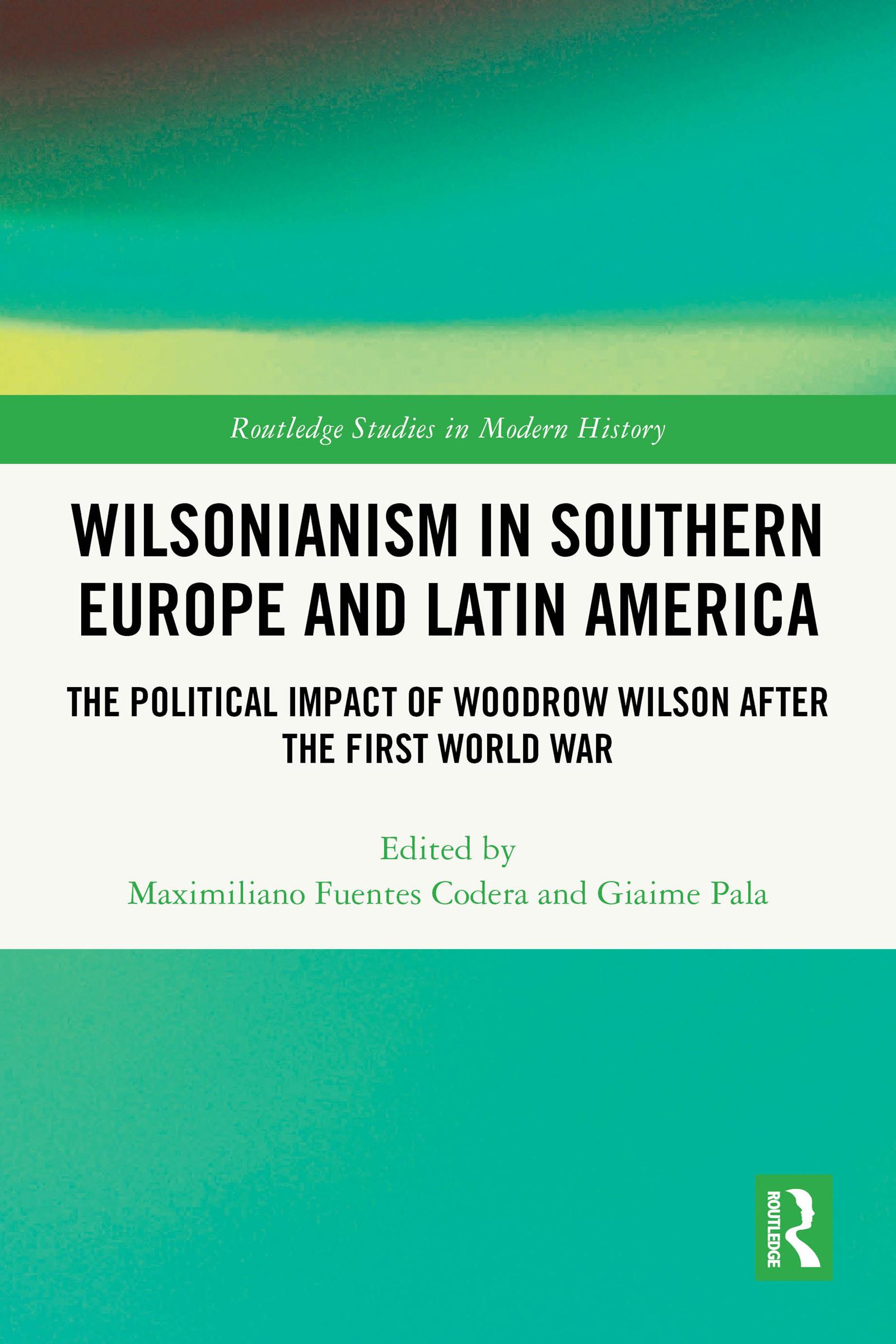
Approaches to the impact of Wilsonianism have traditionally been developed from the fields of international relations, international law and the study of global self-determination movements.
This book offers a complementary and original perspective by examining the political influence of Wilsonian ideals in the broader crisis of liberalism following the First World War. While taking into account Wilson’s role in inspiring self-determination movements, the book primarily analyses the political construction and appropriation of Wilson’s image – as a reformist, pacifist, democratic and liberal leader – by liberal and socialist circles in Europe and Latin America. At the same time, it explores the rejection of Wilsonianism expressed by right-wing political forces and intellectuals, both during the war and in the aftermath of the Treaty of Versailles. Adopting a comparative and transnational approach, the study focuses on “peripheral” contexts that have received limited scholarly attention – such as Spain, Portugal and various countries in Latin America – while also incorporating two key cases, France and Italy, due to their close political and ideological connections with the former.
This book is a valuable resource for students and scholars in the fields of Global History and International Affairs, as well as all those interested in Latin American or Modern European History.
Betal nemt med kort, Klarna, Apple Pay eller Google Pay. Ikke tilfreds? Du har altid 14 dages fortrydelsesret. Læs mere i vores vilkår. Har du spørgsmål, så send os en mail på hello@memmo.org.
Memmo gør det nemmere at studere – uanset hvor du er i verden. Hos os samler du dine kursusbøger og smarte studieværktøjer ét sted: resuméer, quizzer, podcasts og flashcards. Og så er der Ted, din studieven, der svarer på alt, du undrer dig over. Over 50 000 studerende studerer allerede her – bygget til at hjælpe dig med at lære hurtigere og stresse mindre.