
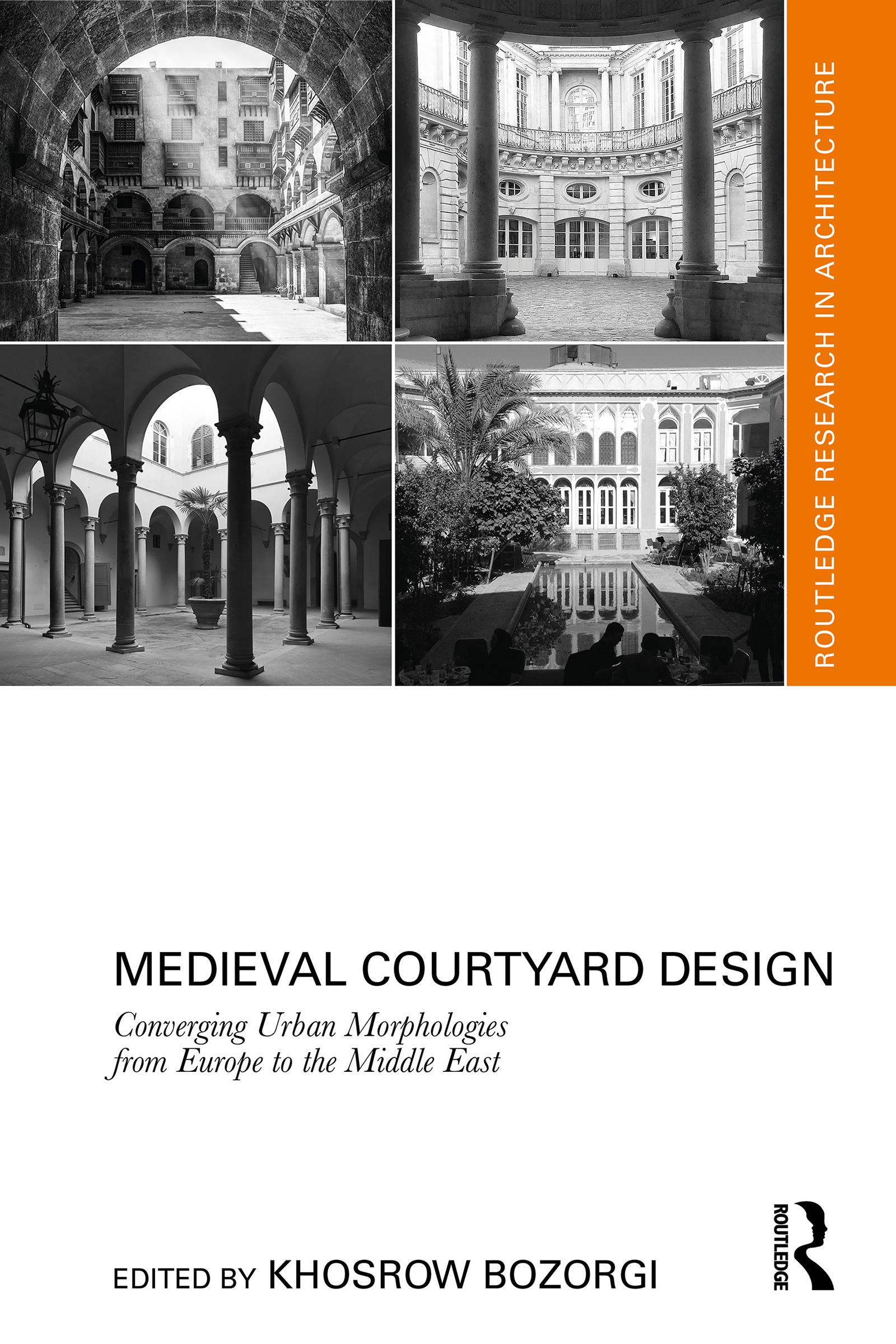
This groundbreaking study examines courtyard architecture across Paris, Florence, Siena, Granada, and Yazd to reveal how the deliberate creation of emptiness—the “bounded void”—functions as architecture’s primary generative principle. Moving beyond conventional object-based analysis, the book demonstrates that architecture’s essence lies not in built form but in calibrated absence.
Through rigorous comparative analysis, readers discover how courtyards operate as environmental mediators, social organizers, and cosmological instruments across diverse cultures. The study reveals striking morphological convergences that emerge through parallel evolution rather than stylistic diffusion. Drawing on spatial cognition research, urban morphology, and phenomenological analysis, the book establishes void-focused methodology as a new theoretical framework. This paradigm shift from analyzing solid to void transforms our understanding of both historical and contemporary spatial practice, uncovering universal principles that transcend geographic and temporal boundaries.
Essential for architectural theorists questioning disciplinary orthodoxies, historians seeking alternatives to period-style categorization, and researchers investigating architecture’s cognitive dimensions. The work provides both radical historiographical revision and practical insights for contemporary designers who engage with density, sustainability, and social space.
Betal nemt med kort, Klarna, Apple Pay eller Google Pay. Ikke tilfreds? Du har altid 14 dages fortrydelsesret. Læs mere i vores vilkår. Har du spørgsmål, så send os en mail på hello@memmo.org.
Memmo gør det nemmere at studere – uanset hvor du er i verden. Hos os samler du dine kursusbøger og smarte studieværktøjer ét sted: resuméer, quizzer, podcasts og flashcards. Og så er der Ted, din studieven, der svarer på alt, du undrer dig over. Over 50 000 studerende studerer allerede her – bygget til at hjælpe dig med at lære hurtigere og stresse mindre.