
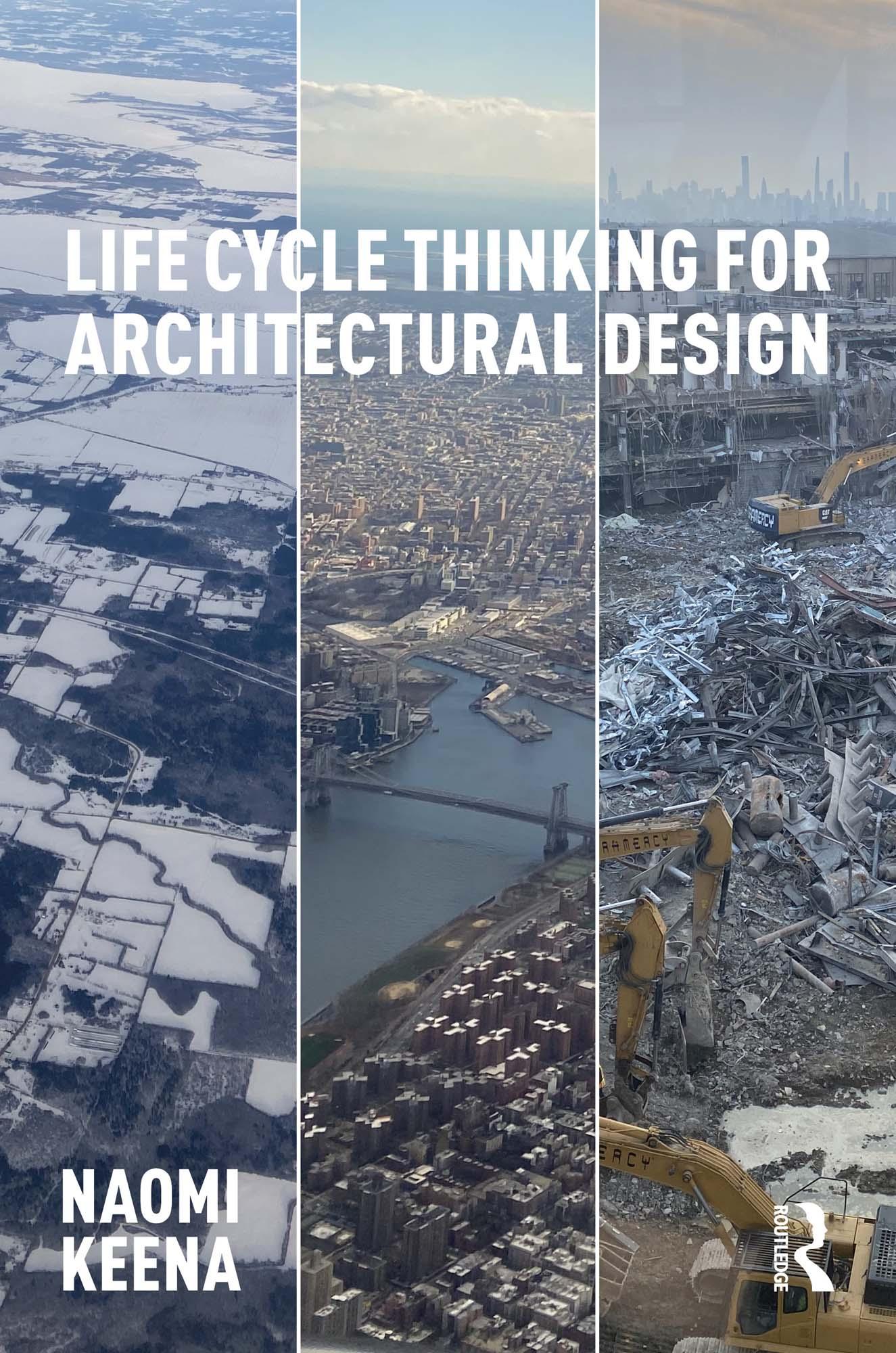
This book provides an accessible and holistic understanding of life cycle assessment, allowing readers to build life cycle thinking into their design process.
Life cycle analysis is becoming more commonplace in architectural discourse to understand embodied carbon in buildings. However, life cycle cost analysis and social life cycle analysis are often not considered. By combining these methods of analyses, a clear understanding of the environmental, economic, and social aspects of the entire life cycle of a building and its design emerges. Drawing from seminal texts as well as contemporary thinking on systems theory, urban systems, and ecological analyses, this book frames architectural design processes within the socio-ecological context of 21st-century challenges. It also highlights the role data visualization and data storytelling play in capturing the memory or embodied aspects of a building's life cycle. This is critical for evidence-based decision-making during the design process as well as documenting the temporal scale of a building to allow for future use architecture. Finally, a case study comparing the life cycle of Grand Central Terminal and Pennsylvania Station in New York highlights the environmental, economic, and social costs borne by the demolition and rebuild of Penn Station, and provides a demonstration of how the theory works in practice.
This will be an essential resource for all architects and designers at the beginning of their careers.
Betal nemt med kort, Klarna, Apple Pay eller Google Pay. Ikke tilfreds? Du har altid 14 dages fortrydelsesret. Læs mere i vores vilkår. Har du spørgsmål, så send os en mail på hello@memmo.org.
Memmo gør det nemmere at studere – uanset hvor du er i verden. Hos os samler du dine kursusbøger og smarte studieværktøjer ét sted: resuméer, quizzer, podcasts og flashcards. Og så er der Ted, din studieven, der svarer på alt, du undrer dig over. Over 50 000 studerende studerer allerede her – bygget til at hjælpe dig med at lære hurtigere og stresse mindre.