
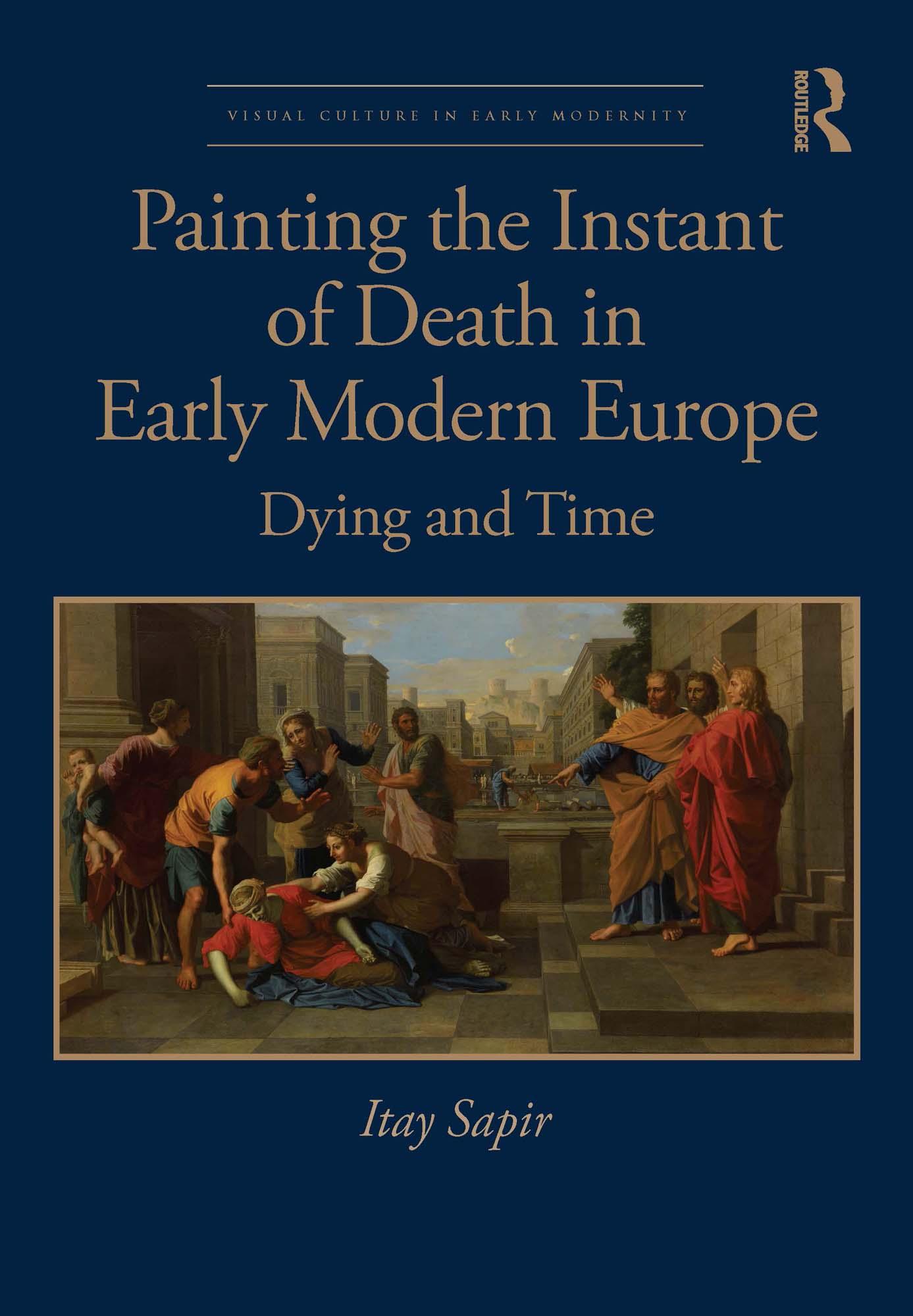
This volume traces the evolution of the pictorial representation – and, more often than not, the visual effacement – of the instant of death in Europe between the Renaissance and the middle of the seventeenth century.
Chapters show how artistic choices tackling the visual depiction of “death events” (i.e. death taking place, as opposed to the long processes of agony on the one hand and mourning on the other) are manifestations of theoretical, philosophical, and anthropological issues as crucial to early modern culture as they are today. This book discusses the very concept of an instant and its aporias; the more specific question (both philosophical and biological) of death, its definitions and its temporality; and the vast art-theoretical issues around painting and its fraught relation with time, liveliness, and the inanimate. Among the artists discussed are Caravaggio, Rubens, Poussin, Ribera, Artemisia Gentileschi, Michelangelo, Rosso Fiorentino, and Piero della Francesca.
This book will be of interest to scholars working in art history, Renaissance and Baroque studies, and death studies.
Betal nemt med kort, Klarna, Apple Pay eller Google Pay. Ikke tilfreds? Du har altid 14 dages fortrydelsesret. Læs mere i vores vilkår. Har du spørgsmål, så send os en mail på hello@memmo.org.
Memmo gør det nemmere at studere – uanset hvor du er i verden. Hos os samler du dine kursusbøger og smarte studieværktøjer ét sted: resuméer, quizzer, podcasts og flashcards. Og så er der Ted, din studieven, der svarer på alt, du undrer dig over. Over 50 000 studerende studerer allerede her – bygget til at hjælpe dig med at lære hurtigere og stresse mindre.