
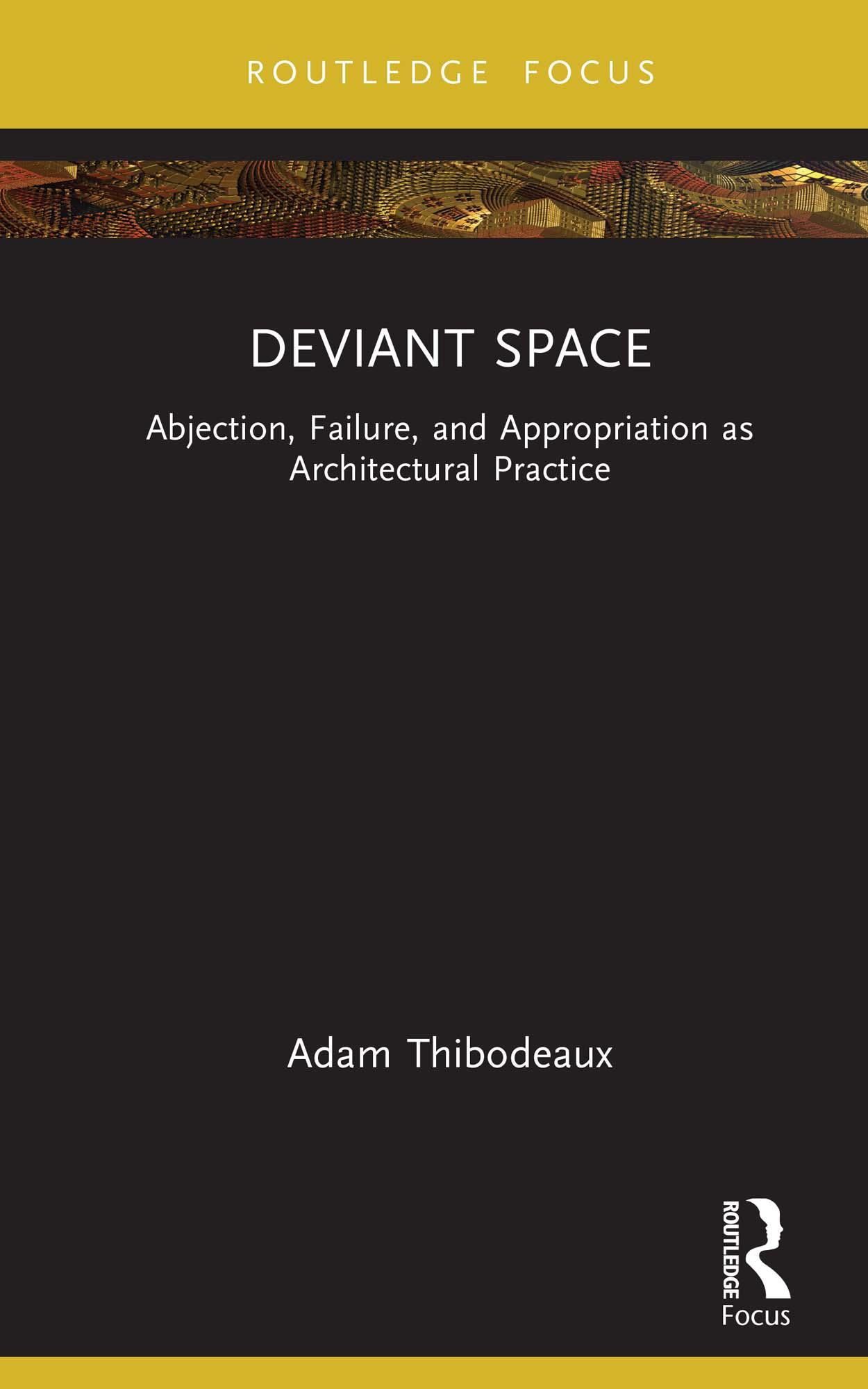
Deviant Space: Abjection, Failure, and Appropriation as Architectural Practice frames architecture as a fragile Symbolic construct, susceptible to appropriation, disruption, and reorientation by deviant bodies. Anchored in phenomenology and queer theory, it examines how spatial practices subvert architectural function, with particular focus on the tactics of men who have sex with men (MSM) in major North American cities during the AIDS epidemic.
The book offers a theoretical and contextual framework for reading architecture as both a mechanism of control and a site of resistance. Through the lenses of abjection and failure, borrowed from psychoanalytic and sociological theory, it outlines a methodology for analyzing spatial tactics like passing, outing, and flagging as examples of how deviant users navigate and respond to the built environment.
Its two-part structure—first philosophical, then historical—moves from broad, translatable phenomena to their tangible manifestations in context. The first offers architects and scholars of environmental design a reframing of the production of space, while the second offers theorists of phenomenology and queer studies new spatial dimensions for precedent theory. Deviant Space speaks to those invested in understanding architecture as mutable terrain: unstable, coded, and open to appropriation.
Betal nemt med kort, Klarna, Apple Pay eller Google Pay. Ikke tilfreds? Du har altid 14 dages fortrydelsesret. Læs mere i vores vilkår. Har du spørgsmål, så send os en mail på hello@memmo.org.
Memmo gør det nemmere at studere – uanset hvor du er i verden. Hos os samler du dine kursusbøger og smarte studieværktøjer ét sted: resuméer, quizzer, podcasts og flashcards. Og så er der Ted, din studieven, der svarer på alt, du undrer dig over. Over 50 000 studerende studerer allerede her – bygget til at hjælpe dig med at lære hurtigere og stresse mindre.