
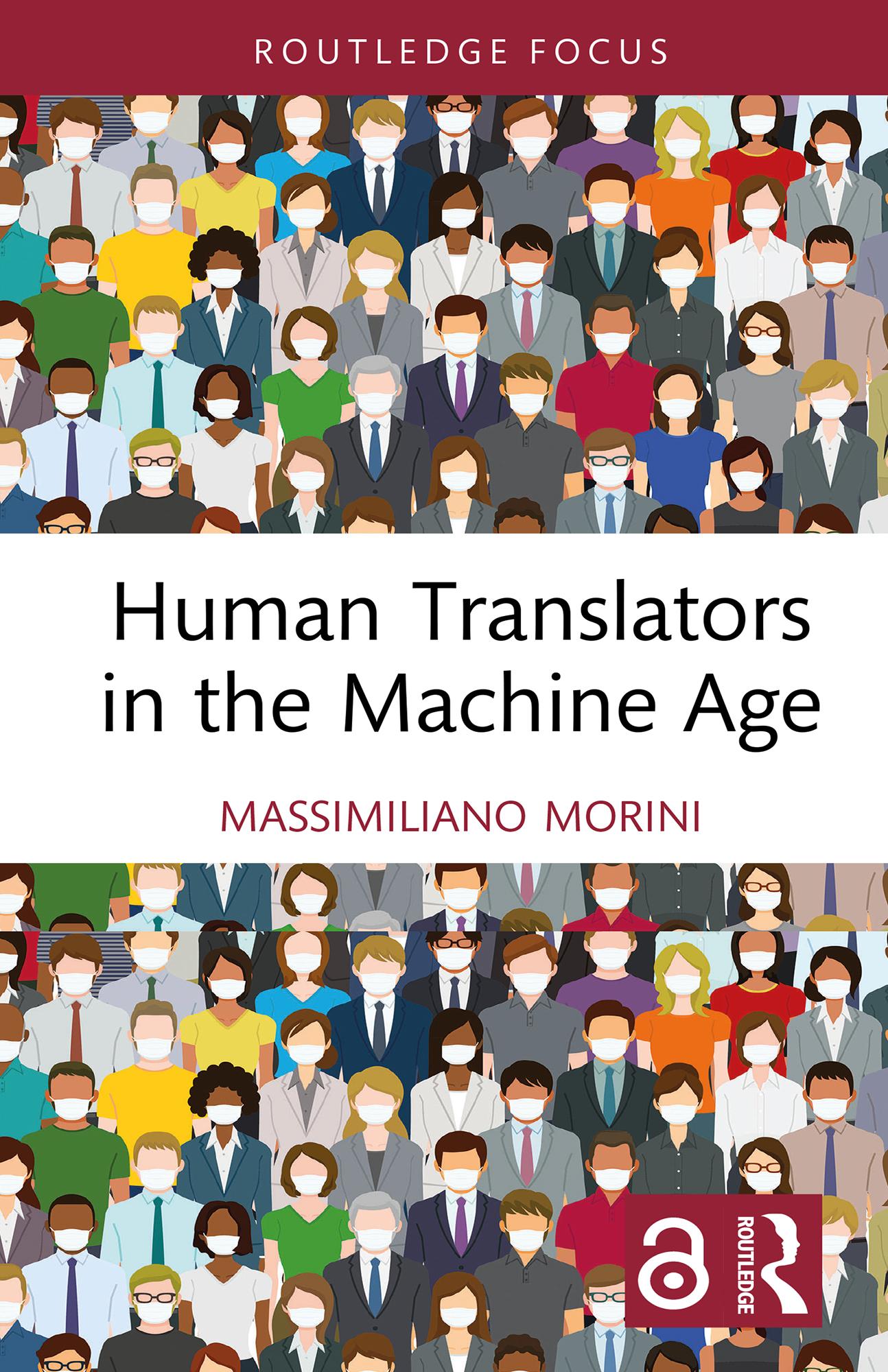
What is the place of human translation in the golden age of artificial intelligence? Human Translators in the Machine Age looks at the millennia of history that have shaped the discipline and its practitioners, and asks what it is that makes translators central in human civilization, and fundamentally different from linguistically competent machines.
Contrary to the age-old emphasis on source adherence and the sacredness of text, it presents translation as a continuous process of semantic and pragmatic drift, and translators as agents of linguistic and cultural change. In doing so it questions all traditional and contemporary dichotomies (faithful/unfaithful, domesticating/foreignizing) and exposes the textual bias which lies at the root of all Western ideas on translation.
Oral in origin, rich and irreducible in its processes and outcomes, deeply and inevitably personal in output, human translation remains central in the machine age precisely because it is the most common human way of receiving, accounting for, and modifying all forms of knowledge and experience. This concise volume offers both a compelling history of translation and a fresh examination of the translator’s role in an AI-dominated world. It engages critically with contemporary translation theory while innovatively exploring the intersection of written and spoken discourse. Essential reading for translators, students, scholars, and anyone interested in linguistic theory.
Betal nemt med kort, Klarna, Apple Pay eller Google Pay. Ikke tilfreds? Du har altid 14 dages fortrydelsesret. Læs mere i vores vilkår. Har du spørgsmål, så send os en mail på hello@memmo.org.
Memmo gør det nemmere at studere – uanset hvor du er i verden. Hos os samler du dine kursusbøger og smarte studieværktøjer ét sted: resuméer, quizzer, podcasts og flashcards. Og så er der Ted, din studieven, der svarer på alt, du undrer dig over. Over 50 000 studerende studerer allerede her – bygget til at hjælpe dig med at lære hurtigere og stresse mindre.