
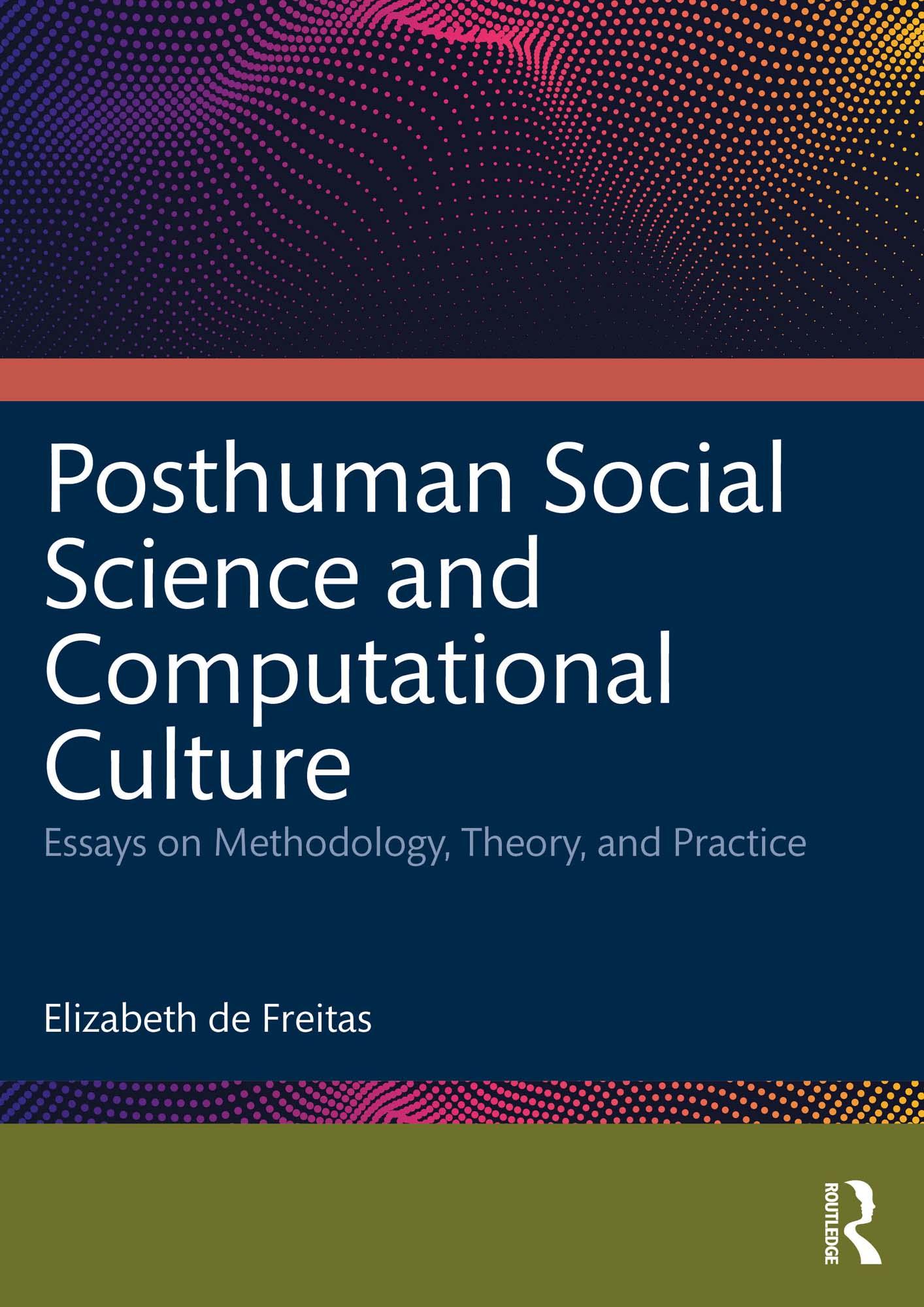
Posthuman Social Science and Computational Culture offers theoretical and practical insight into posthuman social science research methods, addressing new challenges in computational culture. Philosophy and theory from media studies, software studies, and science and technology studies (STS) are used to make sense of cultural trends and empirical experiments.
This book explores new empiricisms in posthuman social science, with particular attention to computational culture and digital life. This book carefully treats key philosophical thinkers such as Karen Barad, Rosie Braidotti, Gilles Deleuze, Édouard Glissant, Bruno Latour, and Gilbert Simondon, and explains how these theorists help make sense of our current social and material conditions. Essays explore difficult questions for contemporary social science researchers: How should we understand computability and its limits? What is the nature of digital relationality? In what sense are software instruments useful in studying political ecologies? How do sensory and affective atmospheres become robust learning environments? When do arts-based and surrealist experiments have impact? Can mapping experiments help disrupt oppressive spatial regimes where control dominates? Why might we affirm the speculative practices of both science and fiction, as part of a post-colonial Anthropocene epistemology? What differentiates human and machine cognitive behavior? Ideas from many current media theorists in software and cultural studies are taken up and applied, including the work of Louise Amoore, Matthew Fuller, Alexander Galloway, Mark Hansen, Kara Keeling, Achille Mbembe, and Luciana Parisi.
This book will be of interest to graduate students and researchers in the social sciences and humanities (education, social work, sociology, anthropology, media studies, feminist studies), who are interested in the power of theory and philosophy, and are designing empirical experiments to investigate the complex ways that computation and digital technology are changing our lives and our sense of how and why we do ‘social’ research.
Betal nemt med kort, Klarna, Apple Pay eller Google Pay. Ikke tilfreds? Du har altid 14 dages fortrydelsesret. Læs mere i vores vilkår. Har du spørgsmål, så send os en mail på hello@memmo.org.
Memmo gør det nemmere at studere – uanset hvor du er i verden. Hos os samler du dine kursusbøger og smarte studieværktøjer ét sted: resuméer, quizzer, podcasts og flashcards. Og så er der Ted, din studieven, der svarer på alt, du undrer dig over. Over 50 000 studerende studerer allerede her – bygget til at hjælpe dig med at lære hurtigere og stresse mindre.