
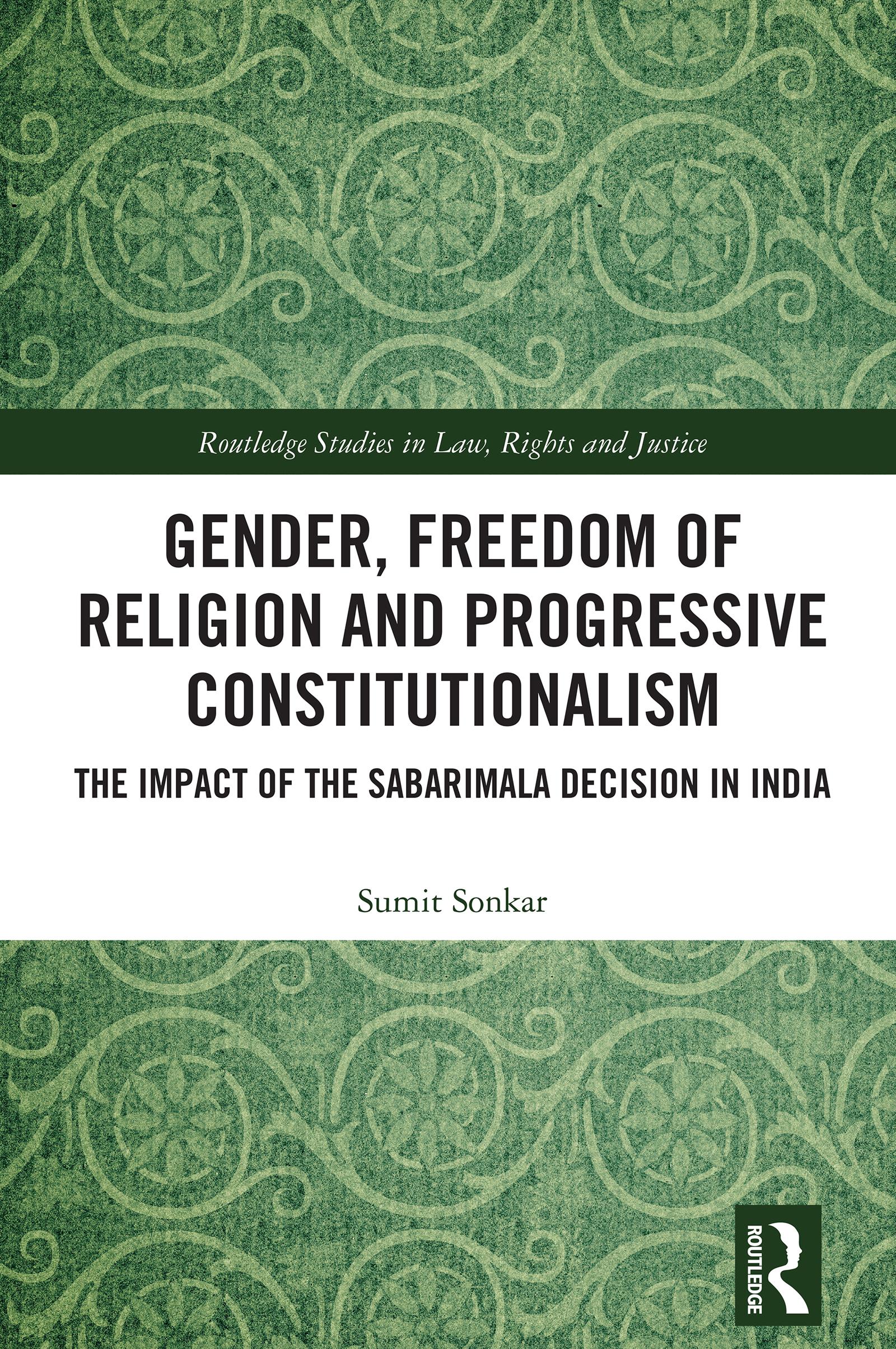
This book examines the role of courts in settling religious disputes in the context of wider debates around religion and gender. By declaring the long-standing tradition of prohibiting entry of menstruating women in the Sabarimala temple unconstitutional, in the Indian Young Lawyers Association v State of Kerala (Sabarimala case), the Supreme Court of India has not only recognised the women’s right to access the temple but also ignited debates on the role of constitutional courts in adjudicating religious disputes and bringing social transformation in India. This work explores the nexus of religious freedom and gender equality, the nature and scope of religious freedom under the Indian Constitution, and judicial approaches in adjudicating religious matters. Thus, it provides a contextual and comprehensive analysis of the Sabarimala case for implementing and enforcing court-crafted constitutional rights. The book includes a discussion of how judicial interventions can bring about progressive social change that can offer valuable lessons on judicial frameworks to advance gender justice more widely. The study will be of interest to academics and researchers working in the areas of human rights law, law and religion, law and gender, social justice, and constitutional law.
Betal nemt med kort, Klarna, Apple Pay eller Google Pay. Ikke tilfreds? Du har altid 14 dages fortrydelsesret. Læs mere i vores vilkår. Har du spørgsmål, så send os en mail på hello@memmo.org.
Memmo gør det nemmere at studere – uanset hvor du er i verden. Hos os samler du dine kursusbøger og smarte studieværktøjer ét sted: resuméer, quizzer, podcasts og flashcards. Og så er der Ted, din studieven, der svarer på alt, du undrer dig over. Over 50 000 studerende studerer allerede her – bygget til at hjælpe dig med at lære hurtigere og stresse mindre.