
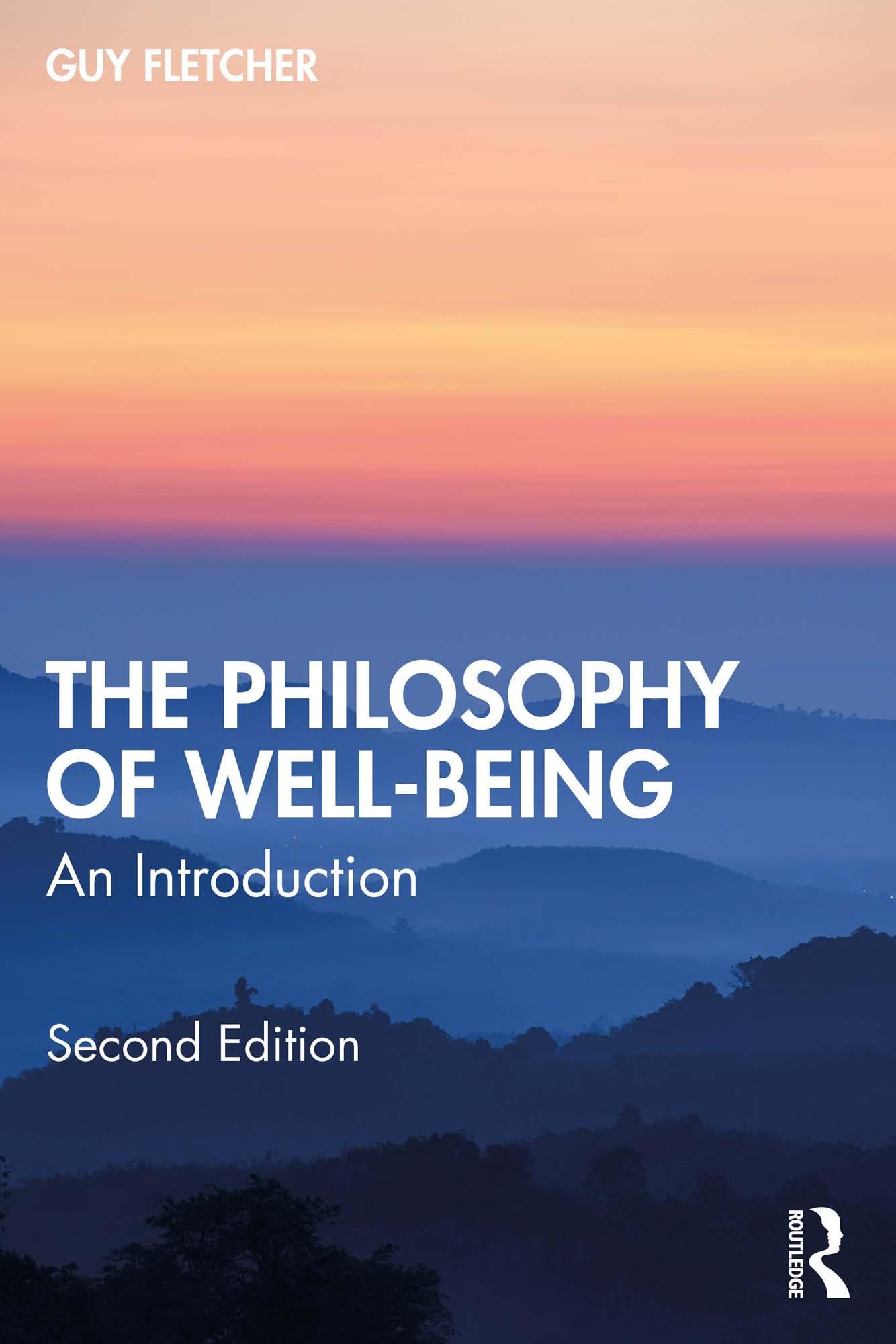
Well-being occupies a central role in ethics and political philosophy, including in major theories such as utilitarianism. It also extends far beyond philosophy: recent studies into the science and psychology of well-being have propelled the topic to centre stage, and governments spend millions on promoting it. We are encouraged to adopt modes of thinking and behaviour that support individual well-being or 'wellness'.
What is well-being? Which theories of well-being are most plausible? In this rigorous and comprehensive introduction to the topic, Guy Fletcher unpacks and assesses these questions and many more, including:
- Are pleasure and pain the only things that affect well-being?
- Does getting what we want make our lives go better?
- Can something be good for someone who does not desire it?
- Is well-being fundamentally connected to human nature?
- Is happiness all that makes our lives go well?
- Which things make our lives go worse?
- Is death always bad for us?
- How is the well-being of a whole life related to well-being at particular times?
Fully revised and updated throughout, this second edition includes a new chapter on ill-being. Annotated further reading and study and comprehension questions follow each chapter, and a glossary of key terms is also included.
The Philosophy of Well-Being is essential reading for students of ethics and political philosophy, and is also suitable for those in related disciplines such as psychology, politics and sociology.
Betal nemt med kort, Klarna, Apple Pay eller Google Pay. Ikke tilfreds? Du har altid 14 dages fortrydelsesret. Læs mere i vores vilkår. Har du spørgsmål, så send os en mail på hello@memmo.org.
Memmo gør det nemmere at studere – uanset hvor du er i verden. Hos os samler du dine kursusbøger og smarte studieværktøjer ét sted: resuméer, quizzer, podcasts og flashcards. Og så er der Ted, din studieven, der svarer på alt, du undrer dig over. Over 50 000 studerende studerer allerede her – bygget til at hjælpe dig med at lære hurtigere og stresse mindre.