
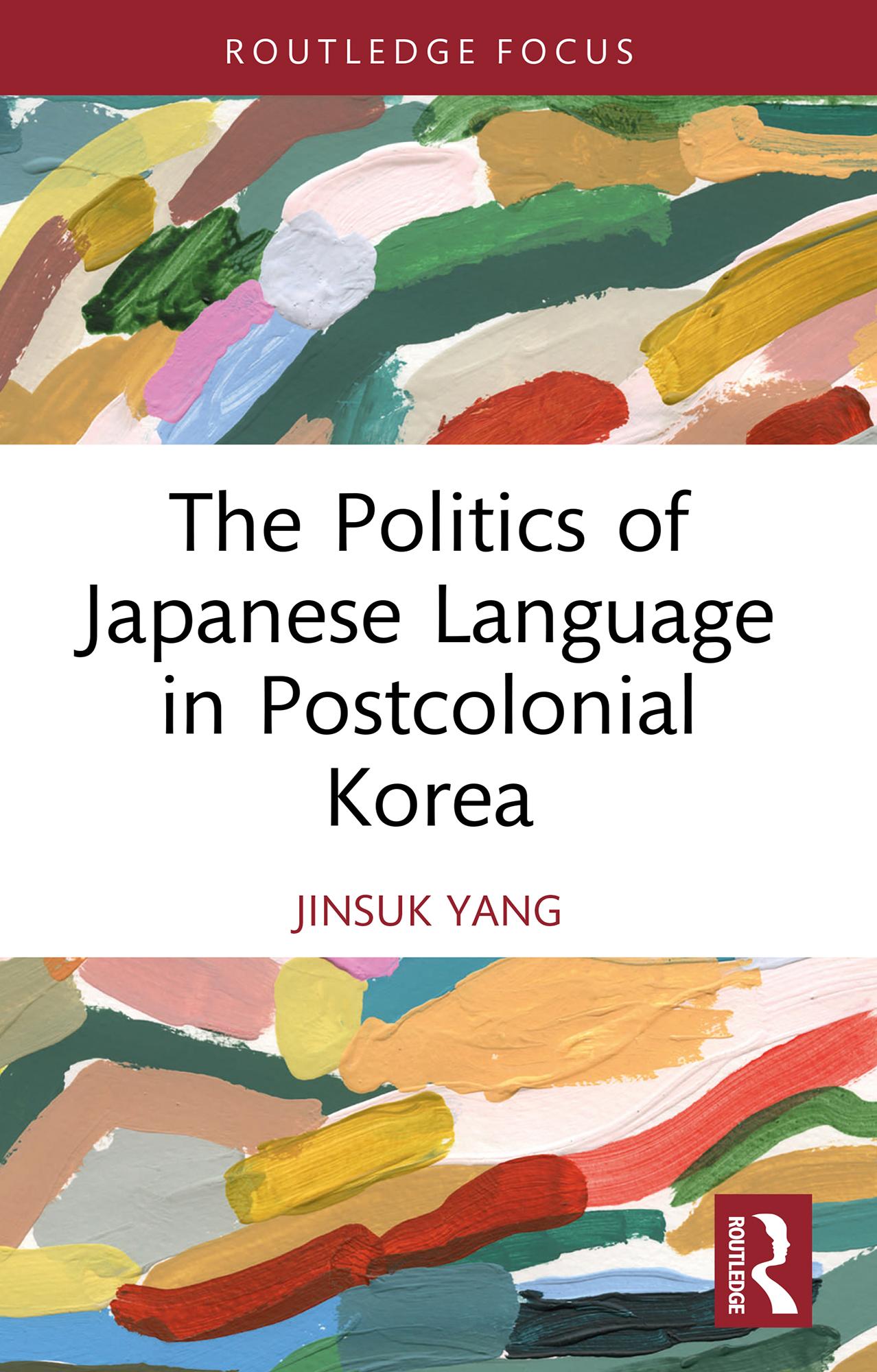
This book examines the politics of Japanese language learning in postcolonial Korea from 1945 through the 1970s, revealing the ways in which language functioned as a site of negotiations over identity, social mobility, and historical memory.
By tracing how Japanese continued to circulate in specific social fields, shaping and being shaped by gendered and classed subject positions, this book counters the linear narrative of national linguistic history that assumes the immediate and complete erasure of the Japanese language in the public sphere. Featuring analysis from contemporary articles from major Japanese and Korean newspapers it provides a comprehensive view of the discourses around Japanese language learning in postcolonial Korea. Through the application of a critical discourse analysis (CDA) as a primary methodological framework it highlights how meanings are constructed, whose perspectives are legitimized or silenced, and what kinds of social roles and hierarchies are reinforced or challenged.
Revealing how the Korean language became symbol to overcome its colonial history, reclaim the language-territory bond, and ultimately, transform Korea into a modern nation-state this will appeal to students and scholars of Korean history, culture and language
Betal nemt med kort, Klarna, Apple Pay eller Google Pay. Ikke tilfreds? Du har altid 14 dages fortrydelsesret. Læs mere i vores vilkår. Har du spørgsmål, så send os en mail på hello@memmo.org.
Memmo gør det nemmere at studere – uanset hvor du er i verden. Hos os samler du dine kursusbøger og smarte studieværktøjer ét sted: resuméer, quizzer, podcasts og flashcards. Og så er der Ted, din studieven, der svarer på alt, du undrer dig over. Over 50 000 studerende studerer allerede her – bygget til at hjælpe dig med at lære hurtigere og stresse mindre.