
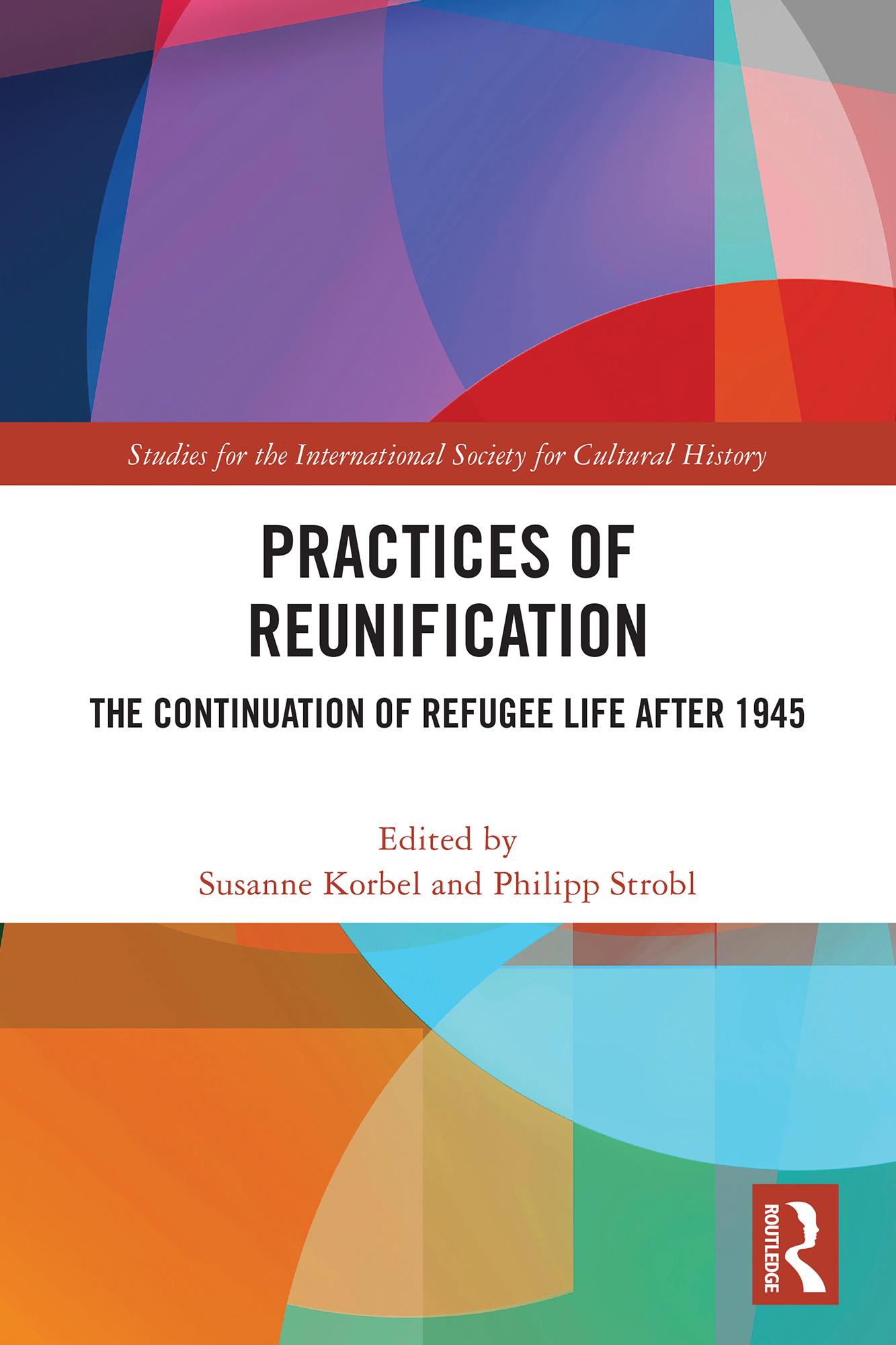
The volume explores the role of refugees and displaced persons (DPs) in Europe after 1945. It expands conventional narratives about post-National Socialist societies, which are characterized by victim myths, narratives of Trümmerfrauen (rubble women), and the reconstruction of supposedly homogeneous societies.
Using analyses informed by new approaches in cultural studies and digital humanities, the authors enhance studies of refugees and DPs’ ways of living and their interactions with their surrounding societies. Relying on microhistorical perspectives, the case studies focus on both post-National Socialist societies and exile communities and thus contribute to a better understanding of everyday life. The book locates itself at the intersection of Migration Studies, Gender Studies, Emotion Studies, and the History of Knowledge and focuses on the following key questions: How did family members reconnect with individuals liberated from concentration camps? How did they communicate about the choice of new places to live? How did exile communities reorganize themselves after the end of the war?
This volume explores diverse experiences in the post-1945 world that have been shaping not only the European societies but have also been influencing our present legal and societal understandings and interpretations on a global scale.
Betal nemt med kort, Klarna, Apple Pay eller Google Pay. Ikke tilfreds? Du har altid 14 dages fortrydelsesret. Læs mere i vores vilkår. Har du spørgsmål, så send os en mail på hello@memmo.org.
Memmo gør det nemmere at studere – uanset hvor du er i verden. Hos os samler du dine kursusbøger og smarte studieværktøjer ét sted: resuméer, quizzer, podcasts og flashcards. Og så er der Ted, din studieven, der svarer på alt, du undrer dig over. Over 50 000 studerende studerer allerede her – bygget til at hjælpe dig med at lære hurtigere og stresse mindre.