
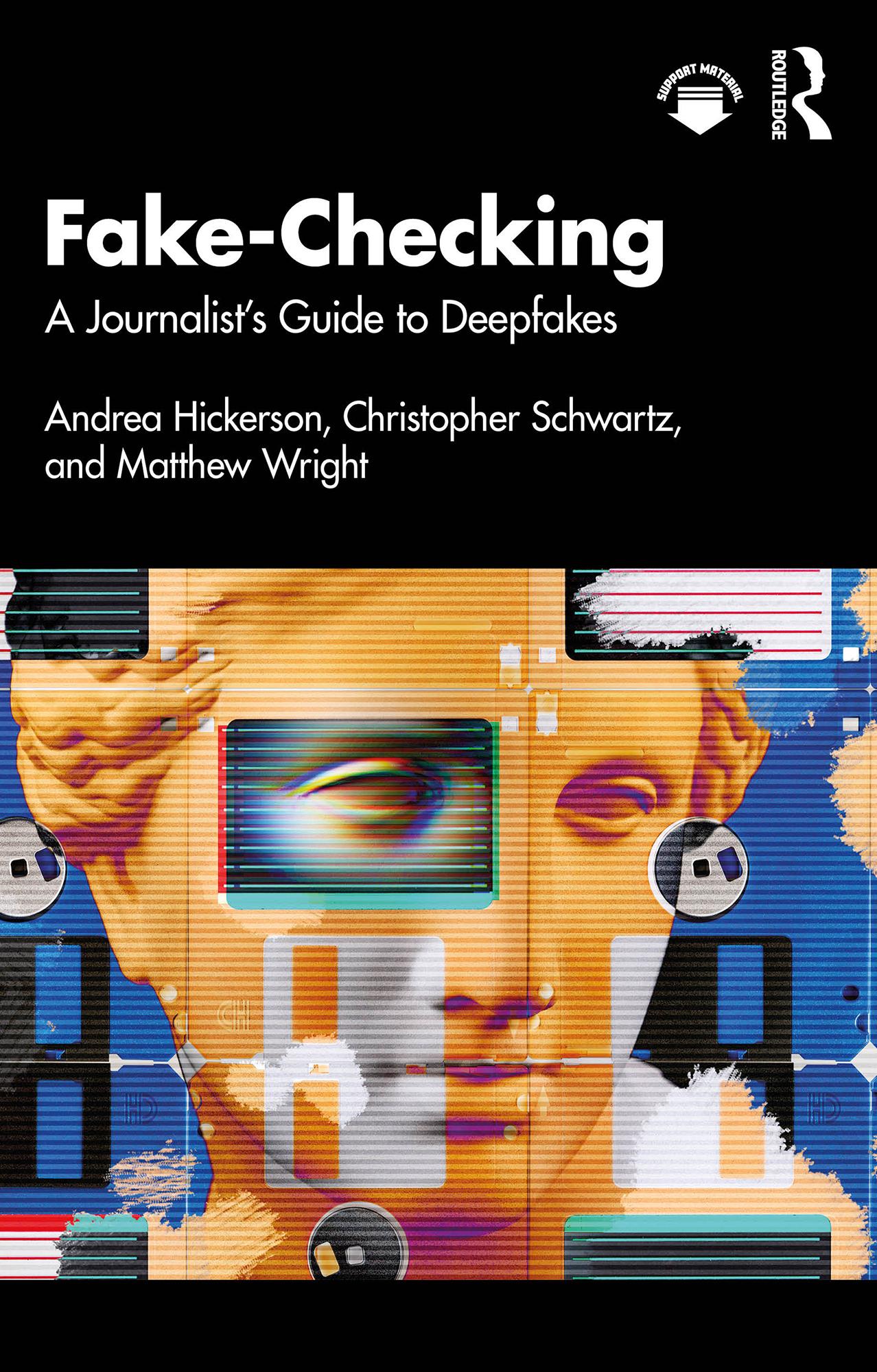
Designed to help journalists keep pace with the rapid evolution of deepfakes as well as integrate ‘fake-checking’ methods into their routine reporting practices, this book offers a concise and accessible guide for reporters navigating this evolving challenge.
This guide aims to assist journalists in understanding the complexities of deepfakes from a number of angles including philosophical, historical, technical, and methodological. Rather than approaching deepfakes as a ‘journalistic apocalypse,’ this book contextualises them in the larger historical practice of fact-checking and on a continuum of technological advances in image and video manipulation. Encouraging readers to view fact-checking as a multimodal process, it stresses the importance of combining philosophical and technical tools, especially ones based in epistemology and artifical intelligence (AI), in addition to the ‘pavement pounding’ essentials of good journalism. The book concludes with a chapter addressing how to explain deepfakes to a public progressively more concerned about the realities and consequences of AI and misinformation.
Fake-Checking serves as a practical reference for journalists and advanced media students who are increasingly required to identify and verify potential deepfakes and their future iterations.
This book is supported by online resources which can be accessed at www.routledge.com/9781032741321.
Betal nemt med kort, Klarna, Apple Pay eller Google Pay. Ikke tilfreds? Du har altid 14 dages fortrydelsesret. Læs mere i vores vilkår. Har du spørgsmål, så send os en mail på hello@memmo.org.
Memmo gør det nemmere at studere – uanset hvor du er i verden. Hos os samler du dine kursusbøger og smarte studieværktøjer ét sted: resuméer, quizzer, podcasts og flashcards. Og så er der Ted, din studieven, der svarer på alt, du undrer dig over. Over 50 000 studerende studerer allerede her – bygget til at hjælpe dig med at lære hurtigere og stresse mindre.