
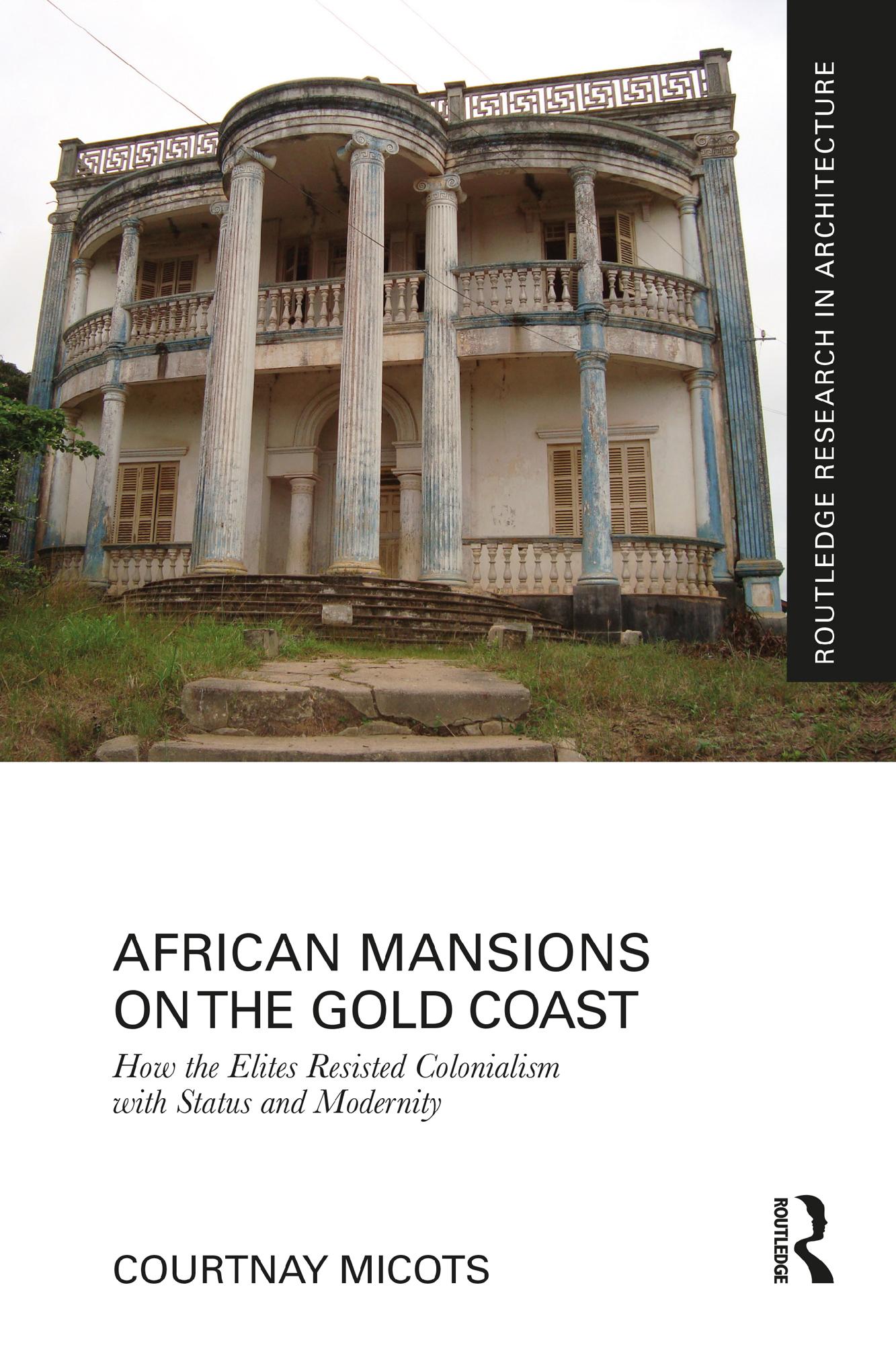
This will be the first book to focus on the African patrons who commissioned grand family mansions from the 1860s to 1950s, and to highlight their intentions during the tumultuous period in the Gold Coast Colony (part of present-day Ghana) from roughly 1874 to independence from the British on March 6, 1957.
Coastal Ghana today is dotted with grand old homes; most are uninhabited, in ruin and hauntingly eerie. Most people associate these homes with European patrons. But what if that weren't true? What if these structures were constructed for wealthy Africans? Case studies reveal what the author calls the “Coastal Elite Style,” an umbrella term for the multitude of innovative responses to European, Afro-Brazilian and American architecture. These hybrid mansions communicate ideas of status and modernity through their combination of local aesthetics with the manipulation of foreign architectural styles. This movement is significant because the layered meanings expressed resistance to the British and established a vernacular for housing in Ghana today. By decolonizing the study of colonial architecture by placing the gaze on African patrons, these mansions will be revealed as unique works of African Modernism.
This book will expand upon the existing literature regading indigenous colonial residential architecture. It will be of interest to researchers and students of architectural history, colonial studies, African studies and Atlantic studies.
Betal nemt med kort, Klarna, Apple Pay eller Google Pay. Ikke tilfreds? Du har altid 14 dages fortrydelsesret. Læs mere i vores vilkår. Har du spørgsmål, så send os en mail på hello@memmo.org.
Memmo gør det nemmere at studere – uanset hvor du er i verden. Hos os samler du dine kursusbøger og smarte studieværktøjer ét sted: resuméer, quizzer, podcasts og flashcards. Og så er der Ted, din studieven, der svarer på alt, du undrer dig over. Over 50 000 studerende studerer allerede her – bygget til at hjælpe dig med at lære hurtigere og stresse mindre.