
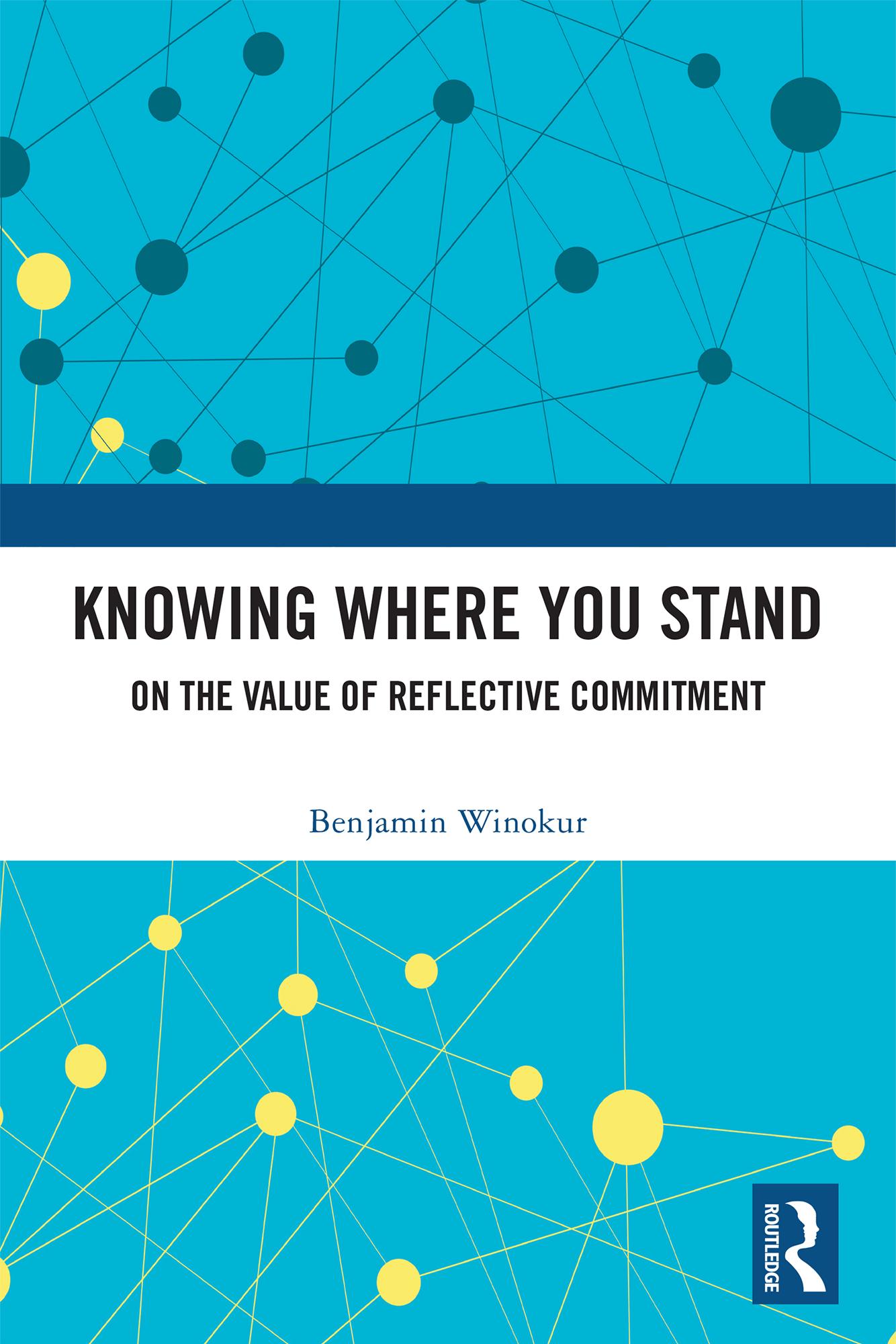
This book examines whether human beings should reflect on, and hence come to know and understand, their own commitments— those beliefs, desires, and intentions that one holds and defends on the basis of one's judgments about the true and the good.
It begins by distinguishing committed attitudes from non-committed attitudes and addressing metaphysical concerns about their distinctive features, paving the way for an in-depth inquiry into why reflection on the former might matter. The author critiques prevailing theories that tie reflection on one’s commitments to phenomena such as rationality, inferential cognition, intentional action, self-regulation, and more. Thereafter, the book argues that reflective commitment matters for safeguarding oneself against manipulation, enabling interpersonal reasoning, and maintaining coherent agency.
This work is indispensable for graduate students and researchers in analytic epistemology and the philosophy of mind with an interest in self-knowledge and related issues, as well as interdisciplinary scholars in psychology who study self-deception, inference, and attitude ascriptions.
Betal nemt med kort, Klarna, Apple Pay eller Google Pay. Ikke tilfreds? Du har altid 14 dages fortrydelsesret. Læs mere i vores vilkår. Har du spørgsmål, så send os en mail på hello@memmo.org.
Memmo gør det nemmere at studere – uanset hvor du er i verden. Hos os samler du dine kursusbøger og smarte studieværktøjer ét sted: resuméer, quizzer, podcasts og flashcards. Og så er der Ted, din studieven, der svarer på alt, du undrer dig over. Over 50 000 studerende studerer allerede her – bygget til at hjælpe dig med at lære hurtigere og stresse mindre.