
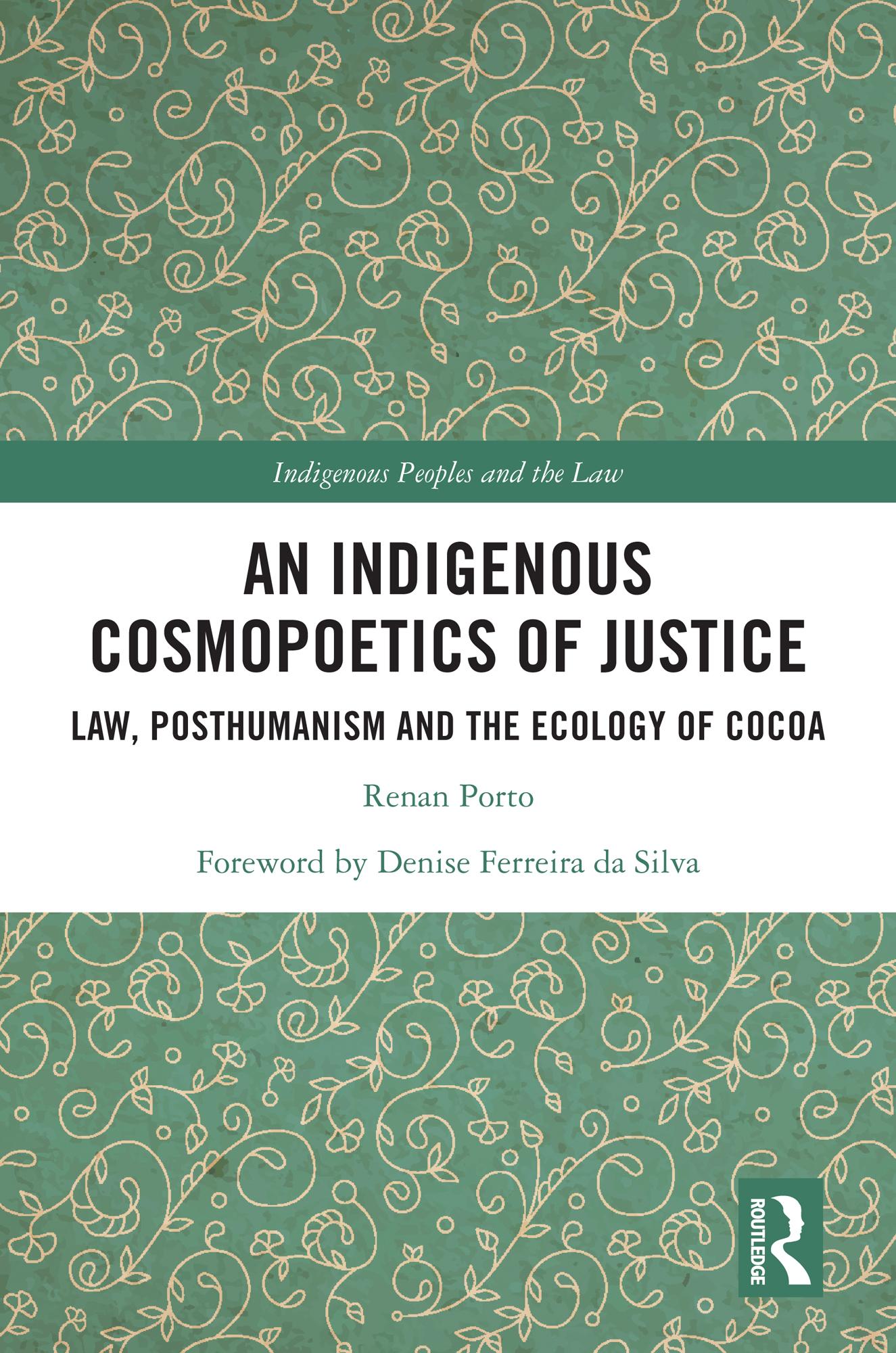
This book examines cocoa farming in northeast Brazil to explore a fundamental question: can ecological relationships create their own form of law?
Through the study of indigenous people and landless workers who use sustainable farming practices to restore damaged lands, the book analyses how humans and nature together create social and ecological systems that function as a kind of "viscous law,” with flexible rules emerging from relationships with the land and its diverse lifeforms. Unlike rigid modern legal systems, this "viscous law" adapts to the realities of cocoa ecology and how it connects people, plants, and animals within global environmental systems. It addresses the practical needs of land rights struggles while recognising relationships that Western legal systems often ignore.
An Indigenous Cosmopoetics of Justice is of interest to legal theorists, as well as those with interests in the areas of indigenous studies, postcolonial studies and ecology.
Betal nemt med kort, Klarna, Apple Pay eller Google Pay. Ikke tilfreds? Du har altid 14 dages fortrydelsesret. Læs mere i vores vilkår. Har du spørgsmål, så send os en mail på hello@memmo.org.
Memmo gør det nemmere at studere – uanset hvor du er i verden. Hos os samler du dine kursusbøger og smarte studieværktøjer ét sted: resuméer, quizzer, podcasts og flashcards. Og så er der Ted, din studieven, der svarer på alt, du undrer dig over. Over 50 000 studerende studerer allerede her – bygget til at hjælpe dig med at lære hurtigere og stresse mindre.