
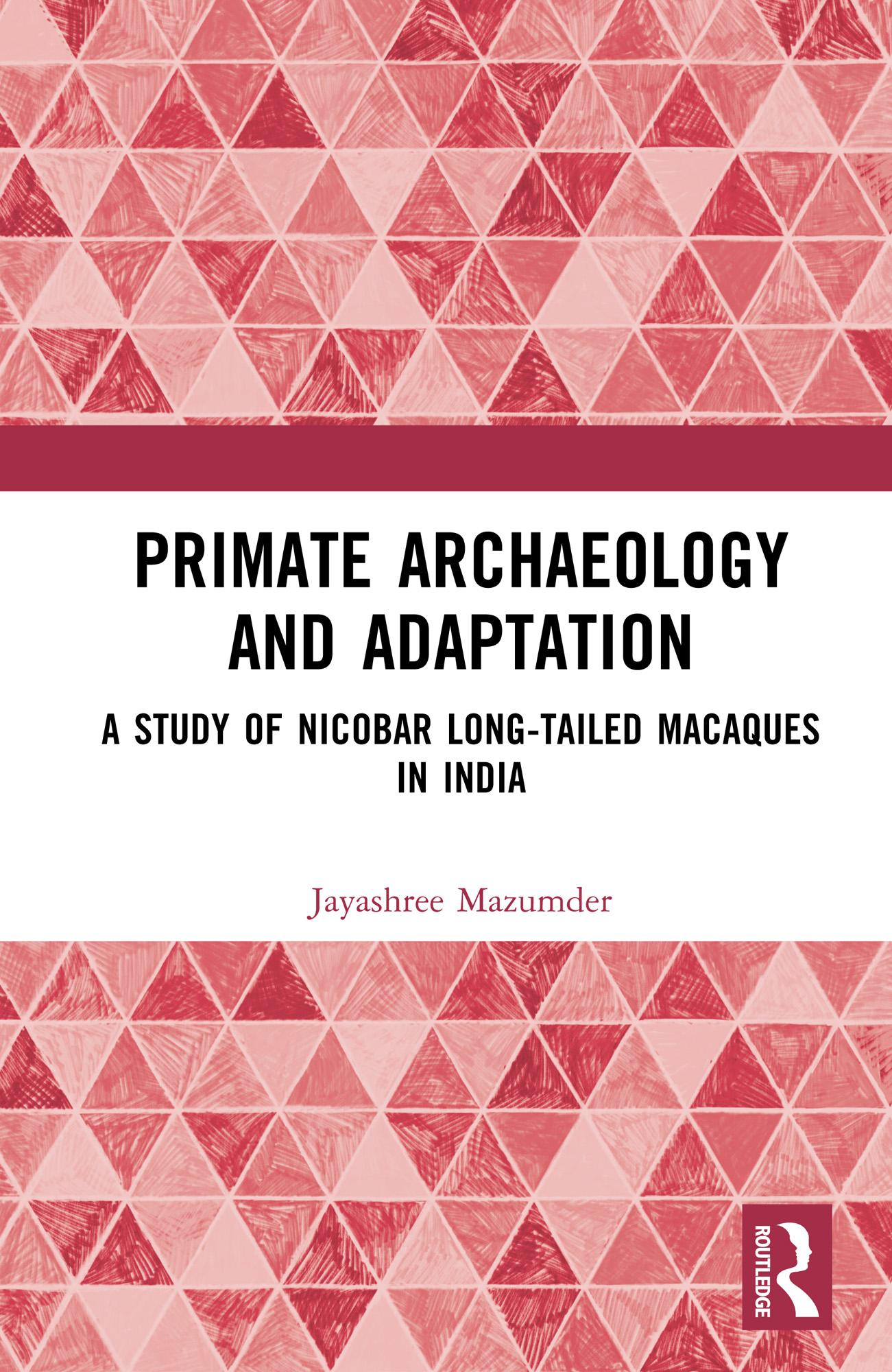
Primate Archaeology and Adaptation offers an interdisciplinary examination of Nicobar long-tailed macaques, situating their tool use, social behavior, and ecological flexibility within deep evolutionary time and contemporary conservation challenges. It documents the ecology, social organization, and behavioral repertoire of long-tailed macaques across Southeast Asia, including foraging strategies, food sharing, reproductive dynamics, exploratory behavior, and diverse forms of object manipulation. The book presents detailed accounts of tool-related behaviors, such as leaf ‘glove’ use, substrate selection for pounding, and the innovative use of anthropogenic materials, while carefully distinguishing between tool use and broader object use. By bridging fossil history, behavioral ecology, and archaeological method, it rethinks material culture beyond humans.
This book will interest scholars and advanced students in biological anthropology, primatology, archaeology, human evolution, animal behavior, and conservation studies. It will also appeal to researchers working on material culture, island ecology, and South Asian environmental policy.
Betal nemt med kort, Klarna, Apple Pay eller Google Pay. Ikke tilfreds? Du har altid 14 dages fortrydelsesret. Læs mere i vores vilkår. Har du spørgsmål, så send os en mail på hello@memmo.org.
Memmo gør det nemmere at studere – uanset hvor du er i verden. Hos os samler du dine kursusbøger og smarte studieværktøjer ét sted: resuméer, quizzer, podcasts og flashcards. Og så er der Ted, din studieven, der svarer på alt, du undrer dig over. Over 50 000 studerende studerer allerede her – bygget til at hjælpe dig med at lære hurtigere og stresse mindre.