
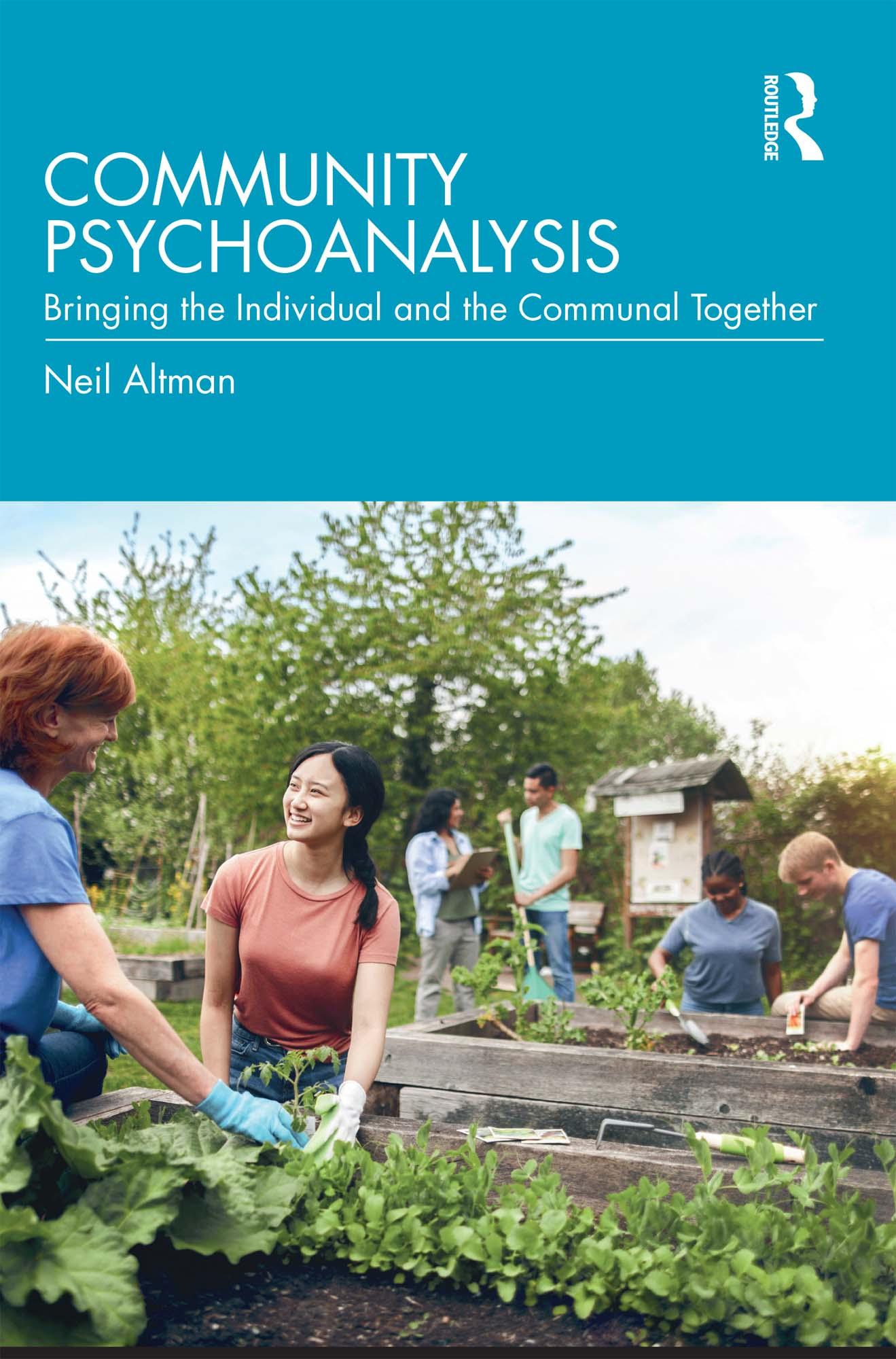
This book delves into the history, current status, and possible future directions of psychoanalysis in the community, outside the traditional consulting room.
The book begins by digging into the individualistic origins of psychoanalysis and the clear definitions around what counts as psychoanalysis and what does not, even to this day. It also explores what has remained constant even as psychoanalysis has splintered into many schools of thought. Rather than rejecting individualistic thinking entirely, Altman investigates how a mix of individual- and community-focused work has been effective in various international settings and the role that the arts can play in informing psychoanalytic practice. In pursuit of the new doors that open as psychoanalysis expands in relational directions, this book considers a range of clinical programs that have recently evolved in non-traditional contexts: in schools, in the streets, and in religious and spiritual communities. With access to new and non-traditional modes of understanding and intervention, new possibilities become thinkable.
With international examples of successful community work and drawing on Altman's extensive clinical experience, this is key reading for psychoanalysts and psychotherapists wanting to explore community practice.
Betal nemt med kort, Klarna, Apple Pay eller Google Pay. Ikke tilfreds? Du har altid 14 dages fortrydelsesret. Læs mere i vores vilkår. Har du spørgsmål, så send os en mail på hello@memmo.org.
Memmo gør det nemmere at studere – uanset hvor du er i verden. Hos os samler du dine kursusbøger og smarte studieværktøjer ét sted: resuméer, quizzer, podcasts og flashcards. Og så er der Ted, din studieven, der svarer på alt, du undrer dig over. Over 50 000 studerende studerer allerede her – bygget til at hjælpe dig med at lære hurtigere og stresse mindre.