
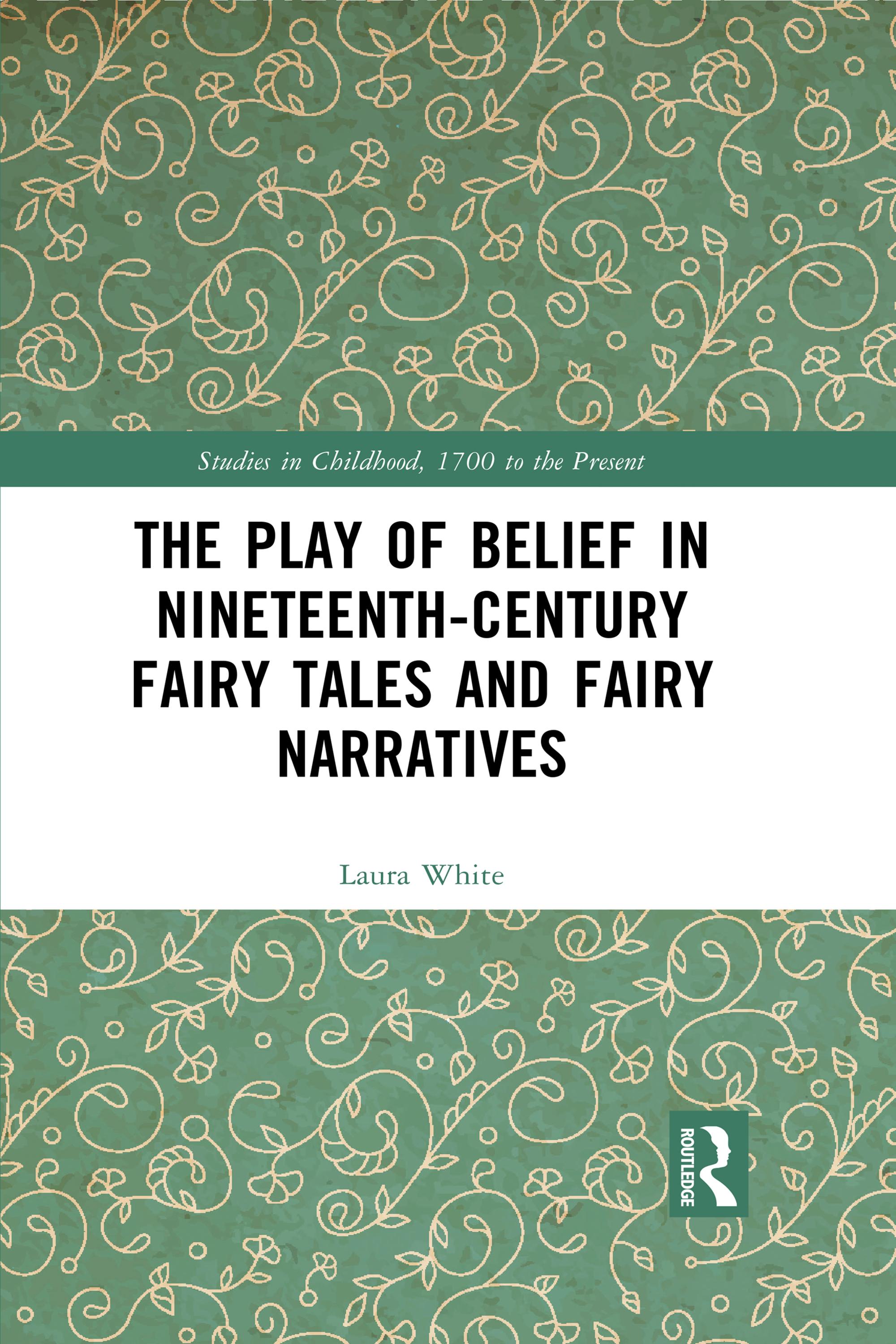
The Play of Belief in Nineteenth-Century Fairy Tales and Fairy Narratives examines the range of playful negotiations with truth claims in British and American fantasies for children of the nineteenth century within the context of the era’s ebbing Christian commitments and competing forces for belief and disenchantment.
While Victorian culture was broadly Christian, its fantasy literature for children shed the explicit piety of writers of earlier generations to embrace magical tales of many stripes. In many ways the story of children’s literature in the nineteenth century is one of a Christian culture disinheriting itself, turning its angels into fairies, its faith into a range of doubts, and blending its Christian ethics with progressive evolutionary ideals. The study shows how authors embraced a wide variety of rhetorical and narrative strategies by which play, ambiguity, and hesitation could suggest what is or is not “real.” Inevitably, such strategies brought disenchantment in their wake, for the more Victorian authors foregrounded the problem of belief, the more they betrayed the nervousness of their own affirmations, especially in the glut of sentiment and frenzied fantasy which typifies fin de siècle fairy tales.
This essential study illuminates the historical nature of children’s literature, making it indispensable reading for scholars of Victorian culture, children's fantasy, and anyone fascinated by the enduring power of fairy tales.
Betal nemt med kort, Klarna, Apple Pay eller Google Pay. Ikke tilfreds? Du har altid 14 dages fortrydelsesret. Læs mere i vores vilkår. Har du spørgsmål, så send os en mail på hello@memmo.org.
Memmo gør det nemmere at studere – uanset hvor du er i verden. Hos os samler du dine kursusbøger og smarte studieværktøjer ét sted: resuméer, quizzer, podcasts og flashcards. Og så er der Ted, din studieven, der svarer på alt, du undrer dig over. Over 50 000 studerende studerer allerede her – bygget til at hjælpe dig med at lære hurtigere og stresse mindre.